Memory cards Kingston Technology
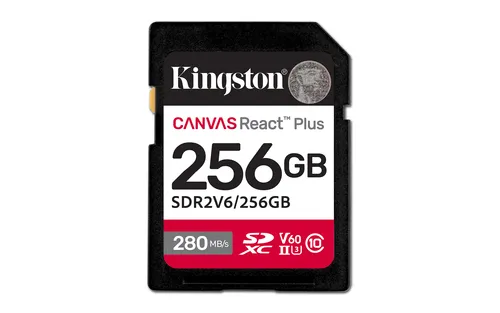
Kingston Technology 256GB Canvas React Plus SDXC UHS-II 280R/150W U3 V60 for Full HD/4K
Relevance for this use: 71/100
When you archive administrative documents or family photos a few times a month, the memory card serves as a temporary backup medium. You transfer the files, then store the card in a drawer until the next use. This occasional practice requires neither large capacity nor high performance.
The decisive criterion then becomes price for decent reliability. No need to pay for features designed for intensive daily use or rapid transfers of large files. A basic card, offering the minimal necessary space and sufficient read speed to consult your archives, perfectly meets this need.
This situation favours simplicity: you seek an economical solution that guarantees data preservation without investing in characteristics you will never exploit. Modest capacity amply suffices for a few hundred light files, and standard read speed allows you to retrieve a document in seconds.
The same criteria as on the category page, but not the same weight: here is what goes up and what goes down.
Price becomes the main criterion for sporadic use. You do not need to pay for advanced technologies that only professional or intensive use justifies. Market surveys show cards at all price points, and for occasional backup, the most affordable models suffice entirely. Seek the best balance between basic reliability and cost, without overpaying for unnecessary features. An economical card that fulfils its occasional archiving function represents the rational choice, especially if you plan to acquire several for different document types.
Capacity matters less in this situation because your backups remain light and infrequent. Market benchmarks range from sixty-four to one thousand gigabytes, with a median at two hundred and fifty-six gigabytes. To archive text documents, family photos or a few presentations, even the lower end of this scale amply suffices. Favouring modest capacity avoids paying for space you will never fill. A reasonably sized card meets your actual needs without wasting your budget on superfluous storage you will not exploit for many years.
Read speed loses importance when you consult your archives once a month or quarter. Measurements recorded on thirty recent datasheets range from one hundred to eight hundred megabytes per second, with a median at one hundred and eighty. To open an administrative document or view a family photo, even the most modest market performances ensure fluid access. No need to pay for speed that only image or video professionals exploit daily. Standard speed makes your files accessible in seconds, which perfectly suits occasional use.
The features pushed in this category that make no difference in this context.
Maximum write speed
Data recording rapidity only serves photographers or videographers who capture continuous image bursts. For occasional backup of a few light files, even slow writing only extends transfer by a few seconds. You wait once a month, not every hour.
Professional video certification
Standards guaranteeing smooth recording of high-definition videos only concern high-end cameras and photo equipment. If you archive text documents or already-taken photos, these certifications bring you nothing. They increase price without improving your actual use.
Extreme condition resistance
Protections against water, shocks, extreme temperatures or X-rays appeal to adventurers and field reporters. For a card stored in an office drawer between uses, these reinforcements remain superfluous. Your domestic environment does not justify this additional robustness.
Orders of magnitude, not displayed prices: a price only appears on Kalyneo once it has been collected from a merchant, with its collection date.
Under €15
Under fifteen euros you obtain a basic card that perfectly fulfils its occasional archiving function, with sufficient capacity and speed to consult your documents.
€15 to €50
Between fifteen and fifty euros, you find slightly higher capacities or established brands, but without decisive gain for occasional backup of light files.
Over €50
Beyond fifty euros, you pay for performance and certifications designed for intensive professional use, without real benefit for a few monthly transfers of personal documents.
Ranked by relevance for this specific case, not by their overall score.
Memory cards Kingston Technology
Relevance for this use: 71/100
A product only enters this list if it meets every one of these points. Its relevance is rated for this specific use, independently of its overall score in the category.