Laser printers Brother
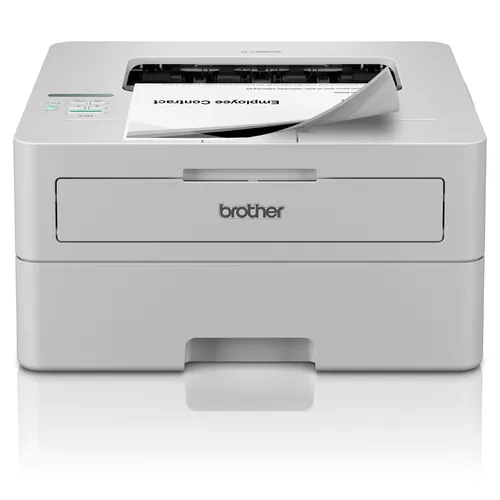
Brother HL-L2865DW laser printer 1200 x 1200 DPI A4 Wi-Fi
Relevance for this use: 67/100
A shared office with a few people prints regularly without reaching large company volumes. The printer stays on all day, its weekly consumption weighs on the bill and carbon footprint. Choosing a sober model limits energy footprint without compromising laser quality needed for professional documents.
Maximum speed matters little when each person edits a few pages at their rhythm. Conversely, consumption in standby and operation accumulates over tens of weekly hours. Favouring energy efficiency meets environmental commitments while controlling recurring costs.
The same criteria as on the category page, but not the same weight: here is what goes up and what goes down.
Purchase price counts more in associative structure or small team than in large company. An affordable model equips the office without burdening the annual budget. Energy-sober printers sometimes cost more upfront, but their economical operation quickly offsets the difference. Aiming for good initial value remains prudent to control overall investment.
Modest speed suffices for an office of five to ten people who do not print simultaneously. Twenty pages per minute handle staggered daily runs without trouble. Rising to fifty pages per minute changes nothing in practice and costs more. Benchmarks range from twenty for entry models to fifty for fast ones, median at thirty-three across thirty sheets.
A standard tray of two hundred fifty sheets covers a shared office week without frequent refilling. Moving to six hundred fifty sheets takes up space and raises price for minimal gain. Benchmarks scale from one hundred fifty sheets for compacts to six hundred fifty for professionals, median at two hundred fifty across thirty sheets. Median capacity fits real needs well.
Electrical consumption becomes the central criterion in continuous use over full day. Dropping from zero point six two to zero point two three kilowatt-hours per week divides the annual bill by nearly three. Benchmarks range from zero point two three for sober to zero point six two for greedy, median at zero point three four across thirty sheets. Choosing an economical model directly reduces office carbon footprint.
Startup time matters less in shared office than in medical practice. Waiting seven seconds instead of four for the first page bothers nobody when printing occasionally. Benchmarks scale from nearly eleven seconds for the slowest to under four for the most responsive, median around seven seconds across thirty sheets. Average responsiveness fits perfectly.
The features pushed in this category that make no difference in this context.
High maximum speed
Fast printers consume more in operation and cost more without bringing real gain in shared office. Runs remain short and spaced, maximum speed never serves. A modest sober model prints the same documents just as well in a few negligible extra seconds. Energy saving outweighs unused raw performance.
Large output tray
An oversized output bin eases large volumes in print shop, not in shared office. Each person collects pages as soon as printed, the output tray never fills. Paying a sorting or large-capacity device inflates price and electrical consumption for superfluous service. A simple tray amply suffices.
Advanced mobile connectivity
Mobile printing functions appeal in theory but remain little used in office equipped with computers. Professional documents process on fixed workstation, mobile printing serves rarely. These options inflate firmware, slow updates and raise standby consumption. Classic network connection meets real needs better.
Secure print mode
Code-release systems protect confidentiality in large company, not in office of a few people who know each other. This function complicates daily use and consumes more energy to manage authentication. In small structure, mutual trust and physical proximity suffice to guarantee discretion without technical or energy surcharge.
Orders of magnitude, not displayed prices: a price only appears on Kalyneo once it has been collected from a merchant, with its collection date.
Under €150
Under one hundred fifty euros give compact sober printers, ideal for an eco-conscious shared office mindful of budget without sacrificing laser quality.
€150 to €400
From one hundred fifty to four hundred euros, models gain speed and capacity at the price of often higher consumption, less consistent with environmental approach.
Over €400
Beyond four hundred euros, advanced functions target large structures: their cost and consumption cannot be justified in modest sober shared office.
Ranked by relevance for this specific case, not by their overall score.
Laser printers Brother
Relevance for this use: 67/100
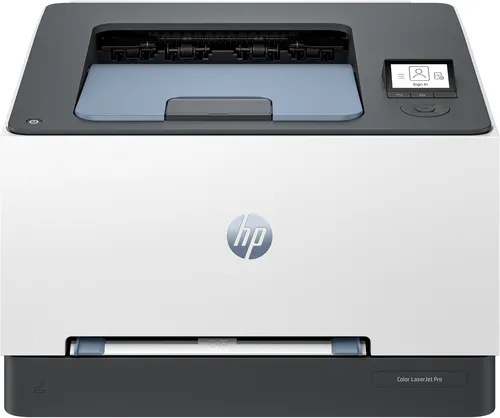
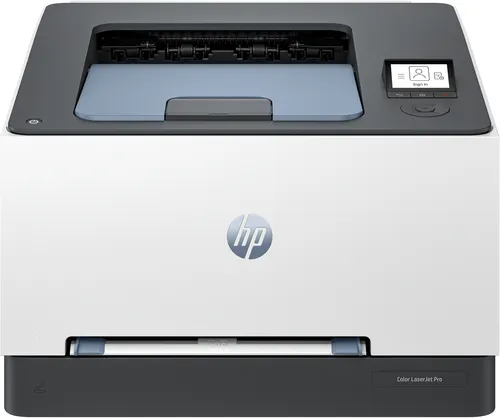
Laser printers HP
Relevance for this use: 67/100
A product only enters this list if it meets every one of these points. Its relevance is rated for this specific use, independently of its overall score in the category.