Internal hard drives Seagate
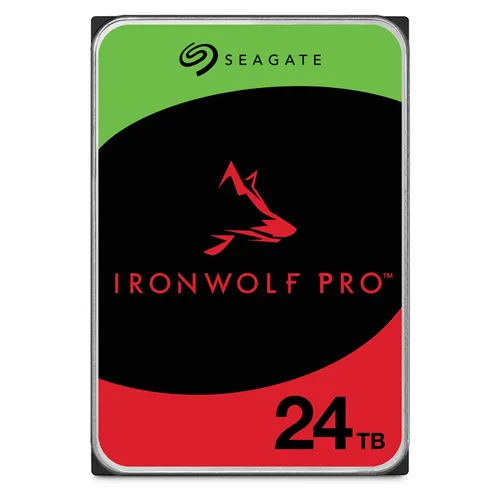
Seagate IronWolf Pro ST24000NT002 internal hard drive 24 TB 7200 RPM 512 MB 3.5" Serial ATA III
Relevance for this use: 64/100
When frequently backing up substantial data volumes, high-resolution images or project videos, storage space quickly becomes the limiting factor. Filling an undersized drive forces multiplication of media or deletion of old backups, compromising the security of files accumulated over time.
In this context, maximum available capacity matters more than price per gigabyte, since running out of space interrupts workflow. Rotation speed and interface throughput retain importance for reducing massive transfer durations, yet remain secondary to the need for accommodating several terabytes without constraint.
The same criteria as on the category page, but not the same weight: here is what goes up and what goes down.
Price becomes less decisive in this scenario, as the absolute priority is having the space necessary for recurring backups. One compares rates to avoid excessive spending, but accepts paying more if it guarantees sufficient capacity. Budget adapts to storage needs rather than limiting them arbitrarily, since lacking space costs more in the long run.
Capacity becomes the dominant criterion for intensive backups, as each additional terabyte postpones the moment when adding a new drive becomes necessary. Between three hundred gigabytes and six terabytes, one favours models approaching the maximum observed, around six thousand gigabytes, to absorb growing volumes without reorganising storage every quarter.
Rotation speed gains importance when regularly transferring tens of gigabytes, as reducing waiting times improves productivity. Models spinning towards fifteen thousand revolutions per minute, positioned at the top of benchmarks, accelerate backup operations and allow the system to be freed more quickly for other tasks without enduring prolonged slowdowns.
Maximum interface throughput matters more in this context, as copying several terabytes intensively stresses the connection between drive and system. Targeting high values around twelve gigabits per second, even though the market median already reaches them, guarantees the interface does not throttle massive transfers and fully exploits rotation speed.
The features pushed in this category that make no difference in this context.
Low-capacity drives
Purchasing models limited to a few hundred gigabytes forces media multiplication and complicates backup management. Better to invest in generous capacity from the outset to avoid juggling multiple drives and simplify file recovery.
Very low rotation speeds
Accepting models spinning at the minimum of benchmarks considerably slows massive transfers. For frequent and voluminous backups, this lost time accumulates and affects daily workflow fluidity, justifying investment in higher speeds.
Interfaces limited to low throughput
Favouring interfaces capped at six gigabits per second throttles drive potential when regularly copying large volumes. Transfers become an unnecessary bottleneck, whereas more capable interfaces eliminate this constraint for modest additional cost.
Orders of magnitude, not displayed prices: a price only appears on Kalyneo once it has been collected from a merchant, with its collection date.
Less than €50
Less than fifty euros often limits capacities and suits intensive backups poorly, except to temporarily supplement existing storage while awaiting better.
€50 to €100
Between fifty and one hundred euros, one finds models balancing reasonable capacity and acceptable performance, suited to regular backups of medium volumes without saturating rapidly.
More than €100
Beyond one hundred euros, drives offer the most generous capacities and highest speeds, ideal for absorbing terabytes of data without compromise on rapidity.
Ranked by relevance for this specific case, not by their overall score.
Internal hard drives Seagate
Relevance for this use: 64/100
A product only enters this list if it meets every one of these points. Its relevance is rated for this specific use, independently of its overall score in the category.