Internal hard drives Seagate
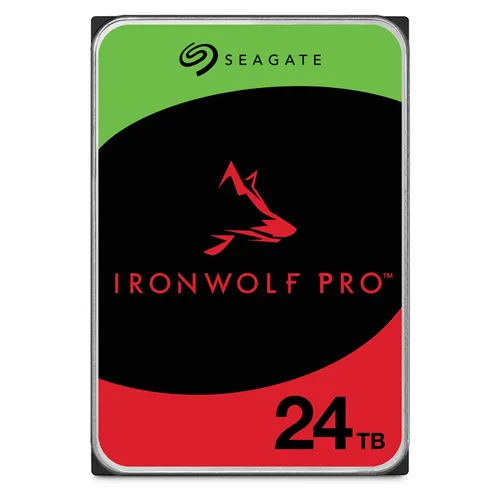
Seagate IronWolf Pro ST24000NT002 internal hard drive 24 TB 7200 RPM 512 MB 3.5" Serial ATA III
Relevance for this use: 56/100
When using a drive to directly execute programs or frequently load large work files, every second saved improves daily comfort. Latency times and limited throughputs interrupt concentration flow, transforming each document opening or application launch into forced pause that slows productivity.
In this scenario, rotation speed and maximum interface throughput become priority criteria, as they determine perceived system responsiveness. Capacity retains usefulness for storing active files, but matters less than access speed, and price fades before performance if it eliminates waiting frustrations.
The same criteria as on the category page, but not the same weight: here is what goes up and what goes down.
Price loses slightly in importance in this context, as investing in speed justifies higher budget to avoid daily slowdowns. We still compare merchant prices to optimise spending, but more readily accept extra cost if performance characteristics guarantee fluidity without compromise on access times.
Capacity retains moderate usefulness, as a fast system must accommodate active work files without saturating. Between three hundred gigabytes and six terabytes, targeting median around one thousand eight hundred gigabytes often suffices for current needs, without seeking maximum if it penalises performance or unnecessarily increases budget.
Rotation speed becomes the dominant criterion for a fast system, as it directly dictates data access times. Models spinning at fifteen thousand revolutions per minute, at observed benchmark peaks, drastically reduce latencies when loading applications or large files, eliminating pauses that fragment work and maintain intact concentration.
Maximum interface throughput rises strongly in importance, as it conditions speed at which data transits between drive and processor. Targeting twelve gigabits per second observed at upper benchmarks guarantees interface does not stifle rotation speed potential, allowing system to fully exploit each millisecond gained on mechanical access.
The features pushed in this category that make no difference in this context.
Excessive capacities at speed’s expense
Favouring six terabytes if it imposes low rotation speeds sacrifices responsiveness for space rarely filled. Better to dimension capacity to just necessary and invest remaining budget in performances that improve daily experience.
Interfaces at minimal throughput
Accepting six gigabits per second when models reach twelve gigabits throttles system speed without tangible benefit. This economy pays itself in seconds lost on each transfer, accumulating frustration and inefficiency across workdays.
Standard rotation speeds
Settling for seven thousand two hundred revolutions per minute for intensive use means leaving half the speed potential on table. Models at fifteen thousand revolutions transform system fluidity, justifying price gap through time gained over hundreds of weekly operations.
Economical models without performance certification
Choosing budget drives that guarantee neither speed nor stable throughput compromises response time reliability. For a fast system, performance regularity matters as much as their maximum values, avoiding unpredictable slowdowns.
Orders of magnitude, not displayed prices: a price only appears on Kalyneo once it has been collected from a merchant, with its collection date.
Less than €50
Less than fifty euros rarely suits a fast system, performances often sacrificed to reach this price at responsiveness expense.
€50 to €100
Between fifty and one hundred euros, acceptable compromises exist for moderate uses, but maximum speeds remain out of reach without upgrading range.
More than €100
Beyond one hundred euros, drives offer highest rotation speeds and interface throughputs, eliminating waits and maximising daily system fluidity.
Ranked by relevance for this specific case, not by their overall score.
Internal hard drives Seagate
Relevance for this use: 56/100
A product only enters this list if it meets every one of these points. Its relevance is rated for this specific use, independently of its overall score in the category.