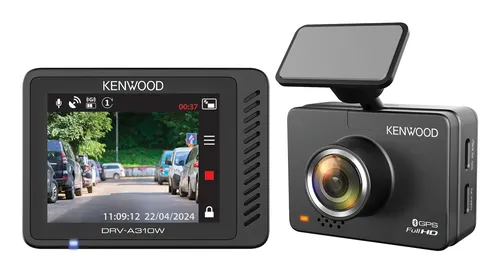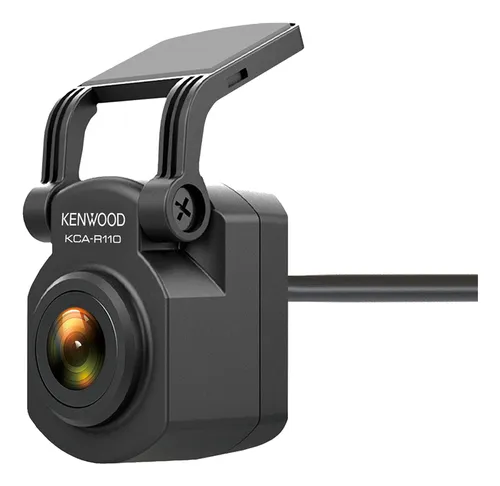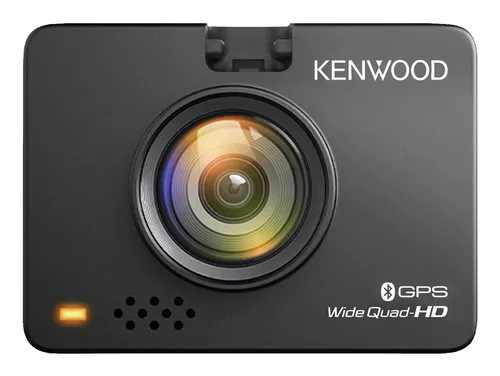
Dash cams Kenwood
Kenwood DRV-A510W dashcam 2K Ultra HD Wi-Fi DC Black
Relevance for this use: 77/100
Some drivers need a dash cam for protection in case of accidents or disputes, without wanting to record every journey. Use remains occasional, often limited to urban commutes or daily errands. In this context, the device should stay simple and affordable.
The choice focuses on basic functions: recording what happens in front of the vehicle with sufficient quality to identify a plate or context. Advanced options and extended capacities lose their relevance when facing a practical need and a controlled budget.
The same criteria as on the category page, but not the same weight: here is what goes up and what goes down.
Price becomes the dominant criterion for occasional use. No need to invest in features you will not exploit. Entry-level models already offer the necessary guarantees to document an incident. The goal is to obtain legal protection at lower cost, without seeking maximum performance. An accessible device fulfils this role perfectly and limits financial risk in case of theft or damage.
Recording smoothness keeps its importance but does not justify a significant premium. Twenty-five frames per second from the slowest models suffice to identify key scene elements: vehicles, signs, trajectories. Only intensive or sporty use would require thirty frames per second. For occasional use in town or on roads, the difference remains imperceptible and without impact on the evidential value of sequences.
Storage capacity becomes secondary when recordings are reviewed and deleted regularly. A one hundred twenty-eight gigabyte card, the low market value, already contains several hours of video before the loop overwrites the oldest files. You will have plenty of time to save an incident. Higher capacities suit repeated long journeys or professional fleets, not occasional domestic use.
The number of cameras matters little for occasional use. A single forward-facing camera covers most dispute situations: collisions, priority violations, line crossings. Half the market models remain equipped with one camera. Adding a rear camera often doubles the price to film rarer events. Unless you park in high-risk areas, this second lens remains superfluous.
The features pushed in this category that make no difference in this context.
Maximum resolution
The highest resolutions increase file sizes and price without adding value for occasional use. Standard definition already allows reading a plate at reasonable distance. You do not need to zoom into tiny details.
Multiple driving modes
Parking modes, motion detection or extended surveillance consume power and complicate installation. For occasional use, simple recording while driving suffices. These options remain unused and increase the bill without real benefit.
Built-in GPS
GPS records position and speed, useful data for fleets or high-mileage drivers. In occasional use, this function adds cost without serving: accident circumstances are proven by image, rarely by exact location.
Orders of magnitude, not displayed prices: a price only appears on Kalyneo once it has been collected from a merchant, with its collection date.
Under €50
Models under fifty euros offer the essentials for occasional use: front recording, sufficient quality, ease of use.
€50 to €120
Between fifty and one hundred twenty euros, you gain in build quality and image stability, without superfluous features inflating the budget.
Over €120
Above one hundred twenty euros, extra costs fund advanced options that exceed the needs of occasional and sporadic use.
Ranked by relevance for this specific case, not by their overall score.
Dash cams Kenwood
Relevance for this use: 77/100
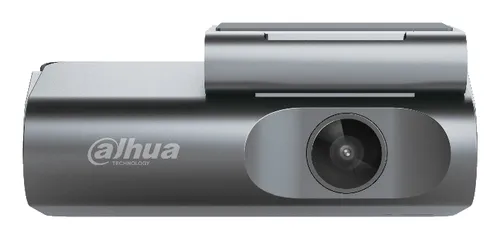
Dash cams Dahua Technology
Relevance for this use: 55/100
Dash cams Dahua Technology
Relevance for this use: 52/100
A product only enters this list if it meets every one of these points. Its relevance is rated for this specific use, independently of its overall score in the category.