Buying guide: how to choose a fridge
A fridge is chosen first on its storage capacity and annual energy consumption, then on how quiet it runs day to day. Freezing capacity and power failure autonomy separate models that otherwise look similar on paper.
What to check
Storage capacity
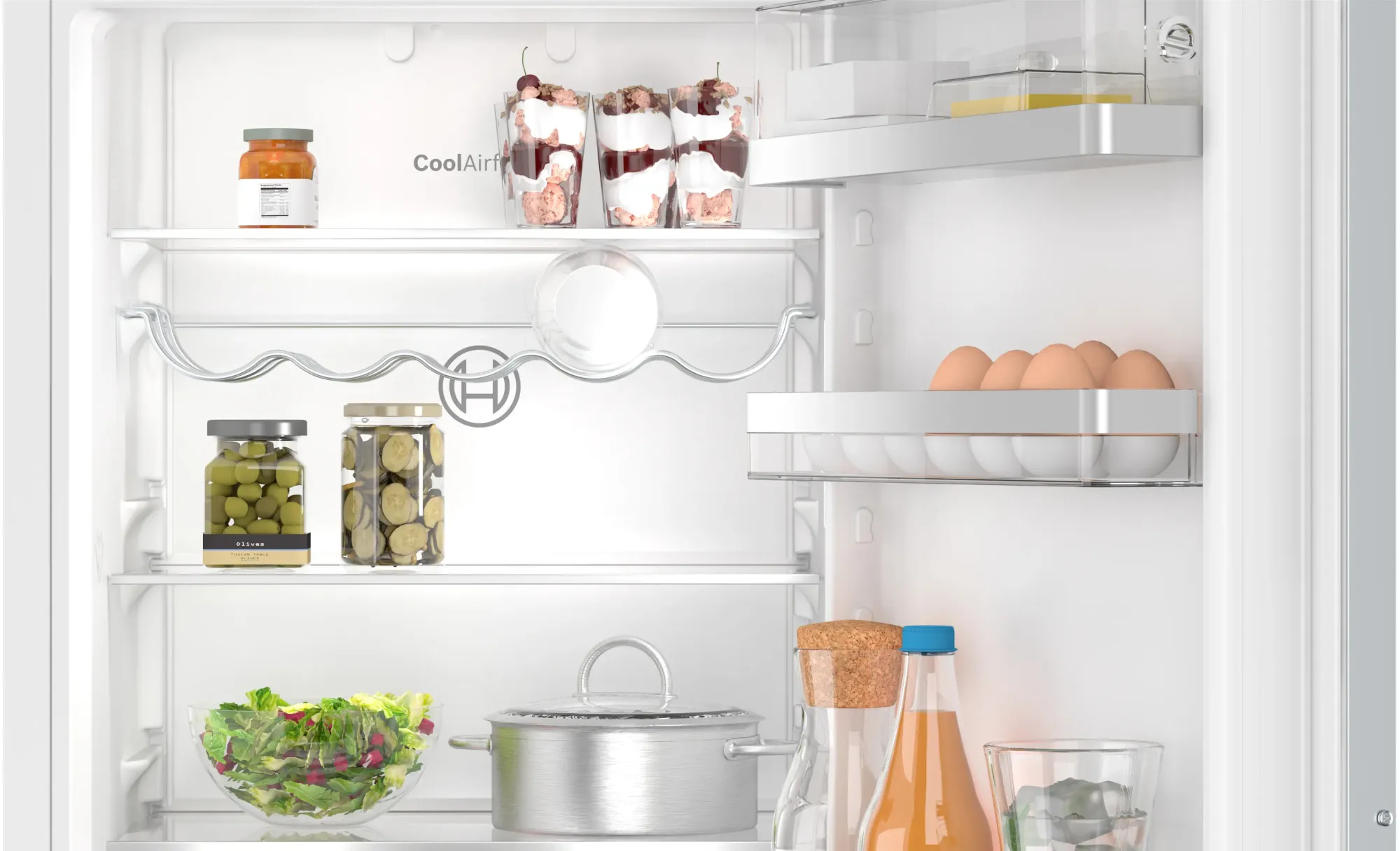
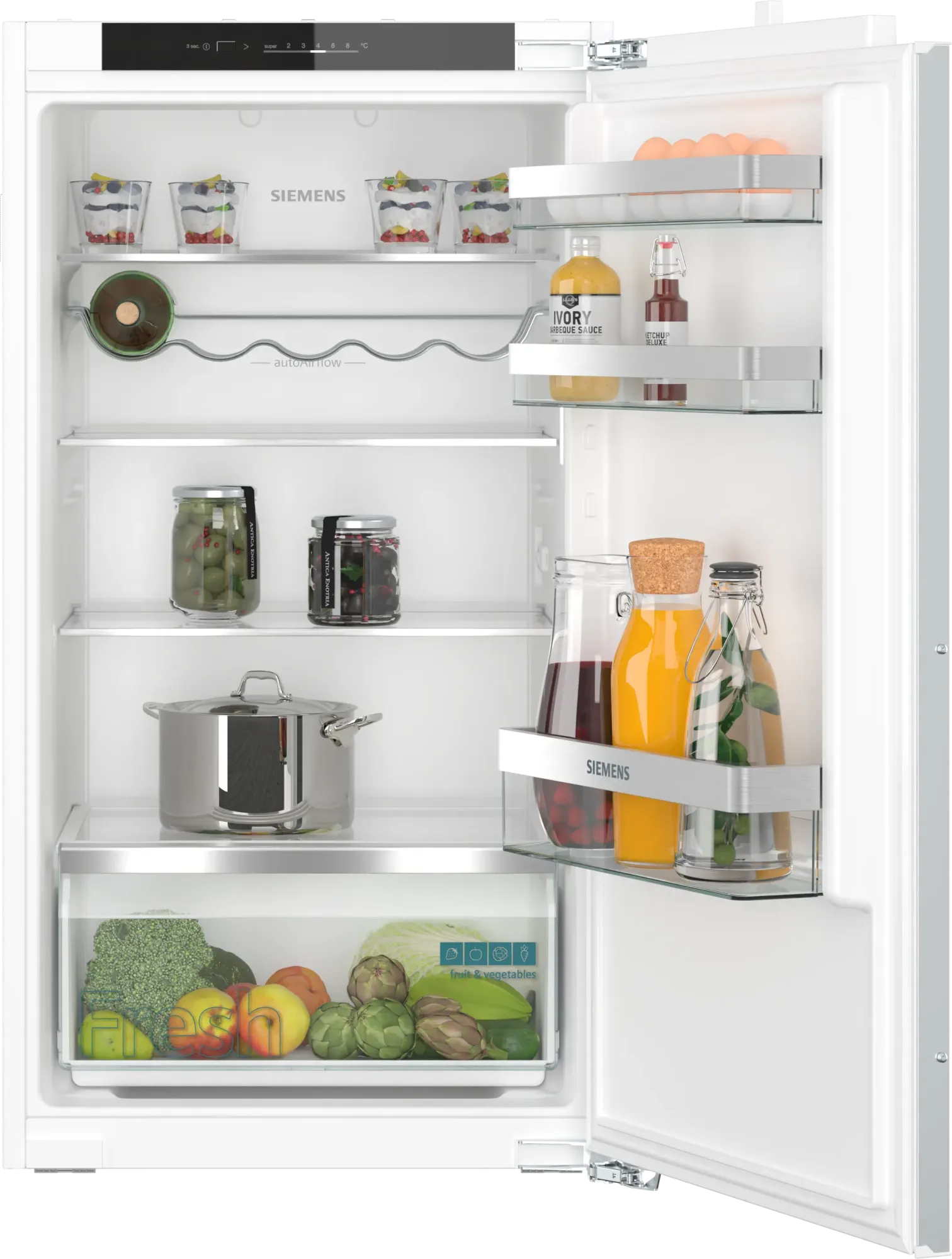
This criterion measures the total net volume available for storing food. The higher it is, the better the fridge suits a large household or less frequent shopping trips. On the site, a longer bar means a larger capacity: measurements across the fiches range from around 128 litres for the most compact models to 477 litres for the roomiest, with a median close to 301.5 litres. Comparing this figure to household size helps avoid buying a fridge that is too small or needlessly large.
Market median: 301.5 L
Annual energy consumption
This criterion measures the energy used over one year of operation. The lower it is, the better the rating, since it means less strain on the electricity bill over time. Recorded values range from 250 kWh per year for the least efficient models to 92 kWh for the most efficient, with a median around 172 kWh. A longer bar on the site therefore signals lower consumption, useful when comparing fridges of similar capacity.
Market median: 172 kWh
Noise level
This criterion measures the sound emitted while the fridge is running. The lower it is, the quieter the surroundings stay, which matters especially when the fridge sits near a living room or bedroom. Readings range from 39 decibels for the noisiest models to 32 decibels for the quietest, with a median of 35 decibels. On the site, a longer bar indicates a quieter appliance.
Market median: 35 dB
Freezing capacity
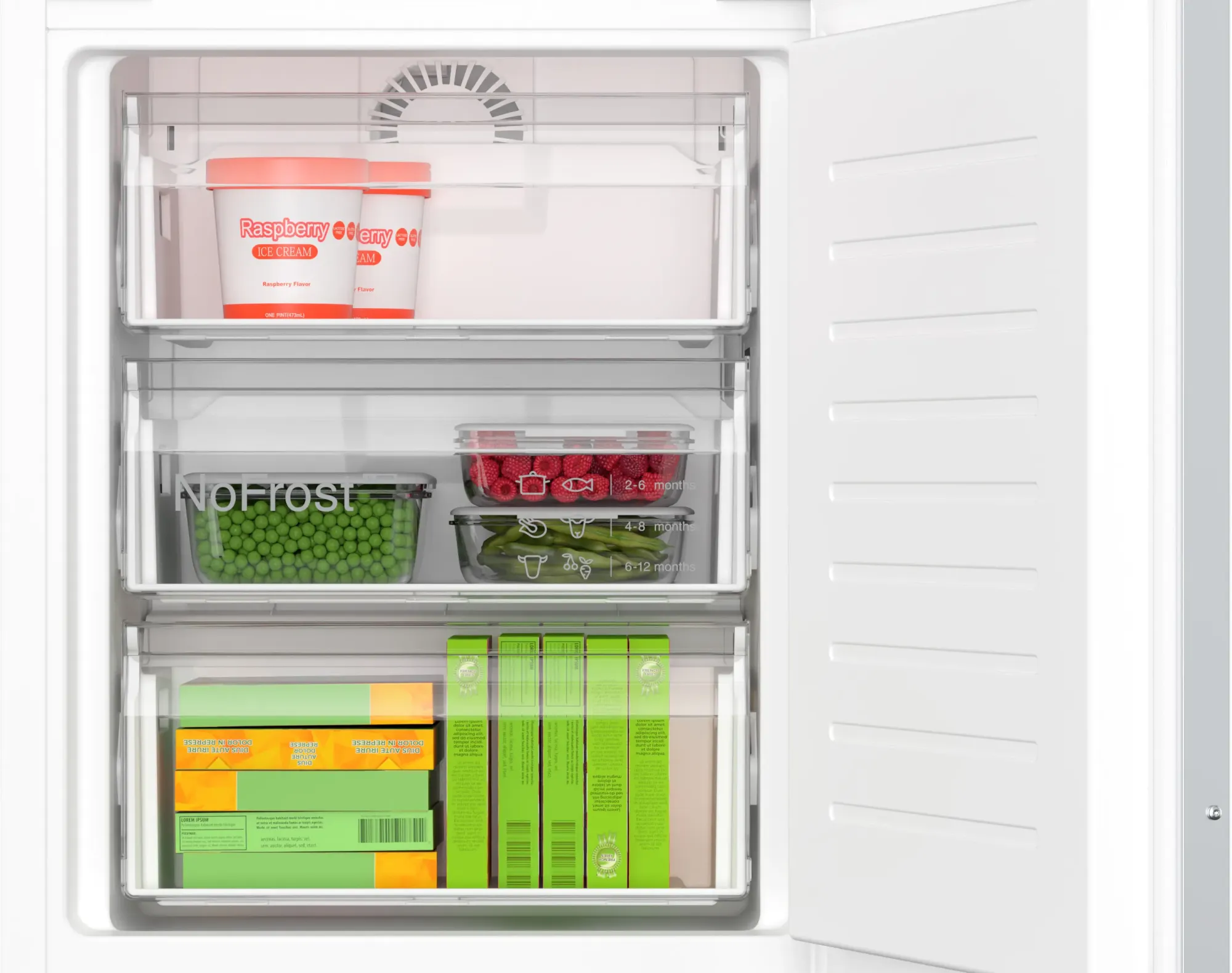
This criterion measures how much fresh food the fridge can freeze within a day. The higher it is, the better suited it is to freezing large quantities at once, for example after a big shop or a garden harvest. Values range from 2.6 kilograms per twenty four hours for the most limited capacity to 12 kilograms for the strongest, with a median of 6 kilograms. A longer bar points to stronger freezing capacity.
Market median: 6 kg/24h
Power failure autonomy
This criterion measures how long food stays cold during a power cut. The longer this duration, the lower the risk of spoiled food during an outage. Recorded autonomy ranges from 6 hours for the least insulated models to 19 hours for the most resilient, with a median of 11 hours. On the site, a longer bar reflects better autonomy during a power failure.
Market median: 11 h
Benchmarks based on 30 recent market listings, collected on 1 October 2026.
What you get for each budget
Under €250
At this price level, models often come with a more modest capacity and results closer to the weaker end of the range for consumption, quietness or power failure autonomy, which suits simple needs or smaller spaces.
€250 to €600
This range covers most models sitting close to the median figures for capacity, consumption and quietness, offering a solid balance across criteria for everyday household use.
Over €600
Above this threshold, models tend to sit closer to the strongest recorded figures, whether in capacity, energy efficiency, quietness or autonomy during a power cut.
Frequent mistakes
Choosing solely on price without checking whether the actual capacity fits the household.
Overlooking annual energy consumption, which affects the budget long after purchase.
Ignoring noise level for a fridge placed near a living area.
Underestimating the value of power failure autonomy in areas prone to outages.
Confusing total capacity with freezing capacity, which measure different things.
Models in this category
Best rated first, among those our merchants offer.