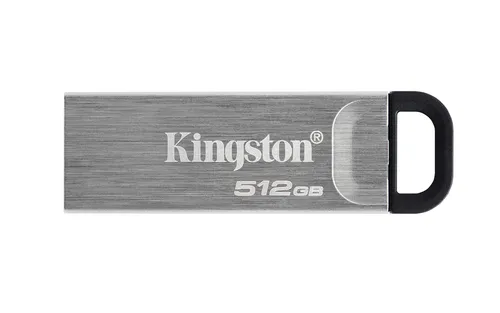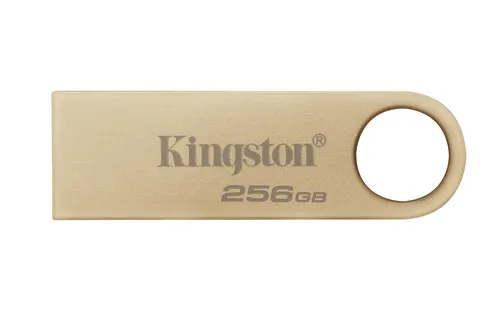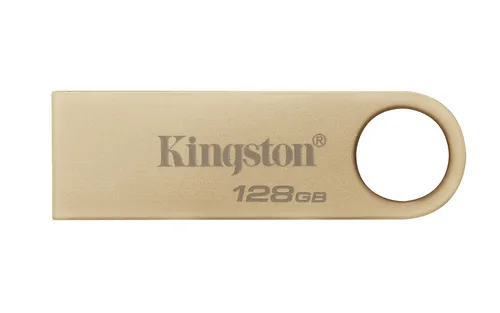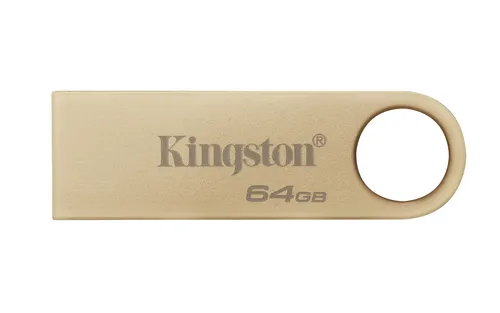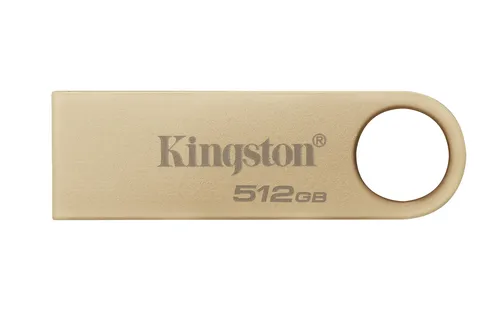
USB flash drives Kingston Technology
Kingston Technology DataTraveler 512GB 220MB/s Metal USB 3.2 Gen 1 SE9 G3
Relevance for this use: 79/100
Carrying your applications everywhere, launching them from any computer without installation, that is what portable software allows. A USB flash drive dedicated to this use does not just store files: it must respond instantly to system requests, as an internal drive would.
The challenge lies in execution fluidity. Portable software loads its resources directly from the drive, and every slowdown affects the interface: menus that delay displaying, documents that take time to open, saves that drag. Reading speed becomes the decisive criterion for the application to respond instantly.
The right choice thus prioritizes speed above all, without requiring excessive capacity: a few dozen gigabytes suffice to install several tools, the essential being that they run without perceptible latency.
The same criteria as on the category page, but not the same weight: here is what goes up and what goes down.
Price keeps its weight but fades slightly before performance. The cheapest drives often struggle to sustain the speeds necessary to run software smoothly. Seeking the best deal remains legitimate, especially for nomadic use that exposes the drive to loss or forgetfulness, but going too low compromises daily usage comfort. It involves finding balance where pricing remains reasonable without sacrificing the responsiveness that makes all the difference between pleasant application and frustrating experience.
Capacity takes a back seat for portable software, rarely bulky. Even accumulating several office tools, system utilities or browsers, one rarely exceeds a few dozen gigabytes. The market offers from thirty-two to five hundred twelve gigabytes, but aiming for the median of one hundred twenty-eight or beyond represents superfluous investment here. Thirty-two to sixty-four gigabytes widely cover needs, freeing budget to prioritize speed. Unused space only serves to increase the bill without improving application responsiveness.
Speed becomes the central criterion, the one transforming daily use. Launching word processing, opening spreadsheet or starting browser from slow drive generates unbearable waits, where fast model responds instantly. Recorded speeds range from sixty to four hundred megabytes per second: aiming for the top of this range, beyond the median of one hundred fifty, guarantees smooth execution. Every disk access translates directly into visible screen action, and prioritizing speed eliminates dead times that spoil user experience.
The features pushed in this category that make no difference in this context.
High capacity
Models well exceeding one hundred gigabytes attract through their space, but portable software rarely occupies more than a few dozen gigabytes. Paying for this surplus means funding emptiness, while modest capacities amply suffice.
Elaborate design
Metal casings, premium finishes or original shapes seduce the eye but bring nothing to application responsiveness. For nomadic use, functional sobriety prevails over aesthetics, especially if the extra cost does not improve performance.
Ancillary features
Sophisticated light indicators, rotating caps or retractable clips add minor conveniences. These gadgets influence neither speed nor reliability, and their cost burdens the budget without tangible benefit for software execution.
Extended compatibility
Multiple connectors for smartphones or tablets theoretically broaden uses, but portable software runs mainly on computer. Paying for this versatility means funding connections one will never exploit for this specific use.
Orders of magnitude, not displayed prices: a price only appears on Kalyneo once it has been collected from a merchant, with its collection date.
Under €15
Models under fifteen euros rarely suit running portable software smoothly: their speed too often limits usage comfort.
€15 to €40
Between fifteen and forty euros, you access decent speeds and suitable capacity, sufficient to run several applications without excessive latency.
Over €40
Beyond forty euros, performance reaches heights that render experience perfectly smooth, without any perceptible wait at launch or use.
Ranked by relevance for this specific case, not by their overall score.
USB flash drives Kingston Technology
Relevance for this use: 79/100
USB flash drives Kingston Technology
Relevance for this use: 78/100
USB flash drives Kingston Technology
Relevance for this use: 76/100
USB flash drives Kingston Technology
Relevance for this use: 75/100
USB flash drives Kingston Technology
Relevance for this use: 70/100
A product only enters this list if it meets every one of these points. Its relevance is rated for this specific use, independently of its overall score in the category.