Toasters for artisan bread enthusiasts
Artisan bread differs from industrial sliced bread through variable thickness, dense crumb and robust crust. These characteristics demand a toaster capable of fine adaptation, with numerous browning levels and sufficient power to heat a thick slice through. Capacity matters less when you toast one or two sourdough slices at a time rather than a pile of standardised toast.
This situation values browning precision and heating speed over slot number. An economical but high-performing model, offering eight settings and high power, far surpasses a family four-slot appliance that is underpowered and poorly adjustable when faced with country bread or rustic loaves.
What matters in this specific case
The same criteria as on the category page, but not the same weight: here is what goes up and what goes down.
-
Price
Matters more coefficient 1.4Price gains importance as artisan bread enthusiasts seek a reliable tool without excessive expense. You invest in the bread quality itself, often costlier than industrial bread, and the toaster must remain affordable to balance the budget. Compare prices found at merchants to find a model offering fine settings and suitable power without superfluous features that needlessly increase the bill.
-
Capacity
Matters less coefficient 0.7Capacity loses weight when you rarely toast more than two slices at once. Market benchmarks range from one to four slots, with a median at two slices simultaneously. For artisan bread, one or two slots suffice amply, as slices are often thick and dense, requiring longer toasting time. Favour heating quality over number of available slots.
-
Power
Matters more coefficient 1.5Power becomes essential to efficiently toast thick, dense slices of artisan bread. Recorded benchmarks range from seven hundred and sixty watts to one thousand six hundred and forty watts, with a median at nine hundred and eighty watts. Aim for at least one thousand watts, ideally above twelve hundred watts, to penetrate compact crumb and brown uniformly without drying the interior. High power compensates for irregular slice thickness.
-
Settings
Matters more coefficient 1.8Browning settings take on full importance given the diversity of artisan breads. Between six and eight browning levels according to market benchmarks, with a median at seven, favour models offering eight levels or more. Sourdough, traditional baguette, country bread and wholemeal loaf each require different dosing. The higher the number of settings, the more finely you master browning according to each bread’s density, moisture and thickness.
What is not worth paying for
The features pushed in this category that make no difference in this context.
-
Capacity above two slots
Three or four slots increase price and bulk without real use for an artisan bread enthusiast. You toast one or two thick slices each time, rarely more, as these breads are consumed slowly and require toasting time. Paying for additional slots you will never use wastes your budget.
-
Complex preprogrammed functions
Automatic cycles for bagels, pastries or frozen bread cost more and do not replace good manual control. Each artisan bread being unique in texture and moisture, no generic programme can adapt perfectly. You adjust the browning level yourself according to the day’s bread, rendering these functions useless.
-
Power below one thousand watts
Underpowered models struggle to toast thick slices of dense bread correctly. With less than one thousand watts, the centre remains lukewarm whilst the outside browns too quickly. This inadequacy frustrates the good bread enthusiast seeking uniform browning throughout thickness, impossible without sufficient power.
-
Premium aesthetic finishes
Precious metal casings, decorative lighting or touch screens increase cost without improving toasting. For an artisan bread enthusiast, performance takes priority over appearance. A simple but robust housing, combined with numerous settings and good power, is better than sophisticated design with limited capabilities.
Price ranges for this use
Orders of magnitude, not displayed prices: a price only appears on Kalyneo once it has been collected from a merchant, with its collection date.
Under €30
Models under thirty euros often offer six settings and modest power, sufficient to begin but limited when faced with very thick bread.
€30 to €60
Between thirty and sixty euros, you find seven to eight browning levels and power exceeding one thousand watts, the best compromise for daily artisan bread.
Over €60
Beyond sixty euros, very fine settings and high power allow optimal control, justified for enthusiasts of varied and demanding breads.
The products selected for this use
Ranked by relevance for this specific case, not by their overall score.
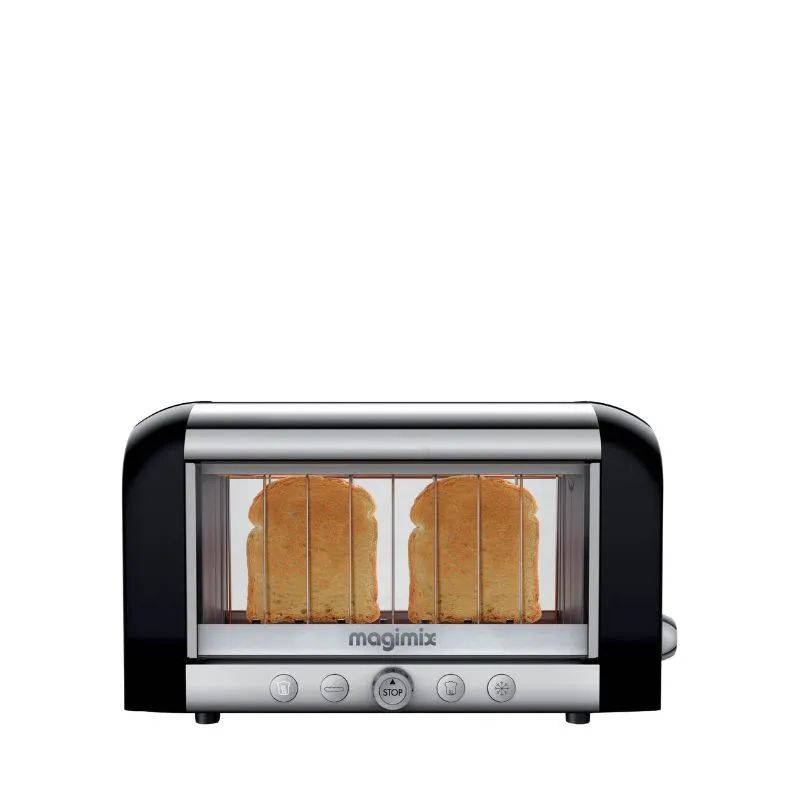
Our selection criteria for this use
A product only enters this list if it meets every one of these points. Its relevance is rated for this specific use, independently of its overall score in the category.
- Selected products provide at least seven browning levels to adapt to different artisan bread types.
- Their power reaches or exceeds one thousand watts to heat thick, dense slices through.
- They display a controlled price, leaving budget for purchasing quality bread from artisan bakers.
- Their design favours toasting performance over superfluous functions or costly decorative finishes.
Other situations in this category
Toasters for occasional use
Compare toasters suited for occasional use. Find an economical model with precise settings, without paying for unnecessary capacity.
Read
Toasters for large families
Compare toasters for large families. Find a high-capacity, powerful model to toast multiple slices quickly every morning.
Read