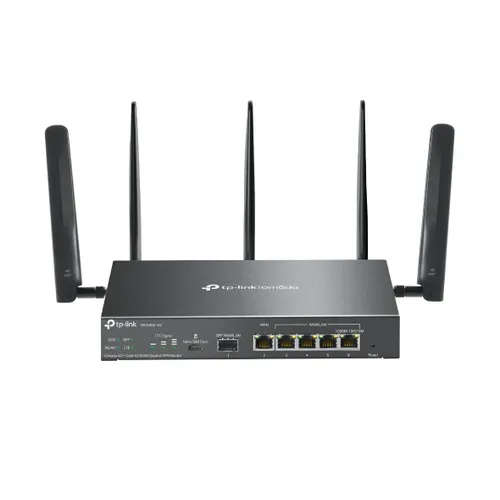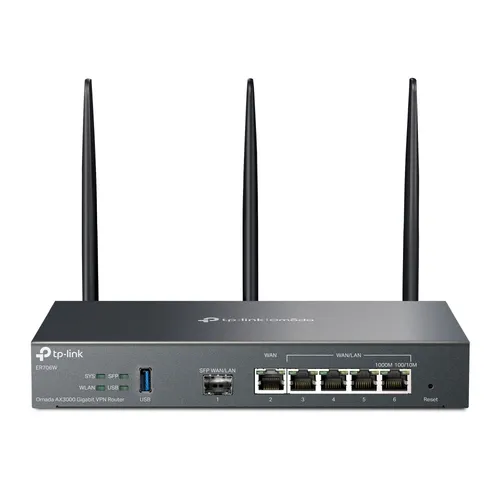
Routers and mesh Wi-Fi systems TP-Link
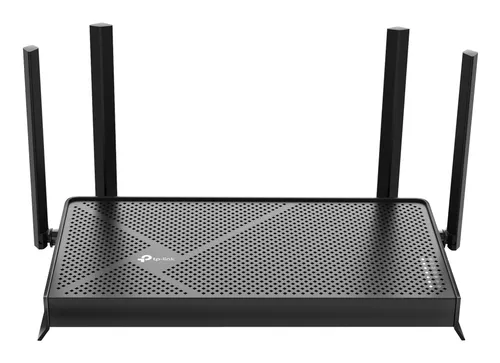
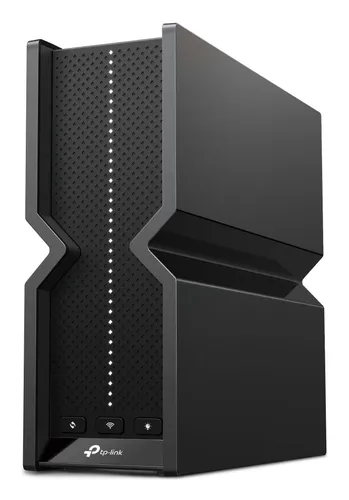
TP-Link Archer BE9300 Tri-Band Wi-Fi 7 Router
Relevance for this use: 88/100
In an office equipped with wired devices, the router primarily serves as a stable connection point for fixed equipment. Network printers, desktop computers, IP phones and file servers plug directly into Ethernet cables, which limits the need for wireless performance.
This setup values the number of available network ports and contained pricing, since advanced Wi-Fi features remain secondary. Priority goes to the reliability of wired connections, which guarantee consistent throughput and minimal latency for everyday professional tasks.
The same criteria as on the category page, but not the same weight: here is what goes up and what goes down.
Price becomes a determining factor in an office where equipment connects via wire. No need to pay for sophisticated wireless technologies: a simple, robust router suffices. Models situated in the lower market range offer the necessary ports without unnecessary extra cost, which frees up budget for other professional equipment like additional switches or higher quality cables.
Maximum Wi-Fi speed takes a back seat when main devices plug in by cable. Market benchmarks range from one thousand one hundred sixty-seven Mbit/s to eleven thousand five hundred thirty Mbit/s across thirty listings, but in this context, only a few occasional mobile devices use wireless. Moderate throughput suffices amply for consulting documents or accessing shared resources from a smartphone or tablet.
The number of Ethernet ports becomes the central criterion for this type of installation. Recent listings show configurations ranging from a single port to five ports, with a median at three. In an office, each fixed device requires its dedicated network socket: the more the router provides, the less investment needed in ancillary equipment. A well-equipped model avoids multiplying switches and simplifies network management.
Antenna quantity loses importance when main traffic transits by cable. Recorded values range from two to twelve antennas, but in an environment where only a few mobile terminals connect occasionally via Wi-Fi, a reduced number suffices. No need to seek extended coverage or maximum wireless performance: wired network stability comes first.
The features pushed in this category that make no difference in this context.
Tri-band and multiple bands
Tri-band routers offer multiple simultaneous frequencies to distribute wireless traffic. In a wired office, this function remains unused since main devices go through Ethernet. Better to favour a classic dual-band model that costs less for identical usage.
Latest Wi-Fi standards
Latest generation wireless standards bring high theoretical speeds and better management of numerous mobile terminals. But when only a few devices connect via Wi-Fi for light tasks, these improvements translate into no concrete gain. An earlier generation fulfils the mission.
Gaming features and advanced QoS
Some routers integrate traffic prioritisation mechanisms for online gaming or high-definition streaming. In a professional environment where wired connections already ensure low latency and stable throughput, these options add cost without measurable benefit.
Orders of magnitude, not displayed prices: a price only appears on Kalyneo once it has been collected from a merchant, with its collection date.
Under €70
Under seventy euros: simple routers offering two to three Ethernet ports, sufficient for a small office with limited fixed equipment.
€70 to €200
Seventy to two hundred euros: intermediate models providing four Ethernet ports and increased reliability, suited to common office configurations with several workstations.
Over €200
Over two hundred euros: routers equipped with five ports or more, for complex installations requiring numerous device connections without multiplying switches.
Ranked by relevance for this specific case, not by their overall score.
Routers and mesh Wi-Fi systems TP-Link
Relevance for this use: 88/100
Routers and mesh Wi-Fi systems TP-Link
Relevance for this use: 78/100
Routers and mesh Wi-Fi systems TP-Link
Relevance for this use: 78/100
Routers and mesh Wi-Fi systems TP-Link
Relevance for this use: 70/100
Routers and mesh Wi-Fi systems TP-Link
Relevance for this use: 68/100
A product only enters this list if it meets every one of these points. Its relevance is rated for this specific use, independently of its overall score in the category.