RAM modules Kingston Technology
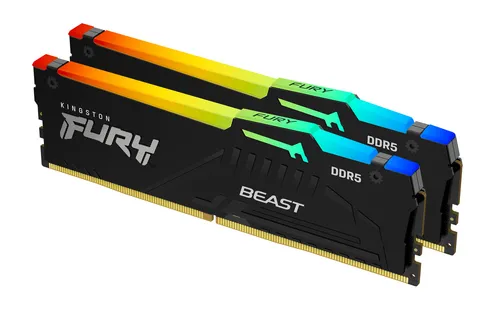
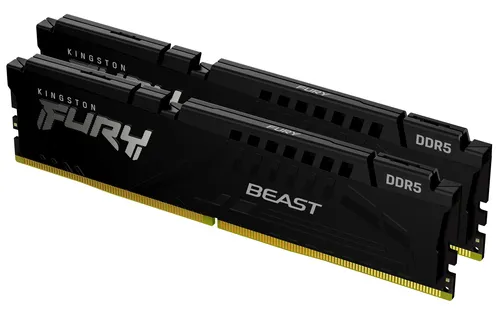
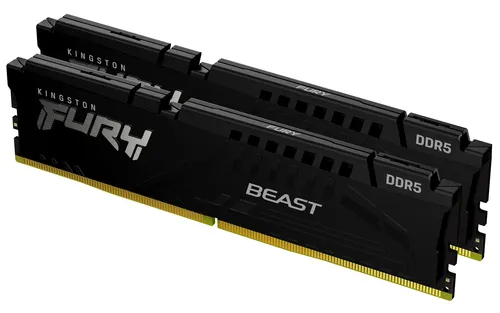
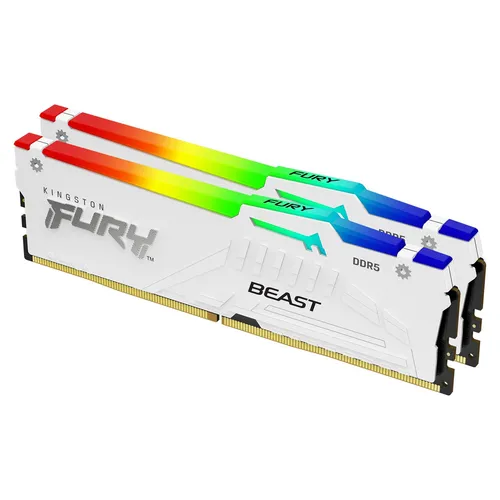
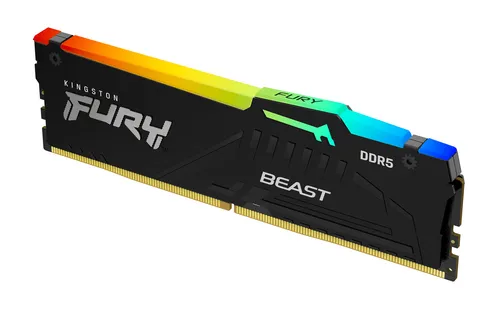
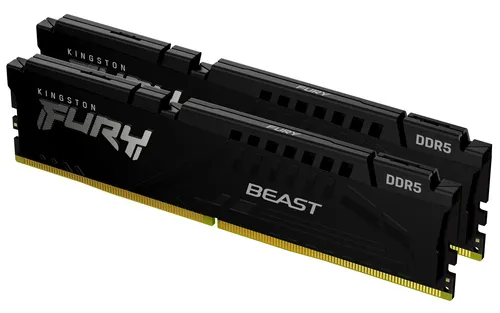
Kingston Technology FURY Beast 64GB 6000MT/s DDR5 CL30 DIMM (Kit of 2) Black EXPO
Relevance for this use: 77/100
Office work, word processing, email and web browsing place little demand on memory speed. These programs rarely run many heavy processes at once, so the module’s frequency has little effect on day to day comfort.
What matters more in this situation is having enough memory to keep several windows and tabs open without slowing down, while keeping the price in check. A module generous in capacity but modest in frequency suits these tasks well.
The same criteria as on the category page, but not the same weight: here is what goes up and what goes down.
Capacity grows in importance here: the higher it is, the longer the bar, and the more comfortable it is to keep several applications open at once. The benchmarks range from eight gigabytes for the most limited configurations to one hundred twenty eight gigabytes for the most generous, with a median of twenty eight gigabytes, a level already sufficient for everyday office work.
Speed matters less here: the module’s frequency speeds up data transfers, an advantage mostly useful for demanding tasks. For office work, a module close to the weakest benchmark, around two thousand one hundred thirty three megahertz, is largely enough, with no need to reach the median of three thousand two hundred megahertz or the top end of five thousand six hundred megahertz.
Price carries more weight in this choice, since there is no benefit in paying for speed that will not be used. Comparing prices at a similar capacity helps identify the most economical modules for the same amount of memory.
The features pushed in this category that make no difference in this context.
A high frequency
Office software does not take advantage of a frequency near the top of the range found on the market. That price difference is better spent on more capacity.
Very high capacity kits
Beyond the median benchmark seen on the market, extra capacity is rarely noticeable in office, email and browsing use.
Orders of magnitude, not displayed prices: a price only appears on Kalyneo once it has been collected from a merchant, with its collection date.
Under €40
Under €40: capacity close to or slightly above the weakest benchmark, enough for simple office work and a few open tabs.
€40 to €90
€40 to €90: capacity close to the market median, comfortable for keeping several applications and many tabs open without slowing down.
Over €90
Over €90: generous capacity, above the median, useful if several tasks pile up on the same computer or if it stays in use for a long time.
Ranked by relevance for this specific case, not by their overall score.
RAM modules Kingston Technology
Relevance for this use: 77/100
RAM modules Kingston Technology
Relevance for this use: 77/100
RAM modules Kingston Technology
Relevance for this use: 74/100
RAM modules Kingston Technology
Relevance for this use: 71/100
RAM modules Kingston Technology
Relevance for this use: 71/100
RAM modules Kingston Technology
Relevance for this use: 71/100
RAM modules Kingston Technology
Relevance for this use: 71/100
RAM modules Kingston Technology
Relevance for this use: 71/100
RAM modules Kingston Technology
Relevance for this use: 71/100
RAM modules Kingston Technology
Relevance for this use: 71/100
RAM modules Kingston Technology
Relevance for this use: 55/100
RAM modules Kingston Technology
Relevance for this use: 55/100
A product only enters this list if it meets every one of these points. Its relevance is rated for this specific use, independently of its overall score in the category.