Mixer for emulsions and delicate mousses
You regularly prepare fragile emulsions, beat egg whites to stiff peaks or whip fresh cream until you achieve an airy texture. These recipes demand a very gentle start to avoid splatter, then a smooth ramp without jolts that break the structure. A mixer offering many speed notches and a reasonable price becomes the favoured tool of this precision cooking.
Speed count weighs heavily because each stage calls for an exact regime: drizzle oil drop by drop into mayonnaise, beat whites without deflating them, whip cream without turning it to butter. Power retreats: these light preparations hardly strain the motor. Bowl capacity matters little since you seldom work more than four eggs or half a litre of cream at once. Price stays watched to avoid overinvesting in a targeted use.
What matters in this specific case
The same criteria as on the category page, but not the same weight: here is what goes up and what goes down.
-
Price
Matters more coefficient 1.3Price keeps notable weight because this specialised use mobilises only part of the mixer’s functions. No point targeting top-tier models equipped for intensive kneading: an appliance between twenty-five and fifty euros already delivers the fine adjustment needed for emulsions. Favouring this segment avoids paying for superfluous accessories and robustness when you chiefly whip fluid preparations.
-
Power
Matters less coefficient 0.8Power matters less for emulsions and mousses because these preparations offer little resistance to the beater. The survey shows a median at three hundred and seventy-five watts, but one hundred watts amply suffice to beat whites or incorporate oil. A modest motor heats little during short sessions and reduces appliance weight, easing manual control. Seeking maximum power brings no advantage for these light tasks.
-
Speeds
Matters more coefficient 1.5Speed count becomes decisive because emulsions demand fine rotation dosing. Recent datasheets offer five to eleven notches, median at ten. Having ten speeds or more lets you start at crawl to avoid spattering oil or icing sugar, then accelerate in tight steps until you reach the desired foam. This granularity prevents abrupt jumps that shatter the fragile structure of a mousse or whipped cream.
-
Capacity
Matters less coefficient 0.6Bowl capacity loses importance because emulsions and mousses prepare in small quantities. Surveys run from four point seven to six point six litres, median at five point one, but you seldom exceed two litres for a family mayonnaise or four beaten whites. A compact bowl handles easily, stores without clutter and cleans quickly after use. Targeting large volume weighs down the whole without concrete benefit for these focused recipes.
What is not worth paying for
The features pushed in this category that make no difference in this context.
-
Solid metal dough hook
A reinforced hook kneads dense bread doughs, but to beat whites or emulsify oil, only classic beaters come into play. Paying for a kneading accessory adds to price and clutters the drawer when you prepare only mousses and light creams.
-
Bowl with non-stick coating
A non-stick coating eases cleaning of sticky doughs, but emulsions and mousses barely cling to walls. A smooth stainless steel bowl suffices fully, washes just as fast and costs less. Non-stick brings no time or comfort gain here.
-
Turbo function for quick kneading
A turbo button delivers instant power boost, useful to clear the resistance of thick dough. Emulsions and mousses demand instead a gentle, controlled rise: a brutal turbo burst breaks texture, splatters the prep and spoils the result. This function stays unused in this application.
-
Motorised rotating stand
An automatic turntable keeps the bowl moving while the beater spins, an asset for large masses of dough. For mayonnaise or beaten whites, holding the bowl in one hand and steering the mixer with the other offers more precision and reactivity, without investing in a complex mechanism.
Price ranges for this use
Orders of magnitude, not displayed prices: a price only appears on Kalyneo once it has been collected from a merchant, with its collection date.
Under €25
Under twenty-five euros already offer a few speeds to beat whites and cream, but fine adjustment stays limited and steps sometimes too wide for fragile emulsions.
€25 to €50
From twenty-five to fifty euros, you get the speed granularity needed for delicate mousses, with quality beaters and comfortable grip for precise control.
Over €50
Beyond fifty euros, extra functions target kneading and large capacities, little use when you focus on emulsions and whipped cream in small quantities.
The products selected for this use
Ranked by relevance for this specific case, not by their overall score.
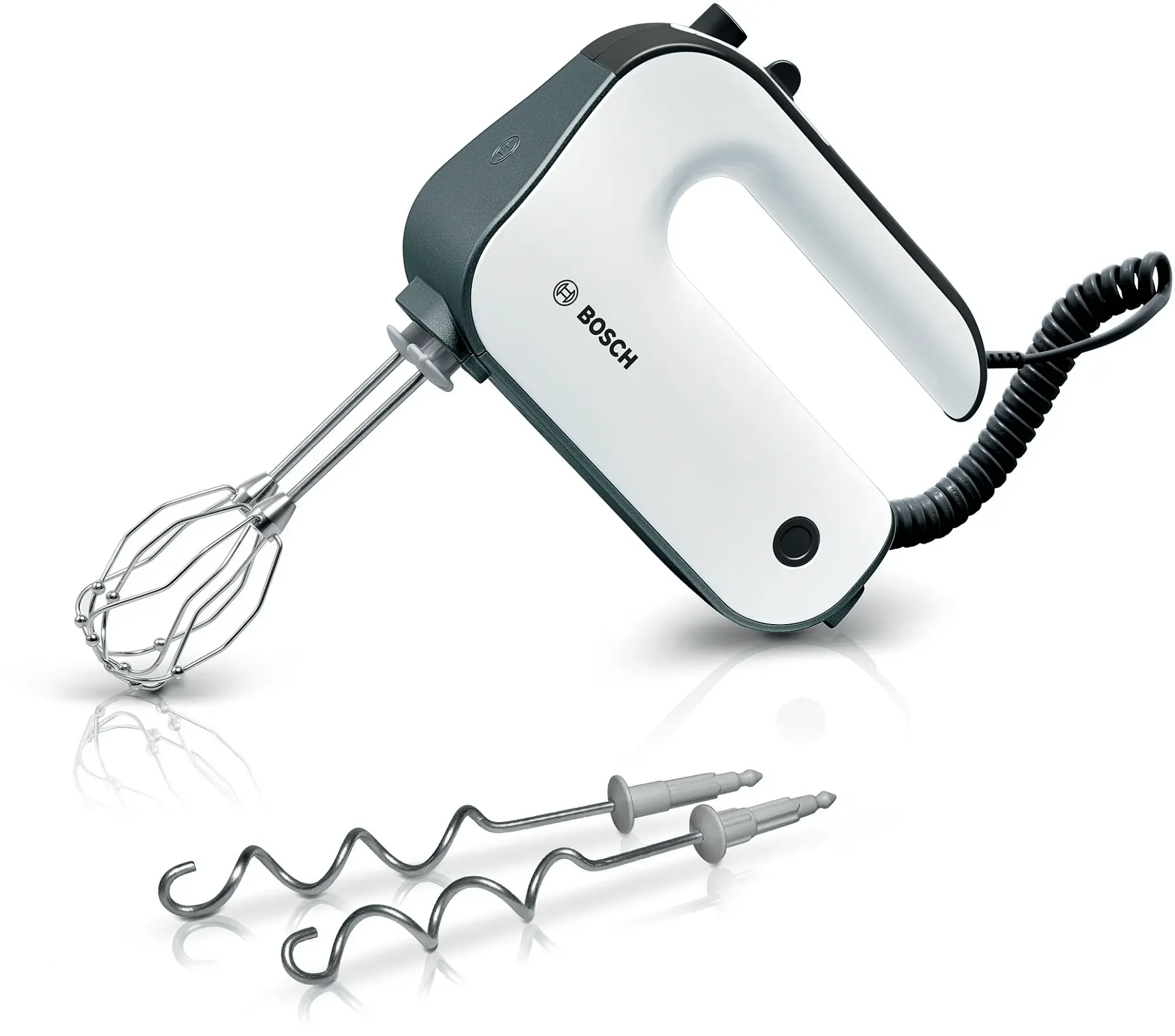
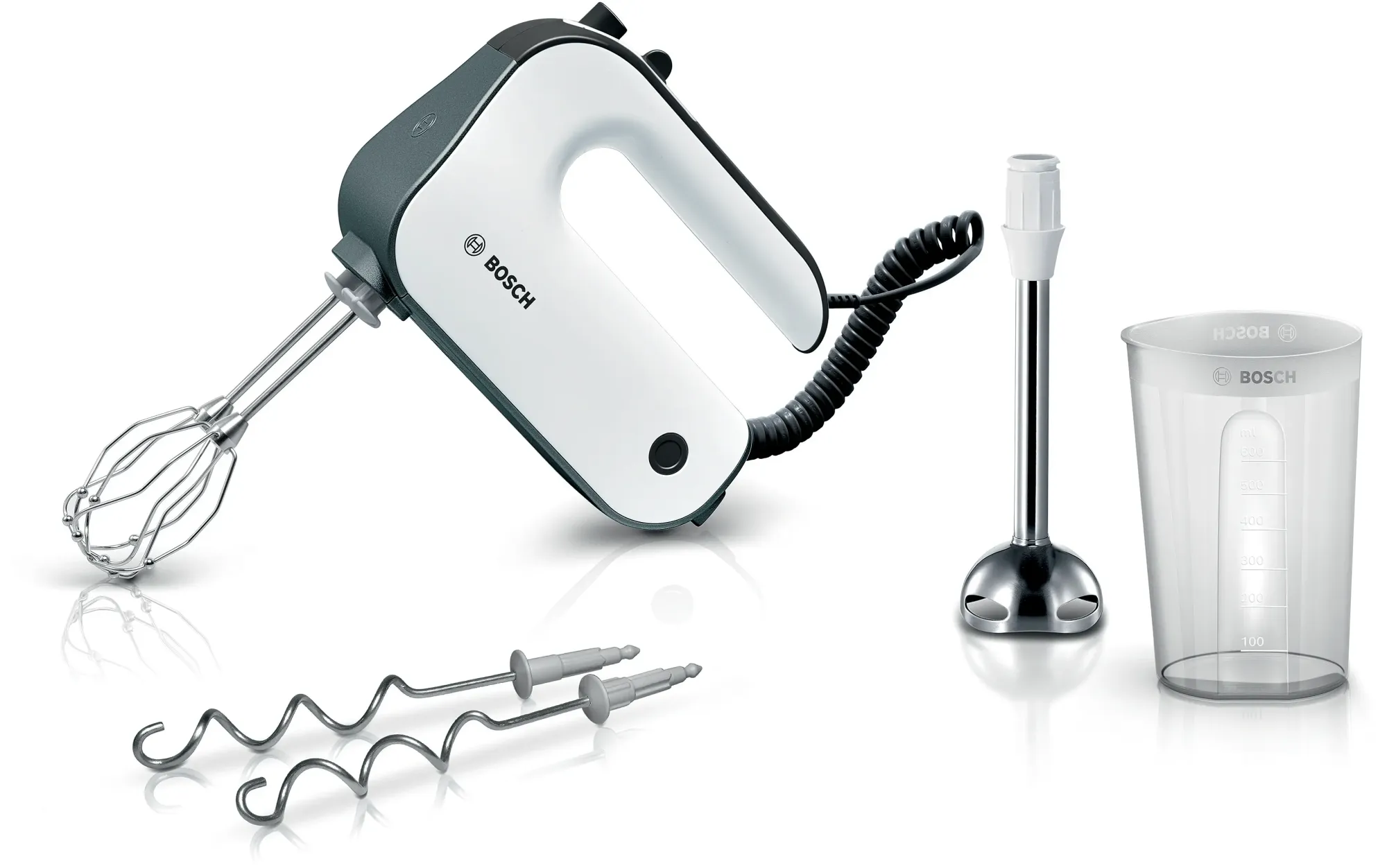
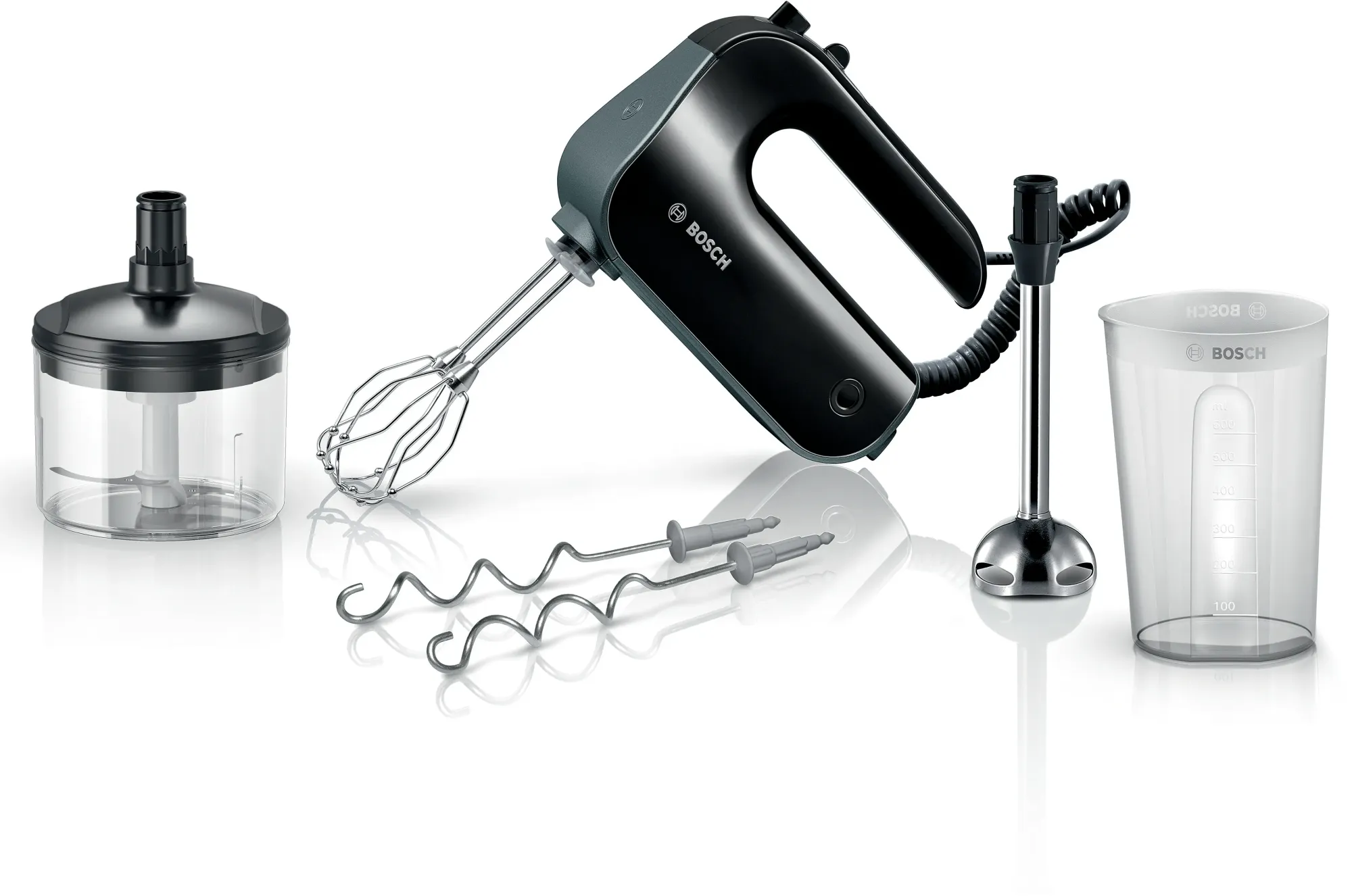
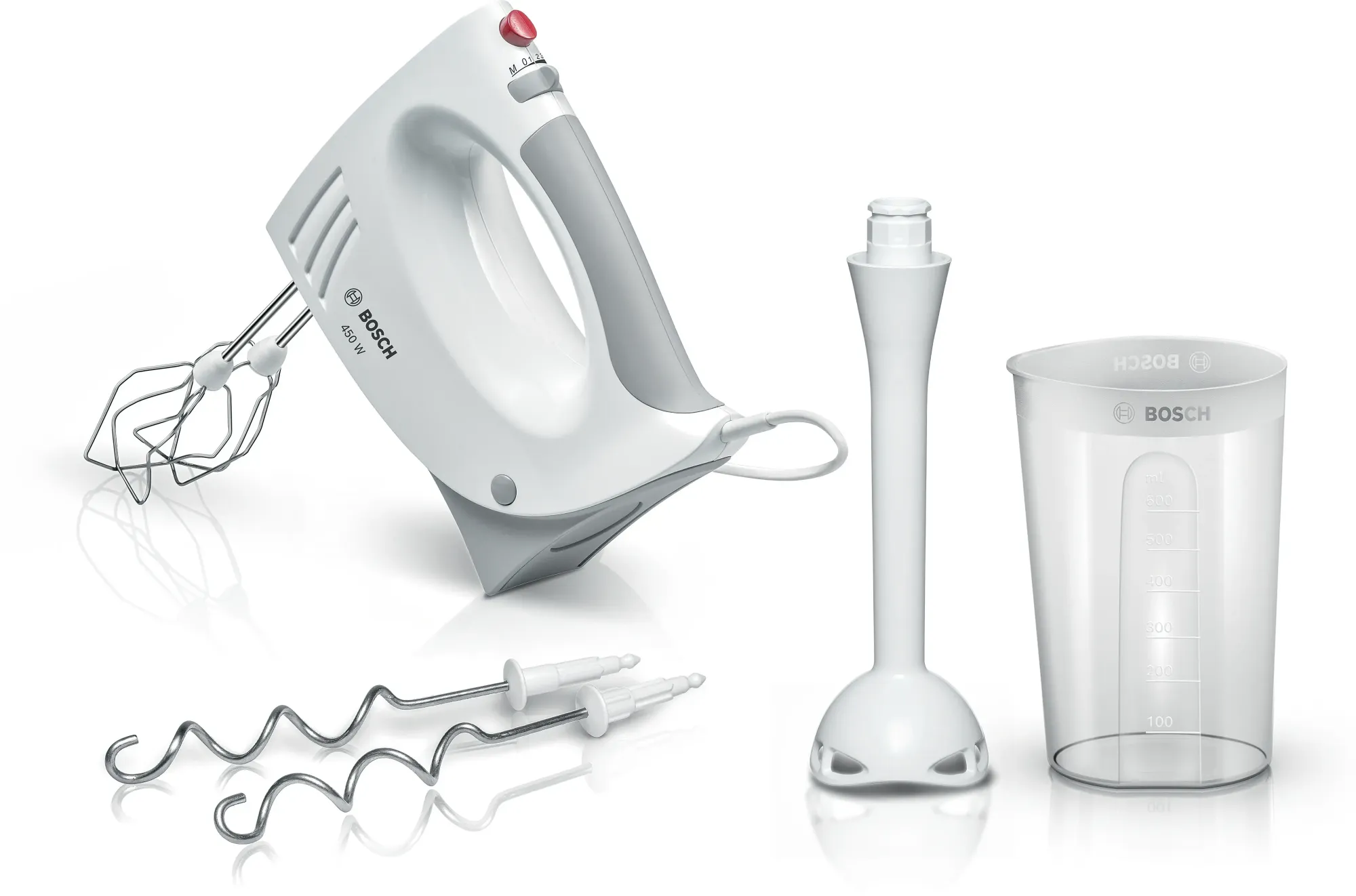
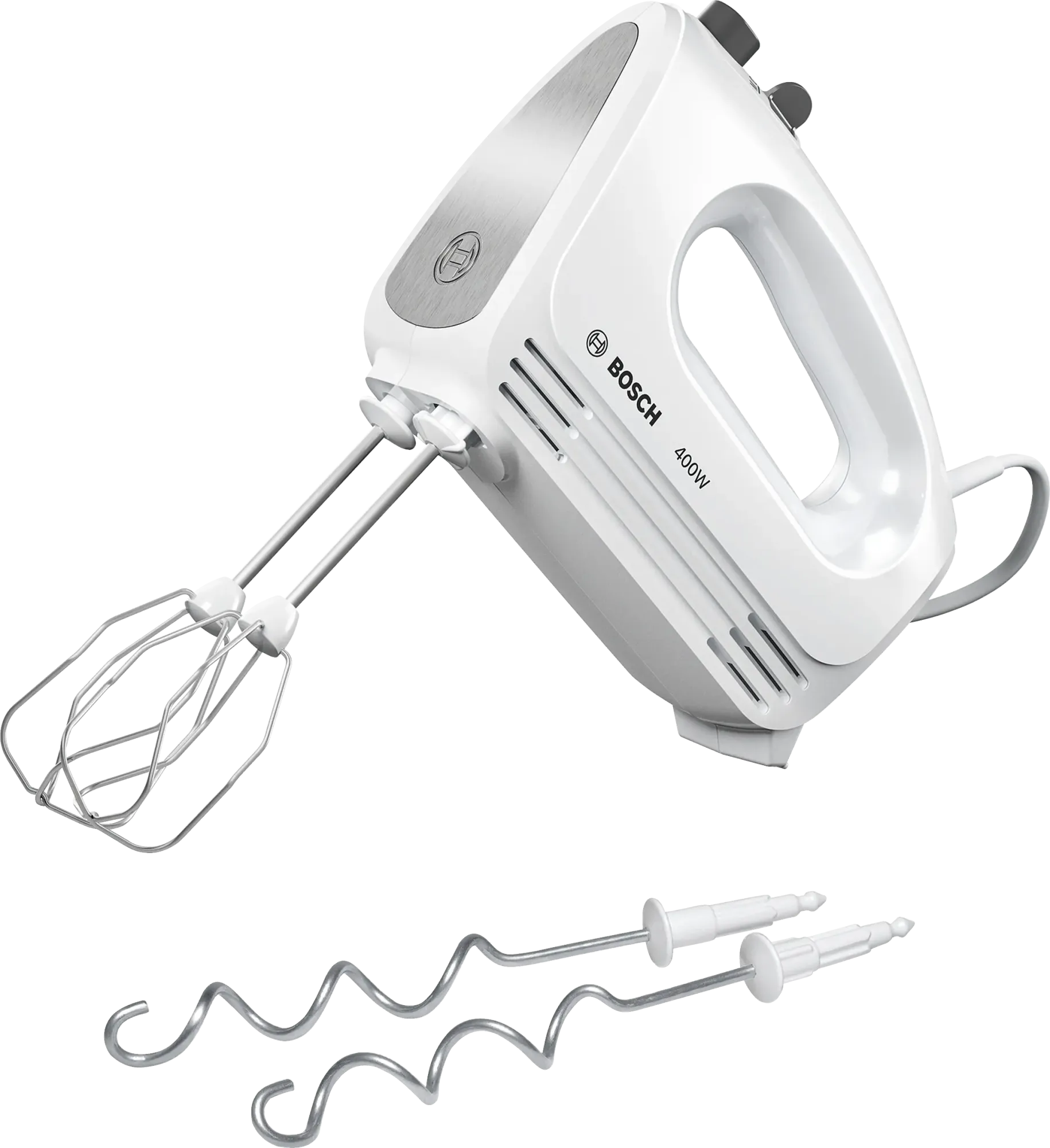
Mixers Bosch
Hand Mixer CleverMixx 400 W White, Brushed Stainless Steel MFQ24200
Relevance for this use: 52/100
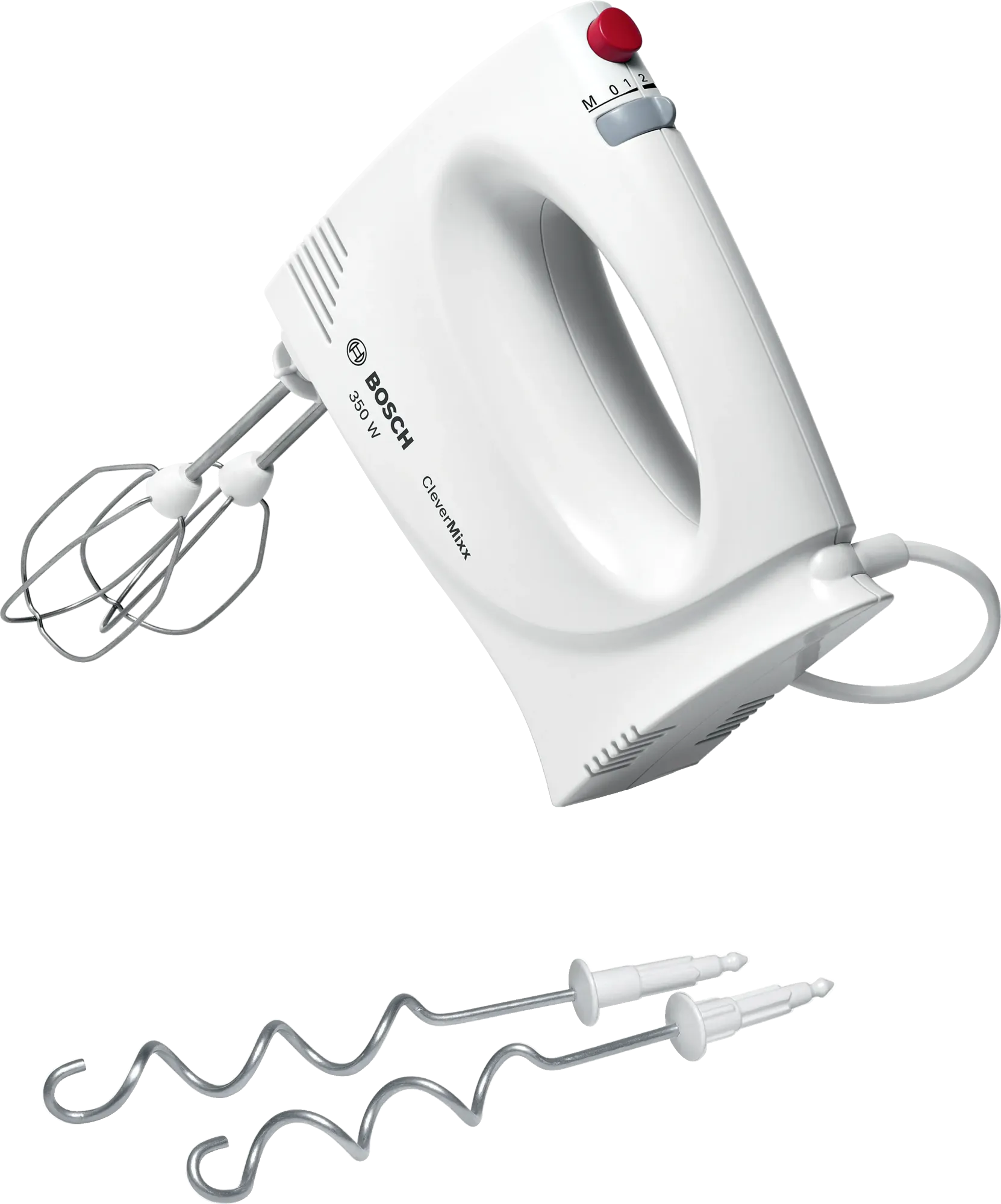
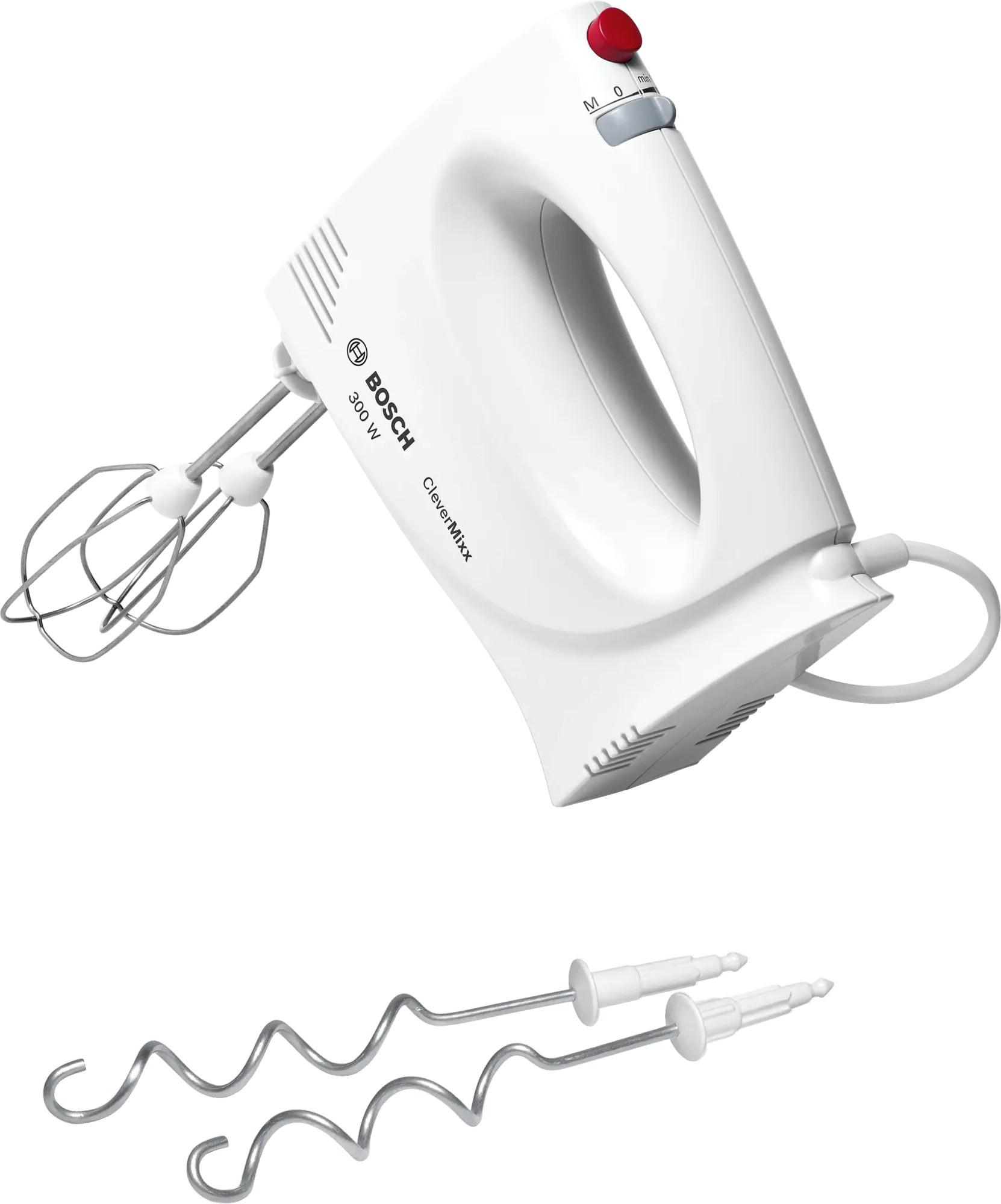
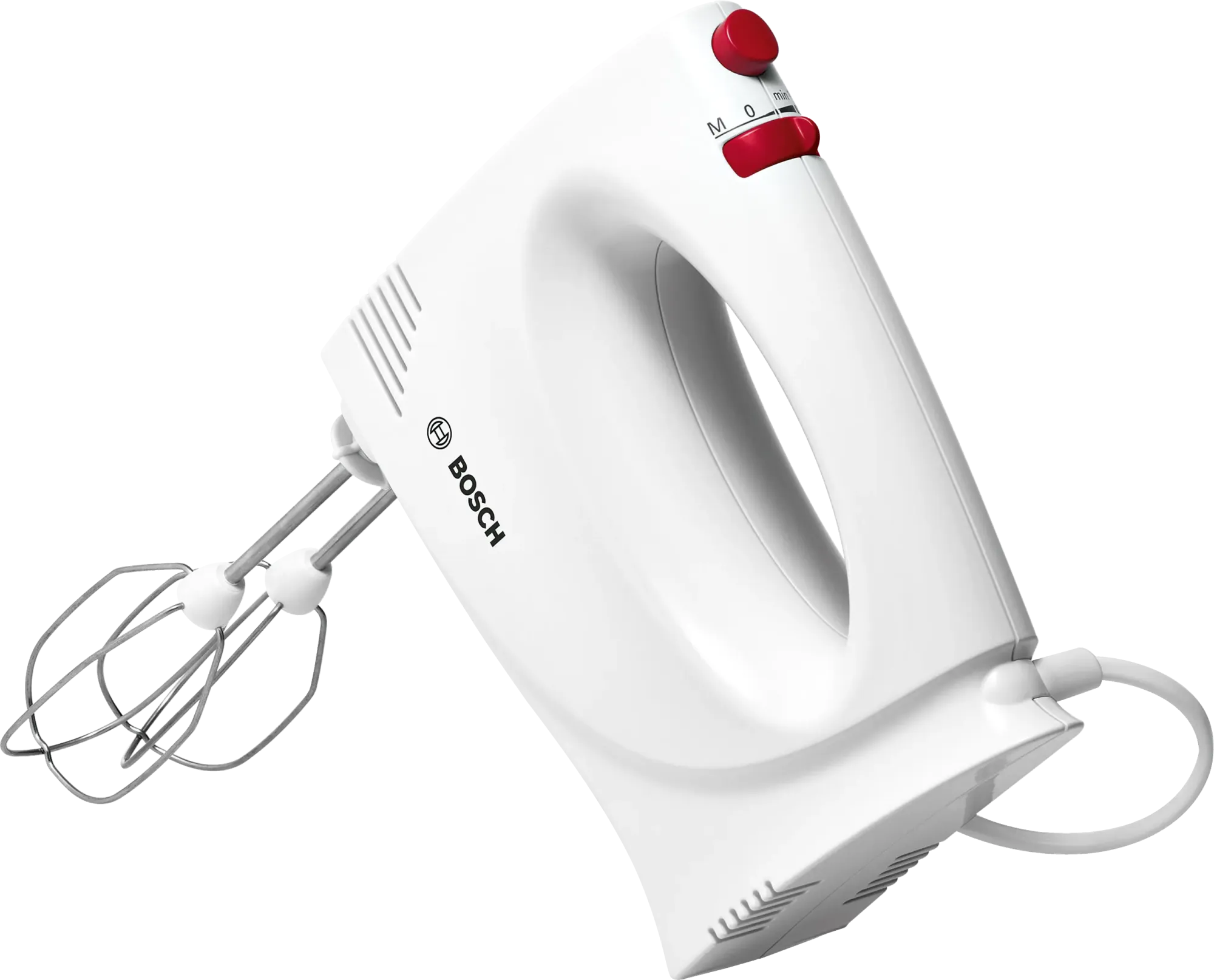
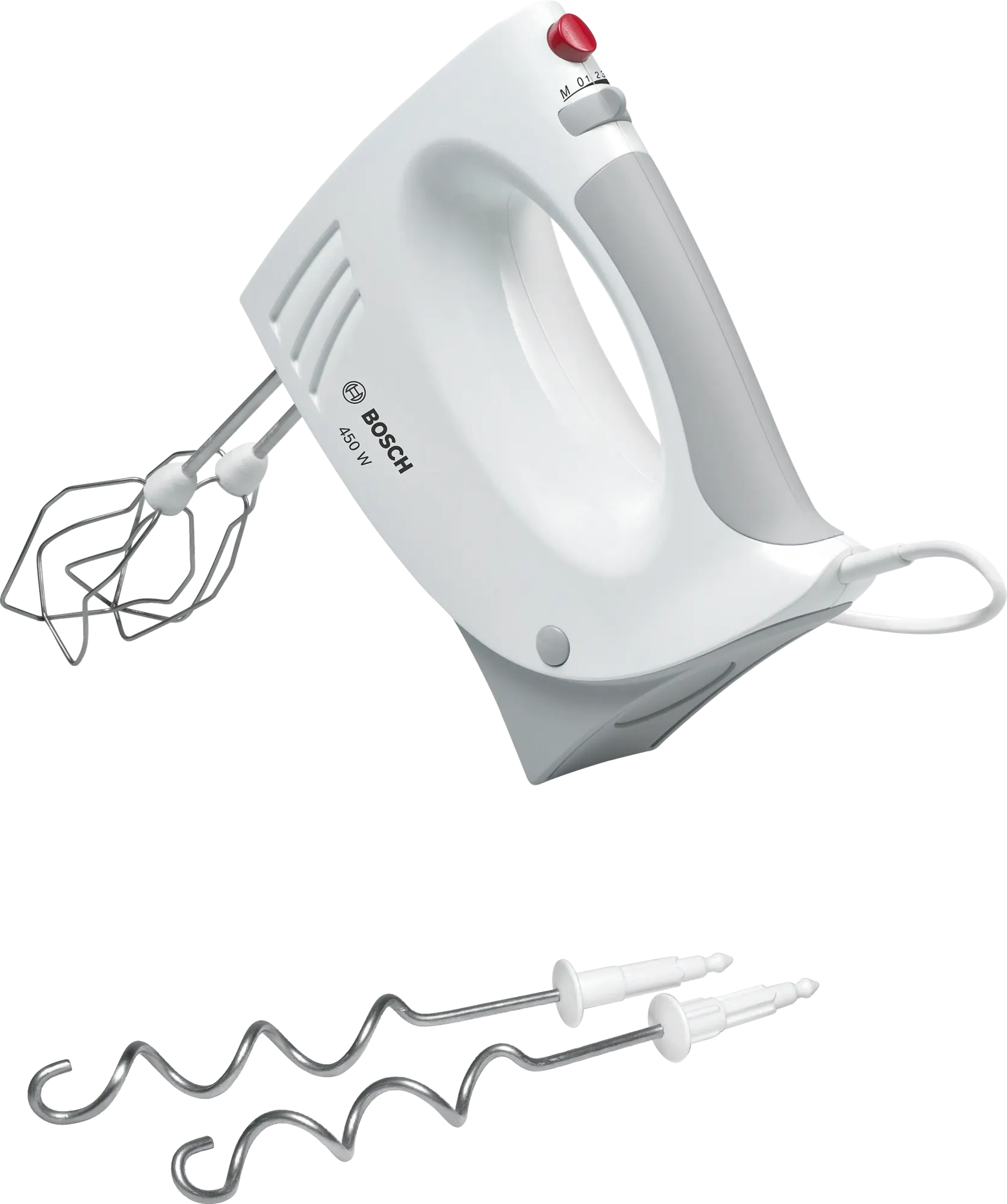
Mixers Bosch
Hand Mixer YourCollection 300 W White, Deep Red MFQP1000
Relevance for this use: 43/100
Our selection criteria for this use
A product only enters this list if it meets every one of these points. Its relevance is rated for this specific use, independently of its overall score in the category.
- The mixer offers at least eight distinct speeds.
- The appliance weighs under one kilogram to ease prolonged manual control.
- Beaters show fine wire spacing to incorporate air efficiently.
- Progressive start avoids splatter when incorporating powdered ingredients.
Other situations in this category
Mixer for occasional baking
To whip eggs or cream twice a month, a simple, affordable mixer does the job. Price and lightness matter most in this setup.
Read
Mixer for intensive baking
To knead bread dough or prepare large quantities each week, power, capacity and fine settings outweigh price in choosing the right mixer.
Read