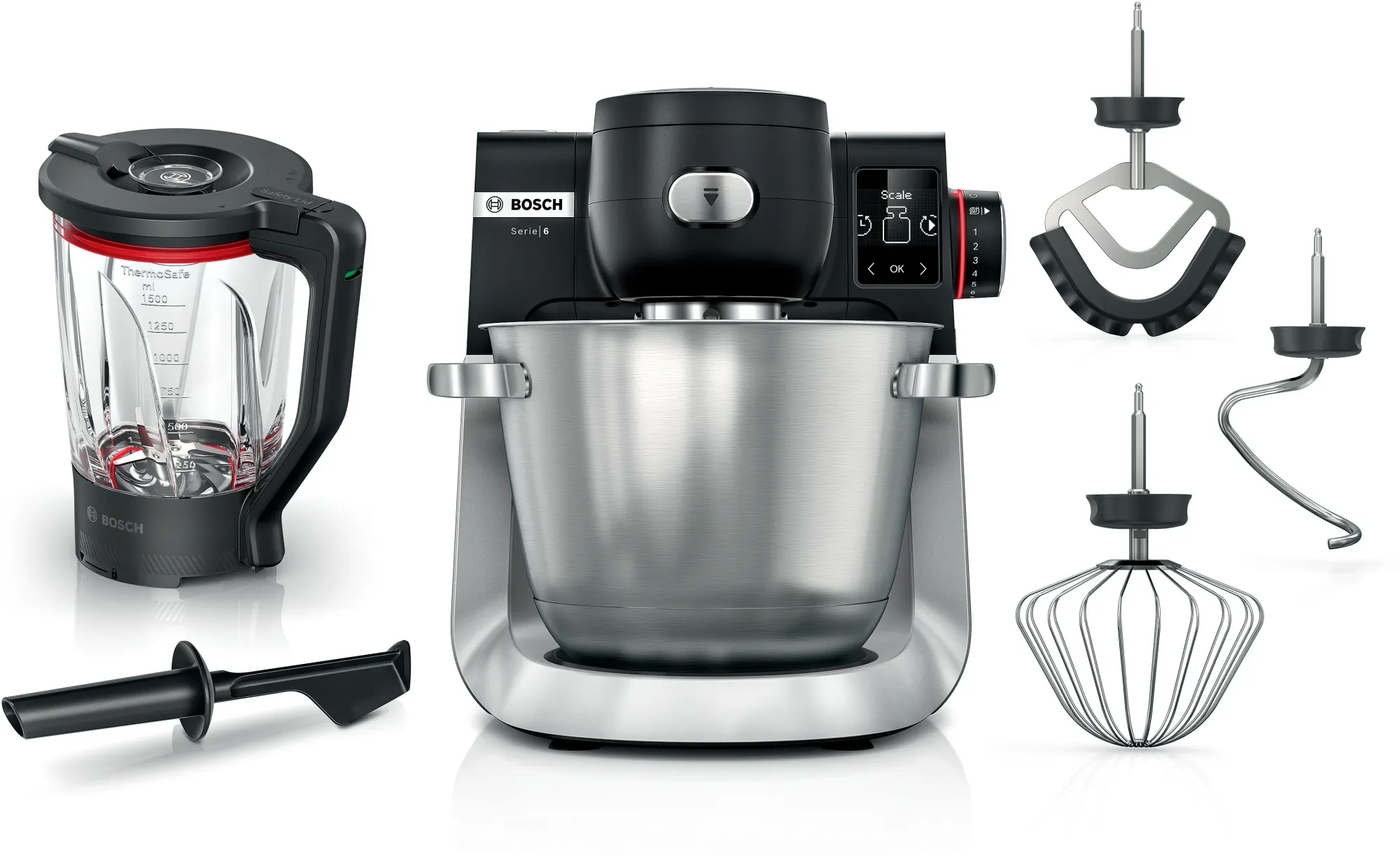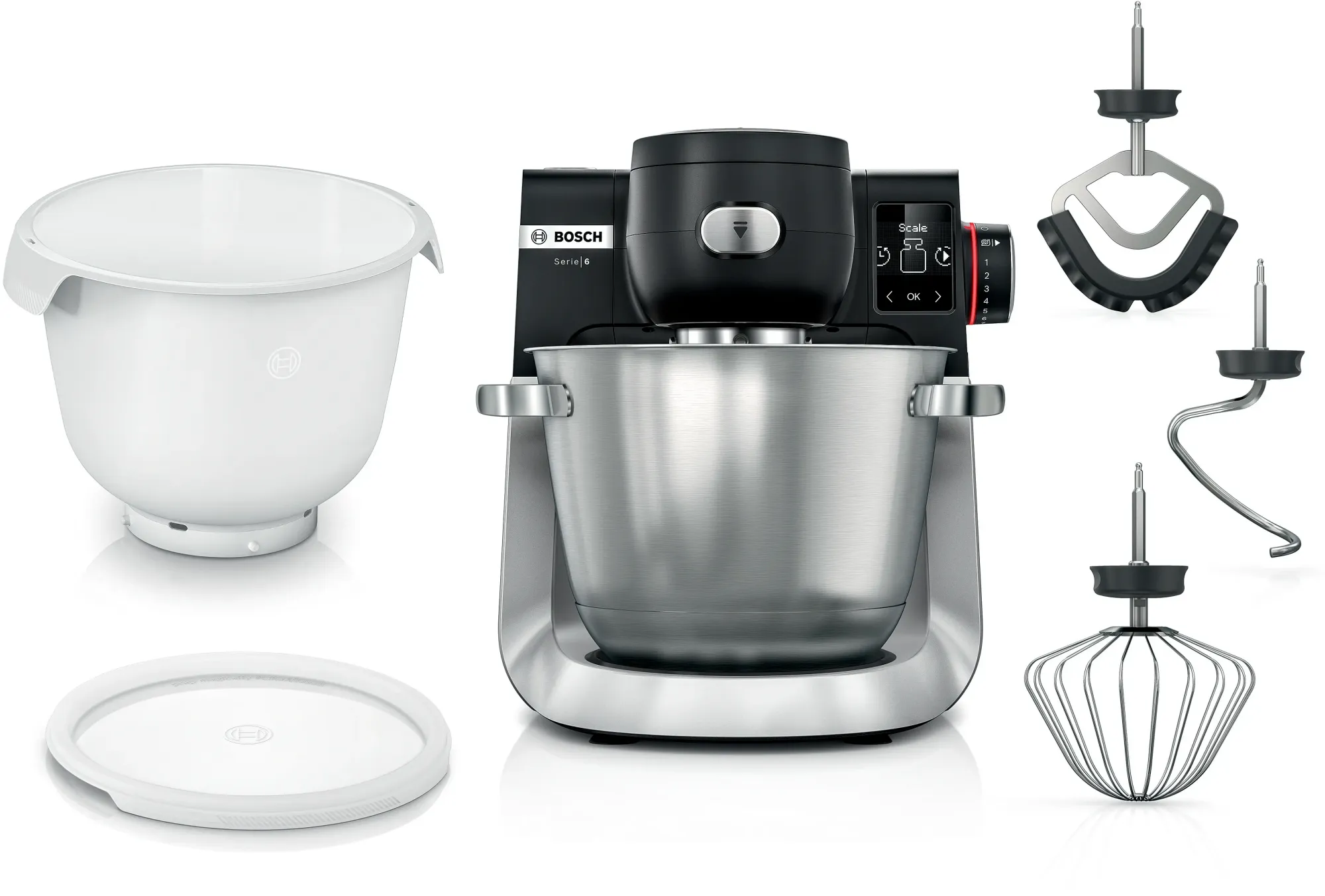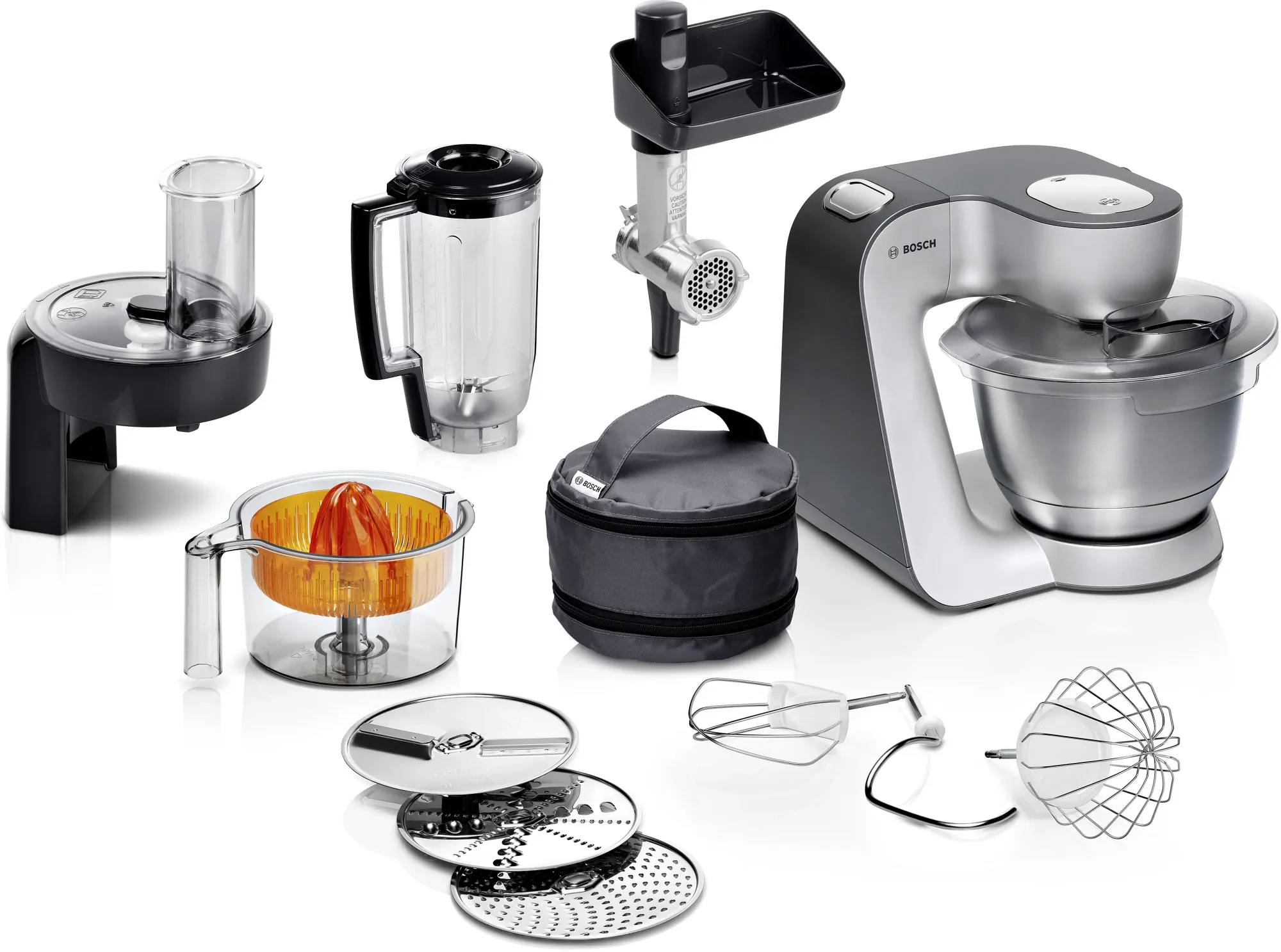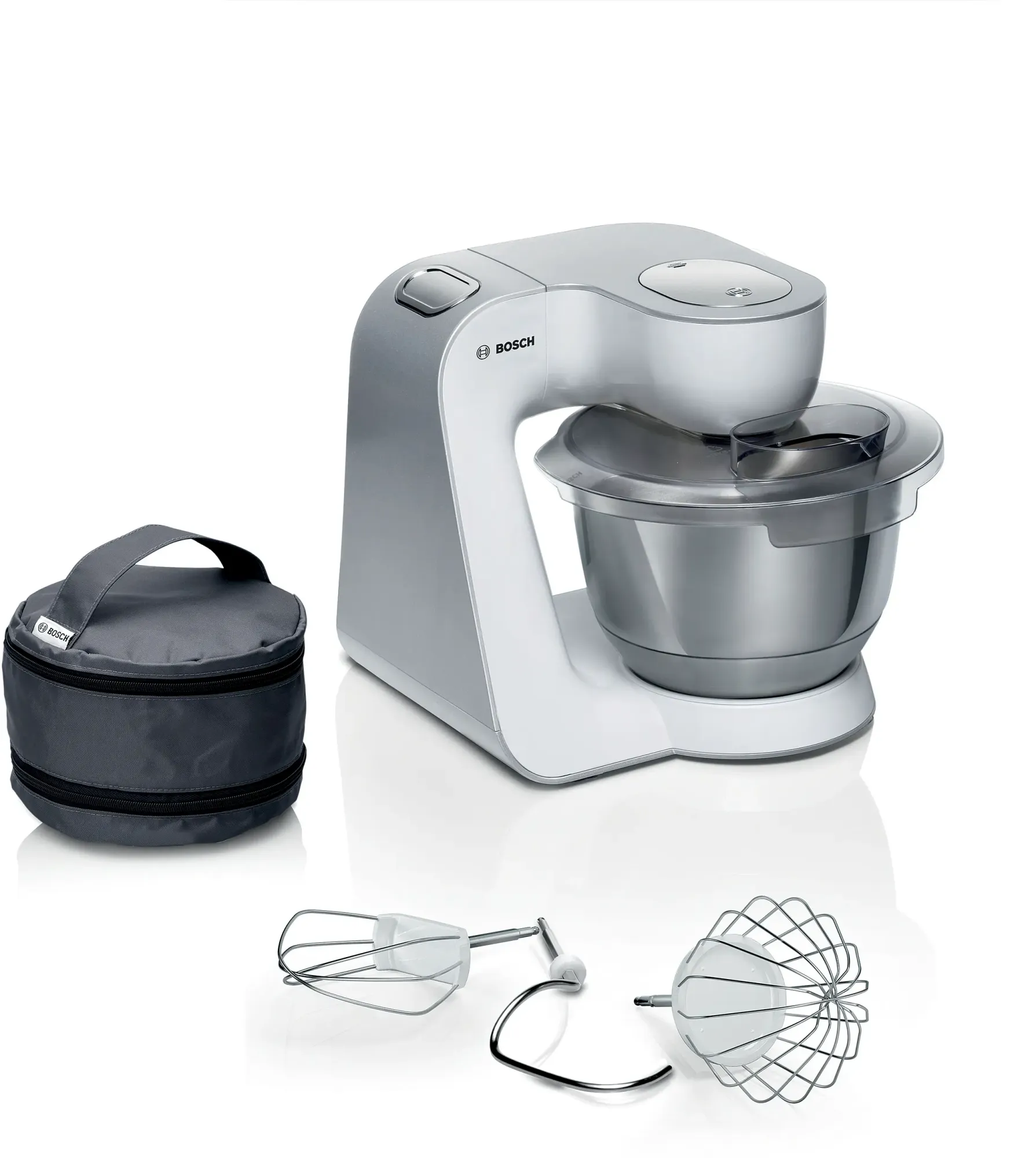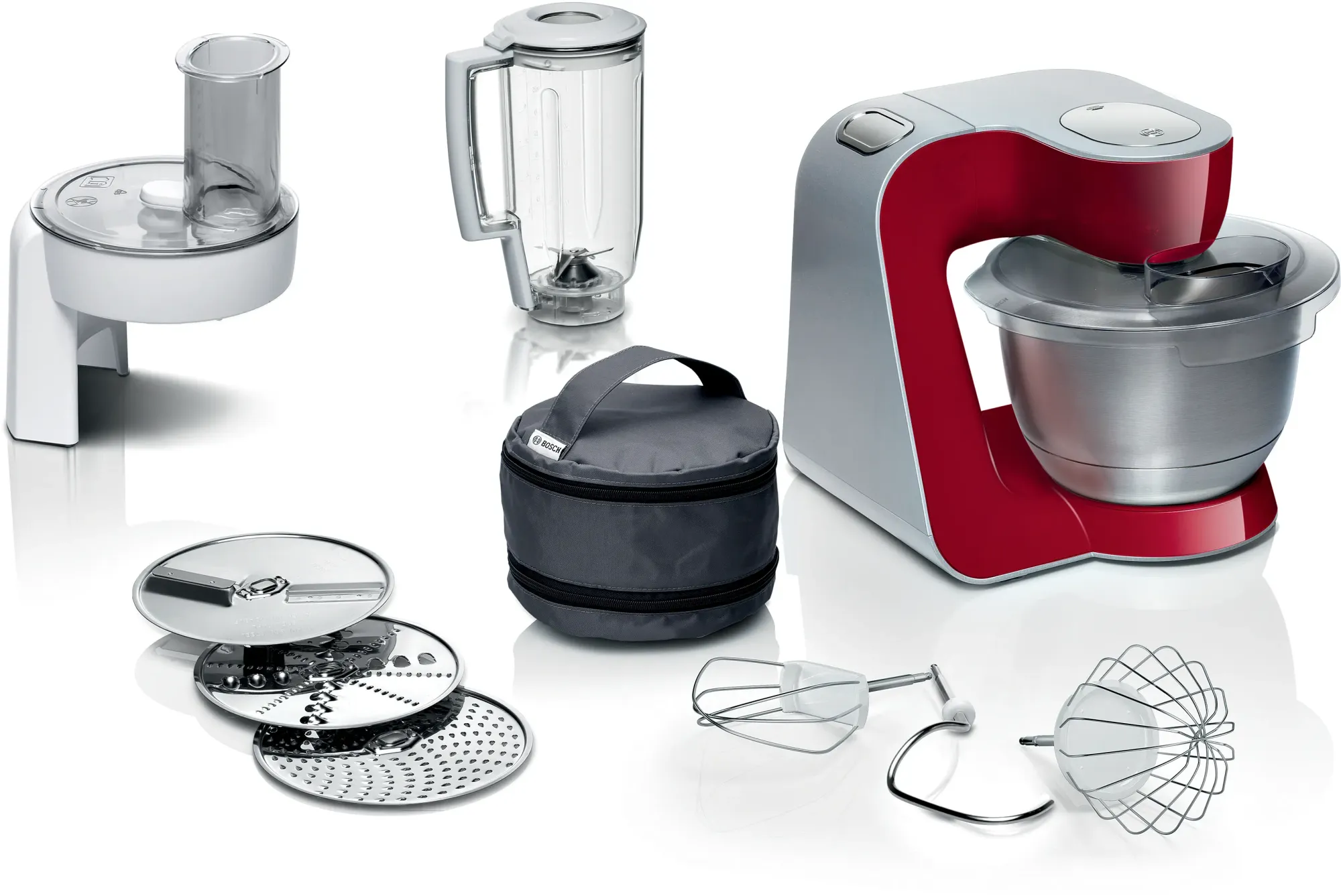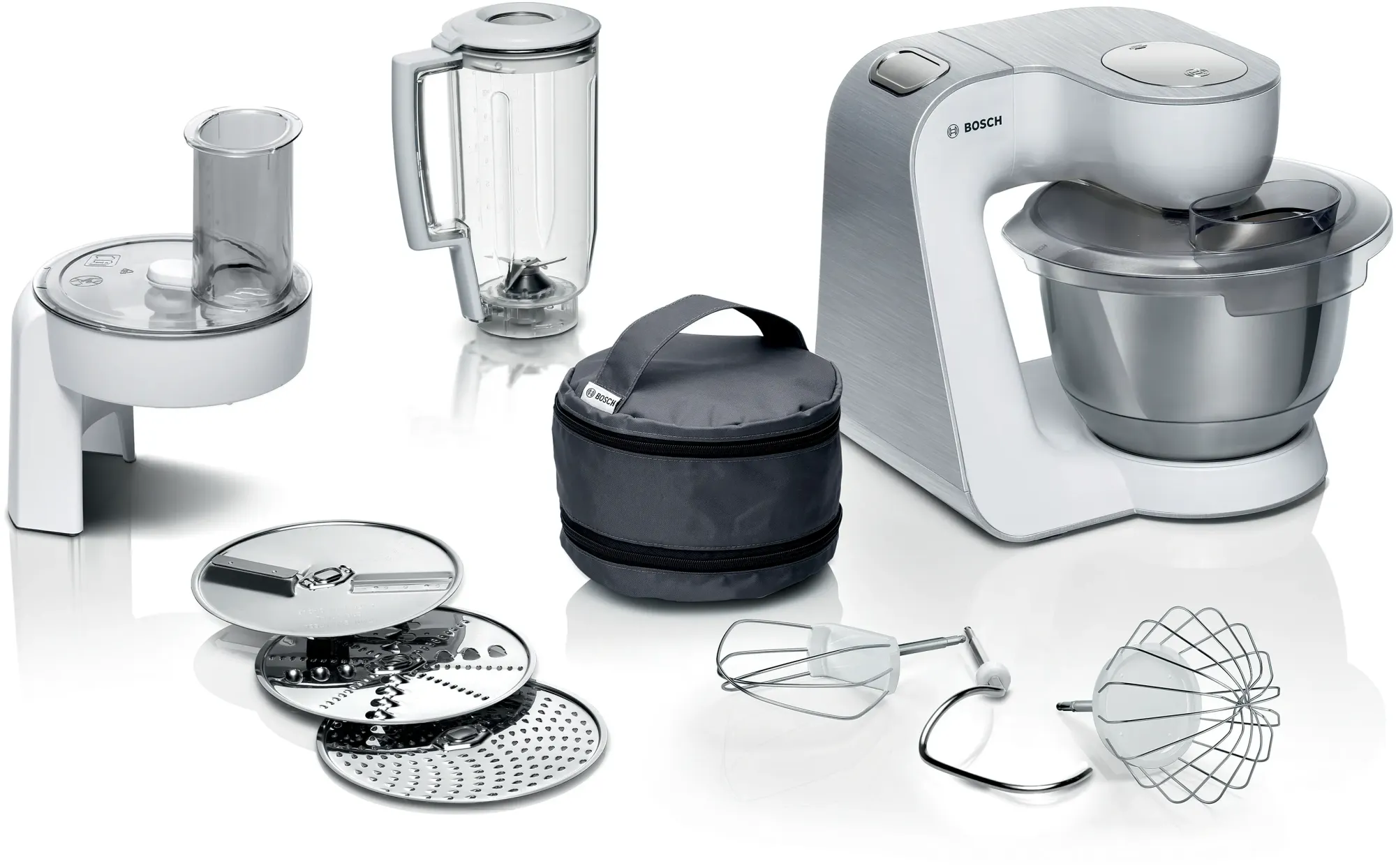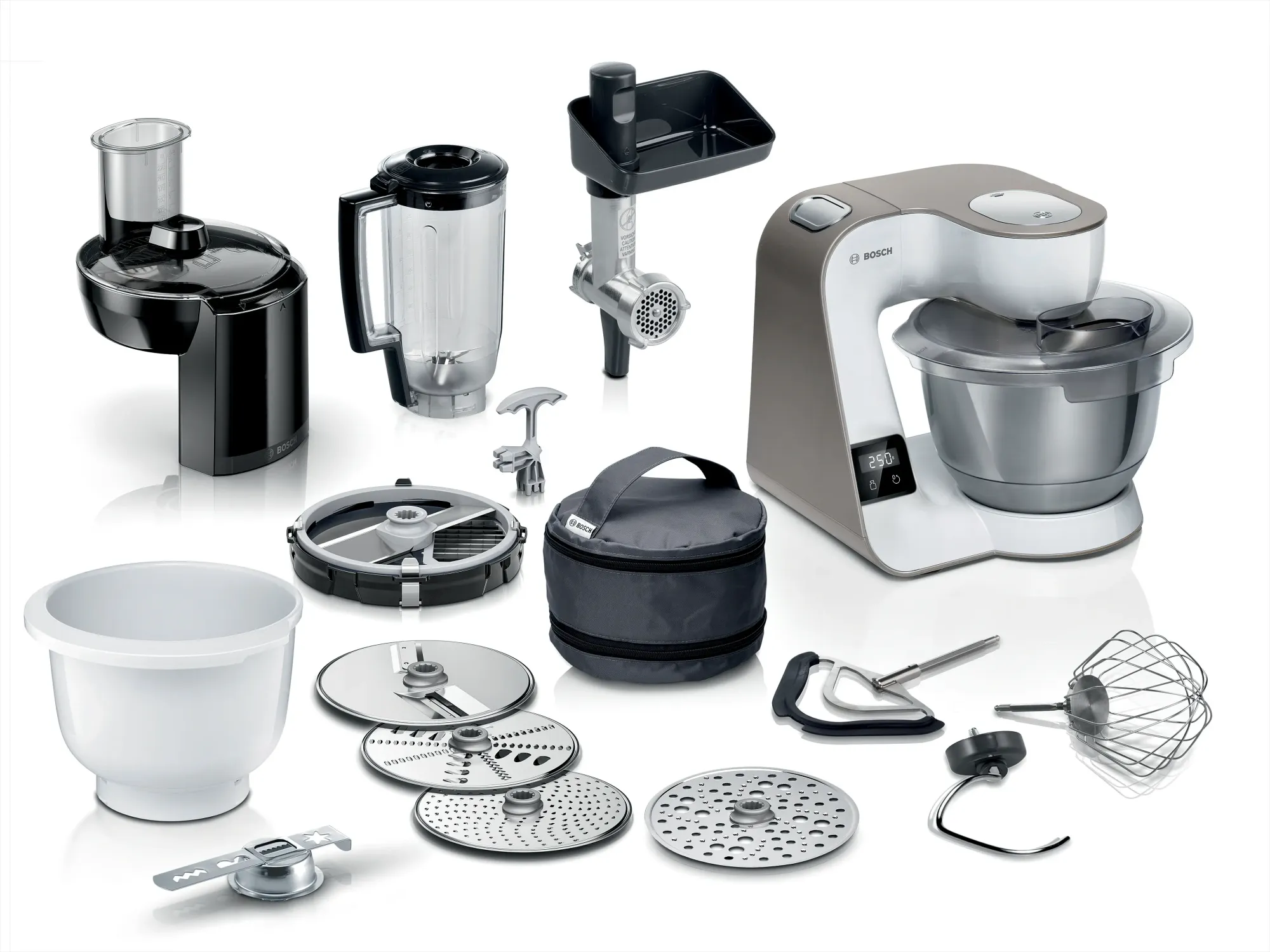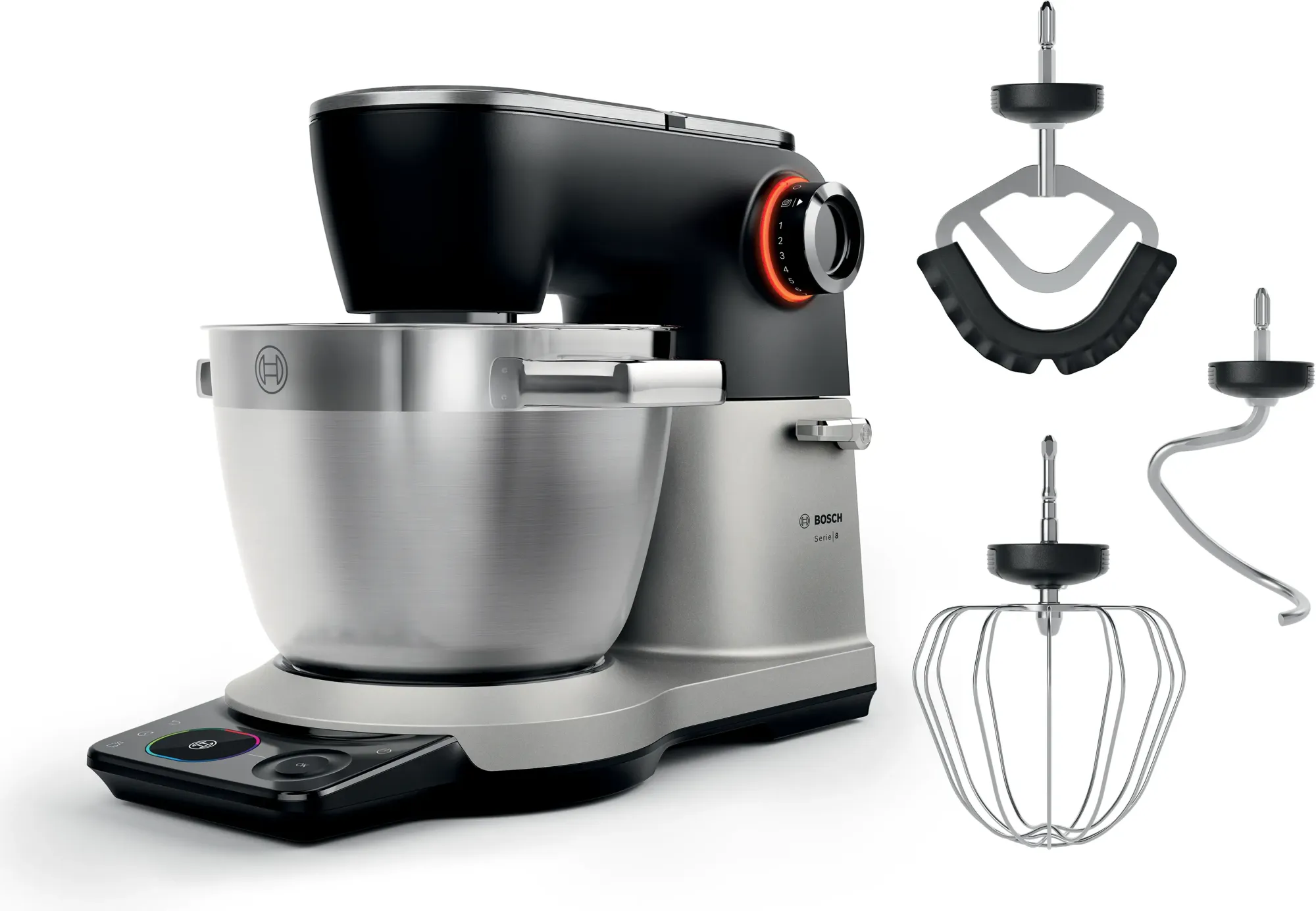
Food processors Bosch
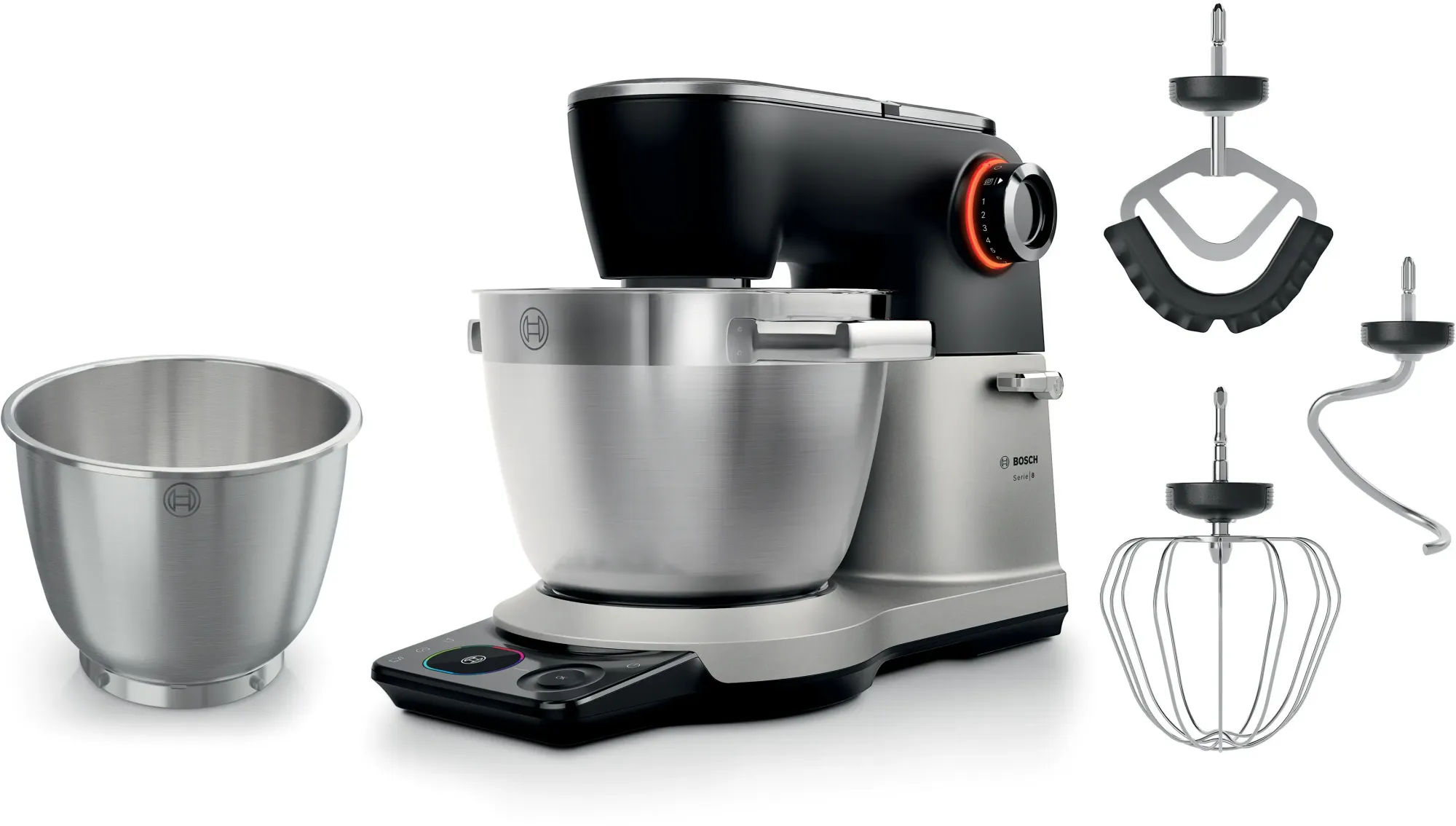
Serie 8 Food Processor with Scales 1800 W Silver, black MUMS8ZS00
Relevance for this use: 87/100
Starting out in baking means trying a range of recipes, from light batters to firmer doughs, without always knowing in advance which appliance will suit this learning phase over time. At this stage, an easy to handle processor matters more than an oversized model built for intensive use.
The quantity prepared is often modest while the right technique is still being learned, so raw power matters less than being able to fine tune the speed to avoid ruining a delicate mixture. Budget matters more here too, since this is a learning purchase rather than professional equipment.
Choosing with this situation in mind avoids paying for features that only become useful once the basics are mastered, letting the budget focus on what truly helps progress: finely graded speed settings.
The same criteria as on the category page, but not the same weight: here is what goes up and what goes down.
Power matters less for this choice: beginner baking mixtures are rarely very dense. A level close to the median recorded on the market is largely enough, with no need to aim for the top of the scale. A more modest motor does not prevent success with common batters, as long as the speed is well set.
Capacity also matters less, since quantities prepared during this learning phase are generally limited. A bowl close to the lowest recorded reference can work well, the main point being not to feel cramped during early attempts. A large bowl brings no learning advantage here.
The number of speeds grows in importance: the more steps there are between the median reference and the highest one recorded, the easier it is to finely adjust speed for delicate batters or fragile mixtures, without a jolt that ruins the preparation. This is the criterion that helps progress the most without spoiling a recipe.
Price becomes a key criterion in this learning situation: it makes sense to favour an accessible model rather than investing upfront in costly equipment whose future use remains uncertain. A contained budget also leaves room to switch appliances once needs become clearer.
The features pushed in this category that make no difference in this context.
High power
Mixtures worked on early in the learning process put little strain on the motor: a very powerful model brings no immediate benefit and often adds to the price.
A very large bowl
Preparing small quantities for practice does not require a large capacity: an oversized bowl can even make mixing small volumes harder.
Highly specialised accessories
Adding many advanced functions does not help with learning the basics: a simple, easy to understand appliance is more useful than a model with complex settings.
A motor built for intensive use
A motor designed for daily, heavy preparations is of no use before the basic techniques are mastered, and its cost is not yet justified.
Orders of magnitude, not displayed prices: a price only appears on Kalyneo once it has been collected from a merchant, with its collection date.
Under €80
Under €80: simple processors are available, with few speeds but enough to practise basic preparations.
€80 to €200
€80 to €200: this range gives access to more speed steps, useful for progressing to more delicate batters.
Over €200
Over €200: this budget often exceeds learning needs, worth considering only if a more intensive use is already planned.
Ranked by relevance for this specific case, not by their overall score.
Food processors Bosch
Relevance for this use: 87/100
Food processors Bosch
Relevance for this use: 87/100
Food processors Bosch
Relevance for this use: 87/100
Food processors Bosch
Relevance for this use: 87/100
Food processors Bosch
Relevance for this use: 87/100
Food processors Bosch
Relevance for this use: 87/100
Food processors Bosch
Relevance for this use: 87/100
Food processors Bosch
Relevance for this use: 78/100
Food processors Bosch
Relevance for this use: 78/100
Food processors Bosch
Relevance for this use: 78/100
Food processors Bosch
Relevance for this use: 78/100
Food processors Bosch
Relevance for this use: 78/100
A product only enters this list if it meets every one of these points. Its relevance is rated for this specific use, independently of its overall score in the category.