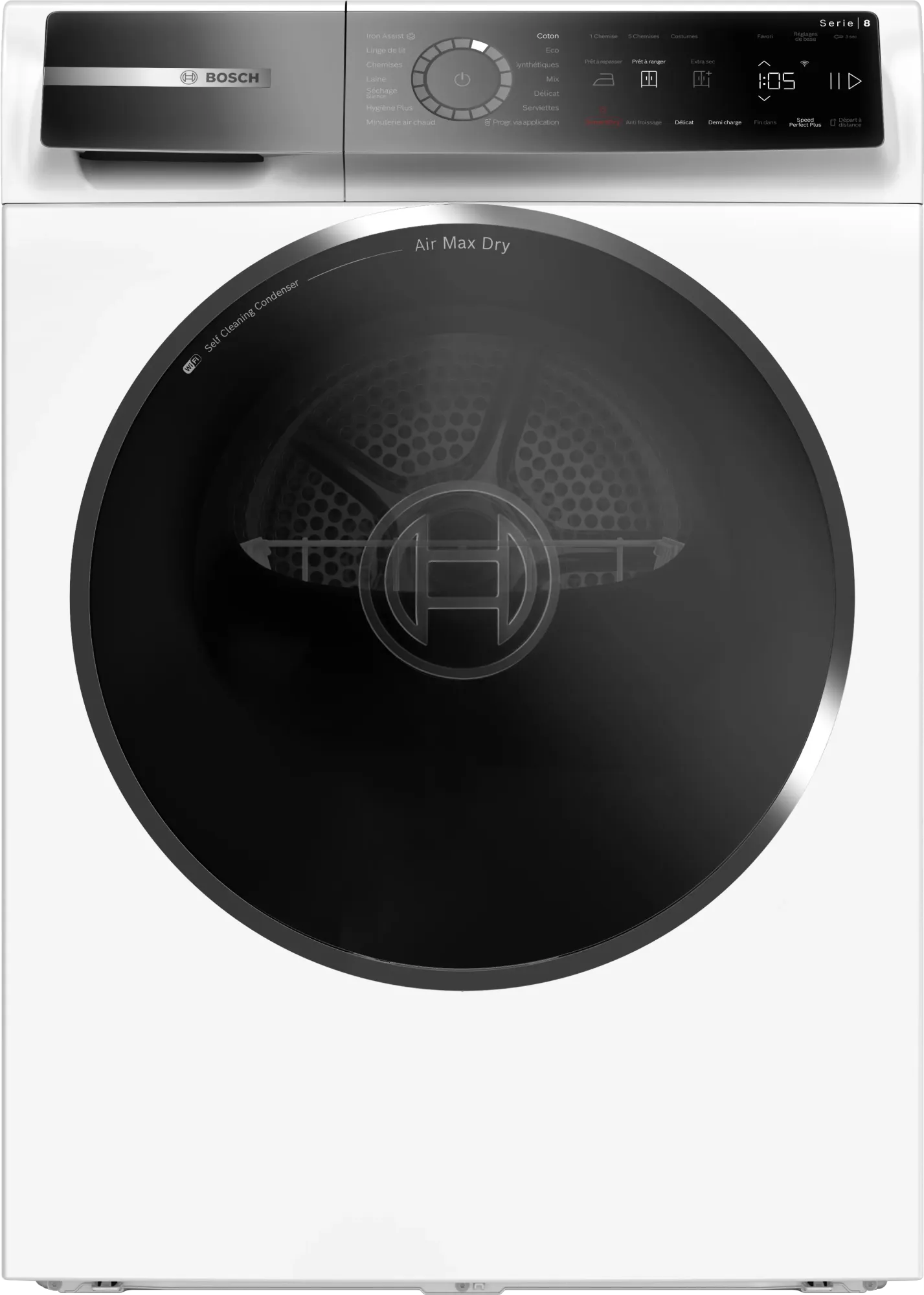
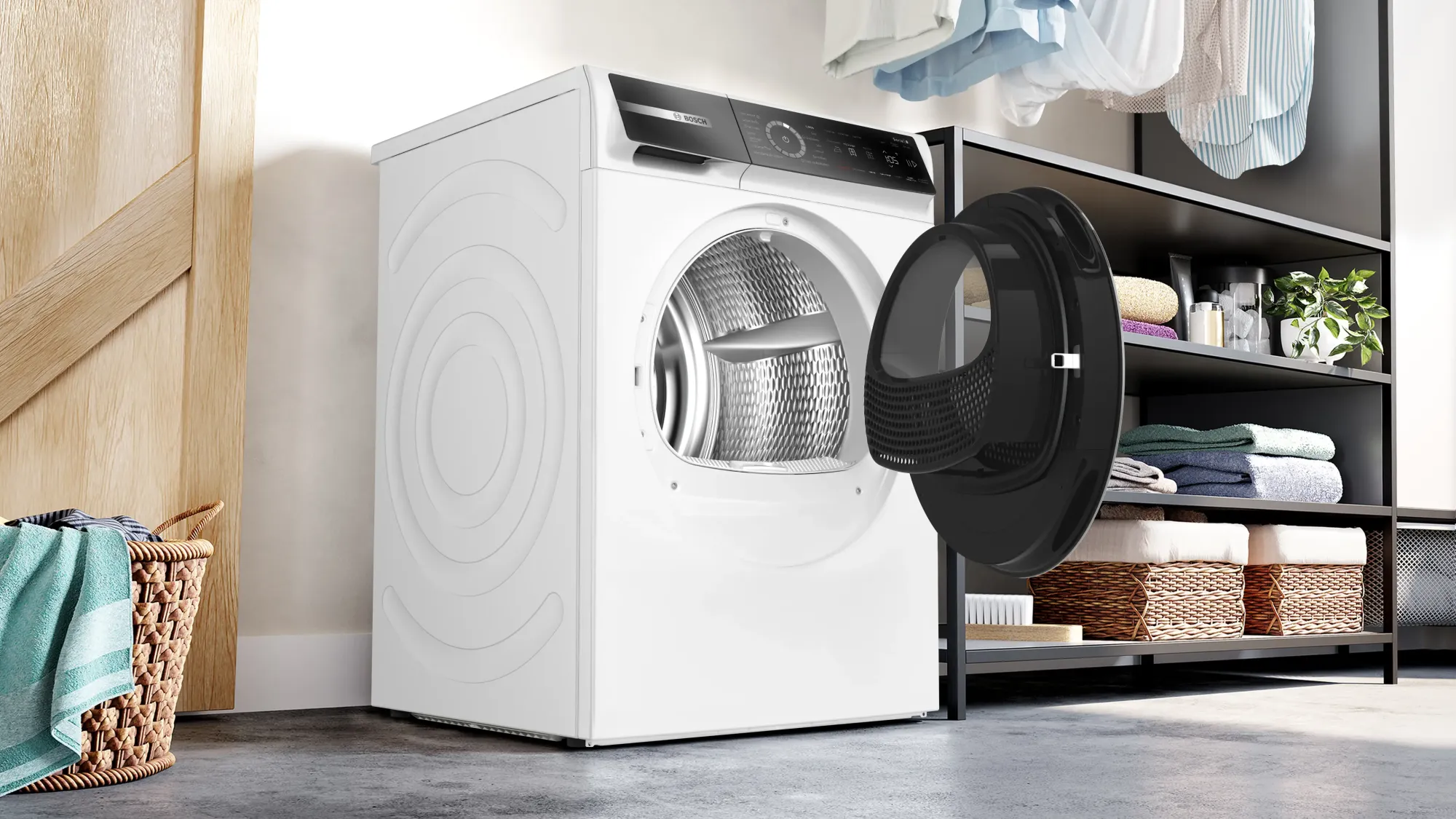
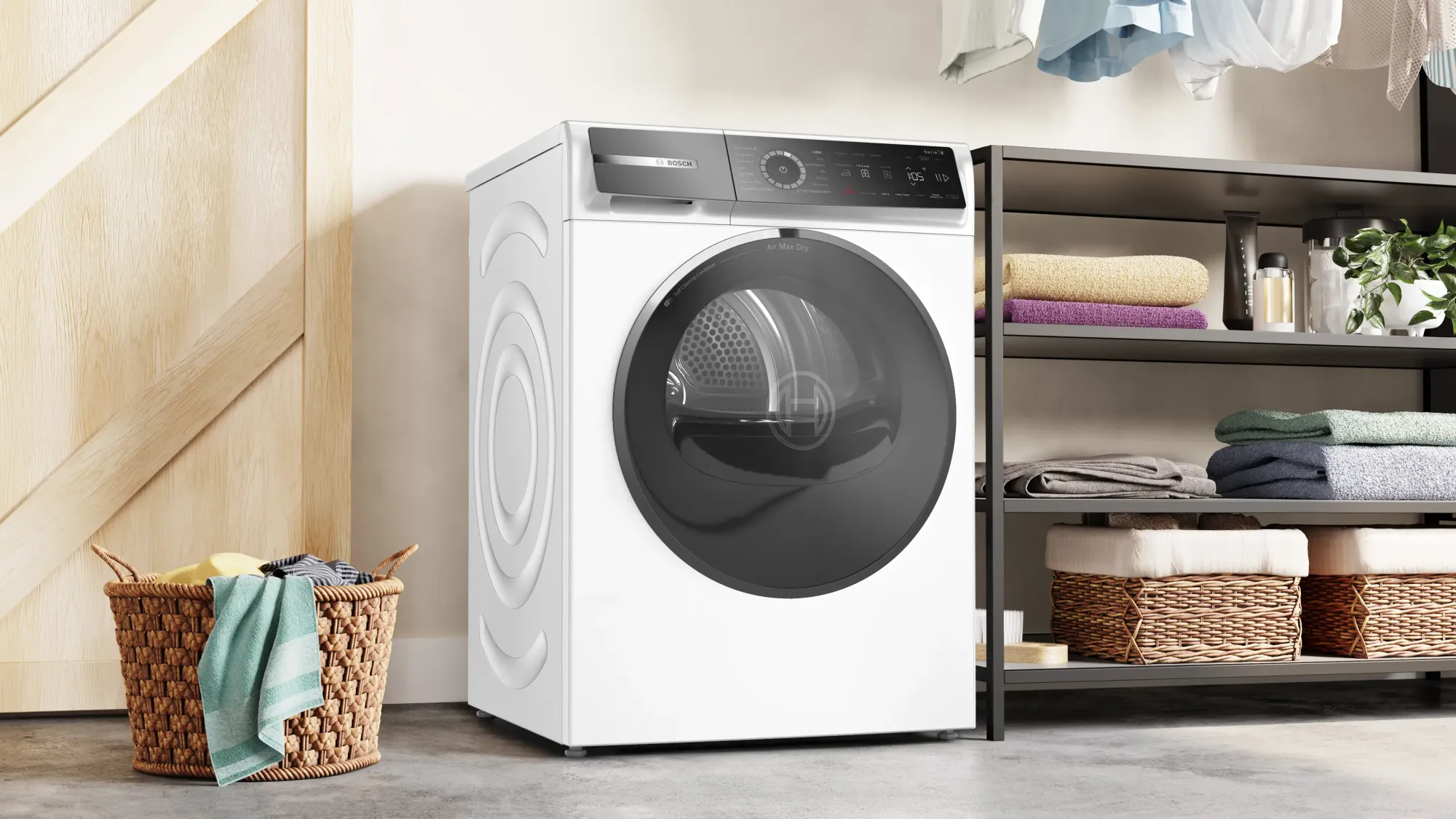
Tumble dryers Bosch
Buying guide: how to choose a tumble dryer
A tumble dryer is chosen mainly on capacity, noise level and energy use over time. These factors matter more than the purchase price alone, since they show up every week in the home and on the electricity bill.
What to check
Drum capacity
This criterion shows the weight of laundry the drum can dry in a single cycle. The higher it is, the fewer batches a household needs for a full laundry load. The site’s score compares the stated weight against market benchmarks: a dryer close to the lowest benchmark suits occasional use or a small household, while one close to the highest benchmark handles large, frequent loads without strain. Check that capacity matches your washing machine, otherwise one of the two appliances becomes oversized for no benefit.
Market median: 9 kg
Energy consumption
This criterion assesses the energy used to dry laundry over a series of cycles. The lower it is, the less the appliance weighs on the electricity bill over the years, which matters more than a price gap at purchase for frequent use. The site’s score places the appliance between the lowest and highest benchmarks recorded on the market: a model near the lower end only makes sense for rare use, while one near the higher end keeps costs down over the long run.
Market median: 97 kWh
Cycle duration
This criterion measures how long a standard drying cycle takes. The shorter it is, the sooner laundry is ready, which matters for households running frequent loads or short on storage space between cycles. The site’s score compares the recorded duration to market benchmarks: a time near the longest benchmark suits those in no hurry, while a time near the shortest lets several cycles fit into one day without taking up the whole evening.
Market median: 205.5 min
Noise level
This criterion measures the sound level during drying. The lower it is, the less noticeable the appliance becomes, which matters especially when it sits near a living room or bedroom. The site’s score places the recorded level between the lowest and highest benchmarks on the market: an appliance near the higher end suits daytime use in an isolated space, while one near the lowest benchmark also works well in the evening or close to living areas.
Market median: 64 dB
Installation and ventilation
A tumble dryer needs a stable spot, a suitable power outlet and, depending on the technology, either an exhaust route or easy access to empty a condensation tank. Before buying, measure the available space and check for a nearby socket. Also consider the room needed to open the drum door and the height required if the dryer sits on top of a washing machine. A poor location can hinder daily use even if the appliance scores well on every other criterion.
Benchmarks based on 30 recent market listings, collected on 22 September 2026.
What you get for each budget
Under 350 €
At this price level, capacity often stays close to the median benchmark, so the trade-off usually lies between noise, speed and energy use depending on the household’s main need.
350 to 600 €
This range opens the door to appliances that combine several strong results at once, particularly on energy consumption and noise level.
Over 600 €
Above this range, models more easily gather good scores across every criterion at once: capacity, quietness, speed and energy consumption.
Frequent mistakes
Picking a capacity without matching it to the washing machine, which creates a bottleneck between the two appliances.
Overlooking noise level for an appliance placed near a living space or used in the evening.
Focusing on the purchase price while ignoring energy consumption, which adds up with every cycle over several years.
Forgetting to check the available space and exhaust type before settling on a model.
Comparing appliances without factoring in cycle duration, which directly changes how laundry days are organised.
Models in this category
Best rated first, among those our merchants offer.
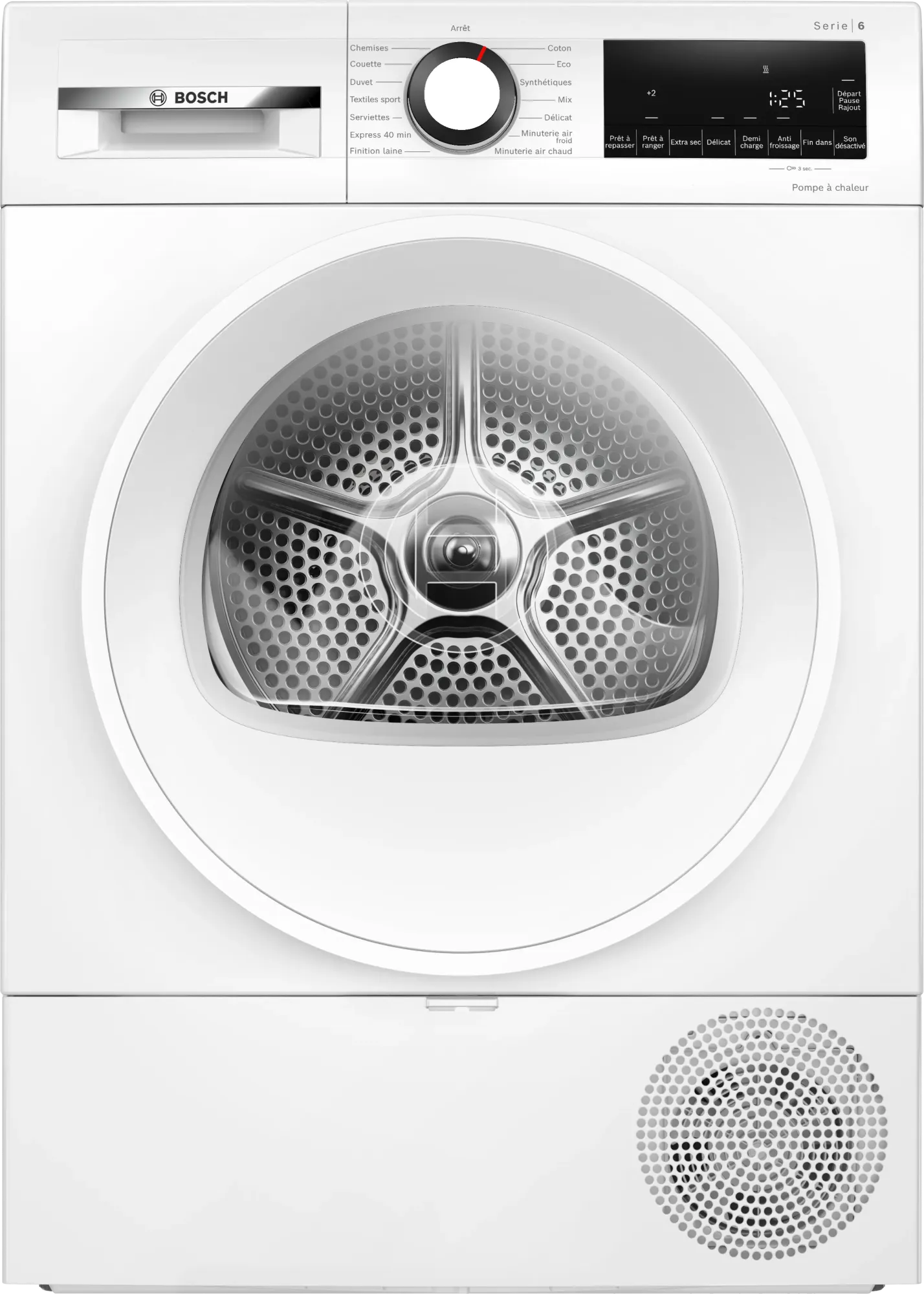
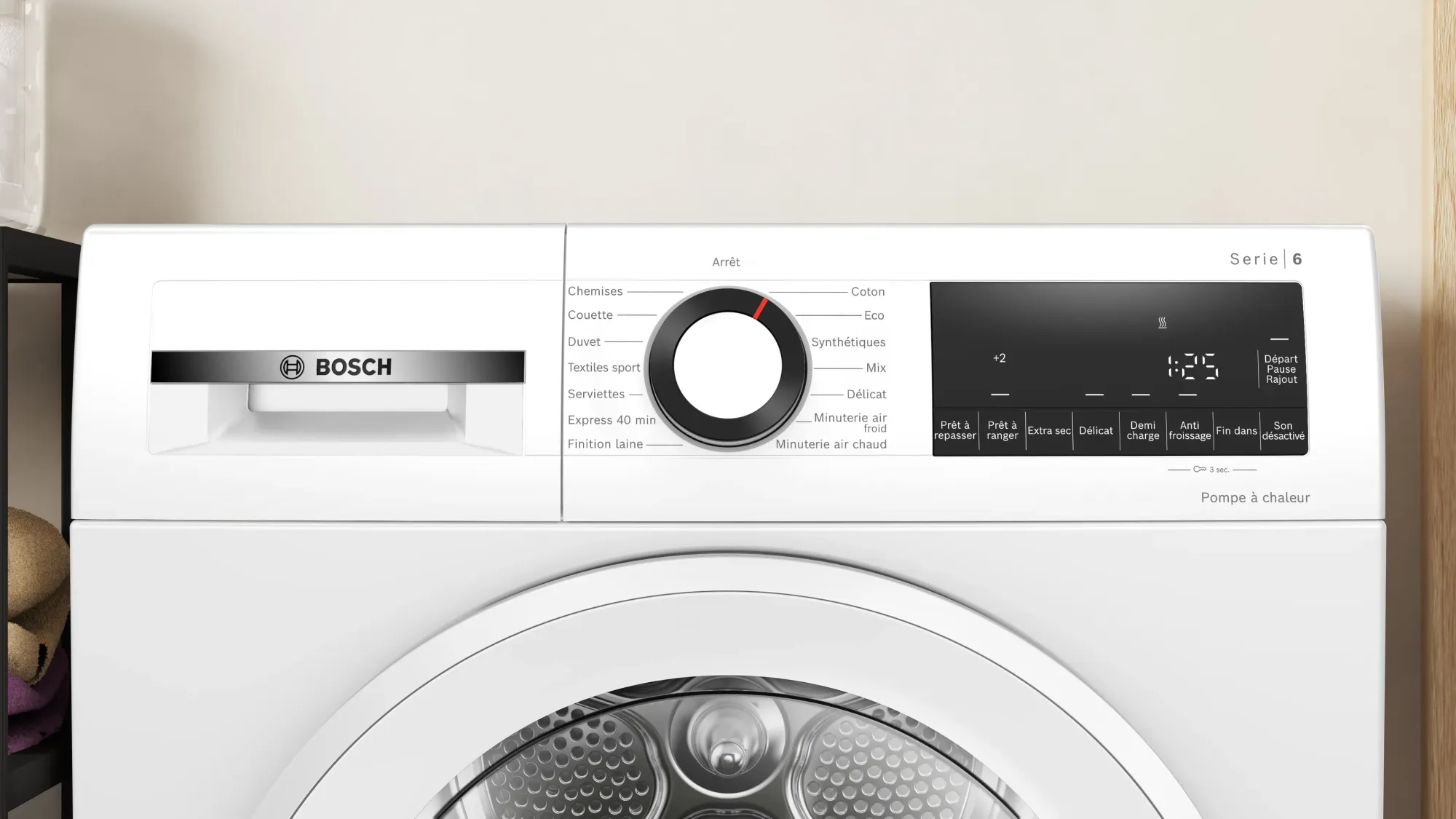
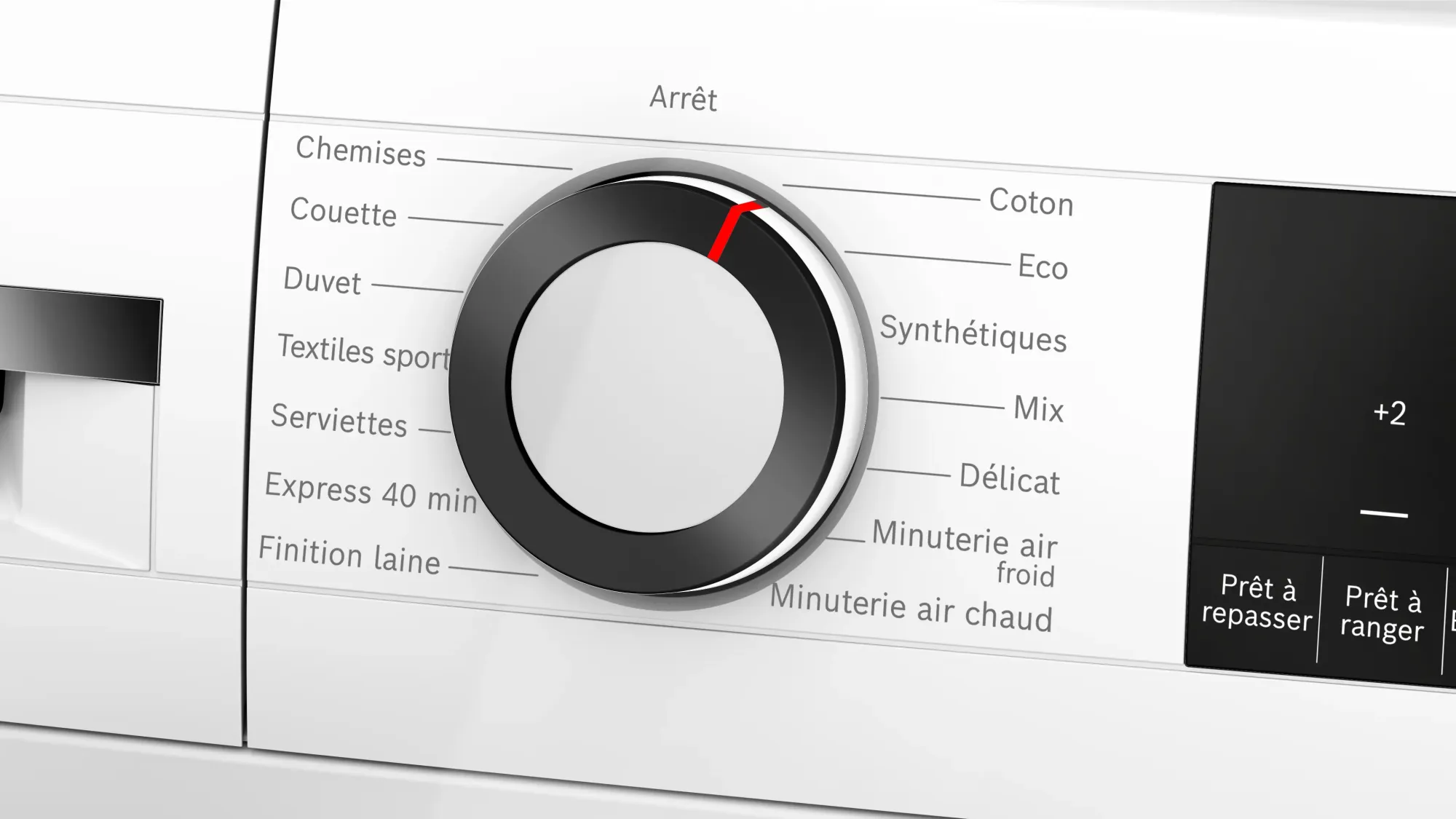
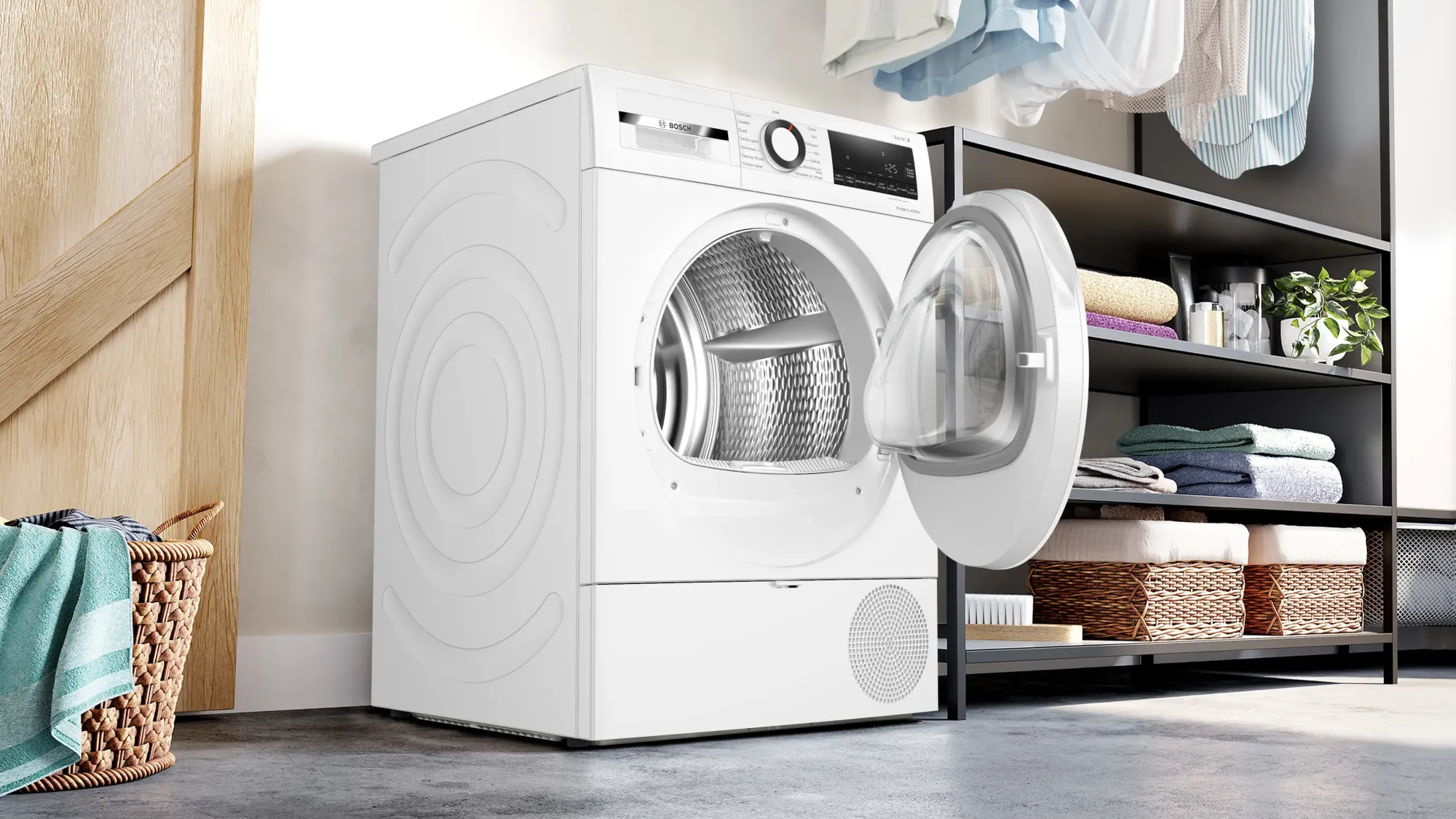
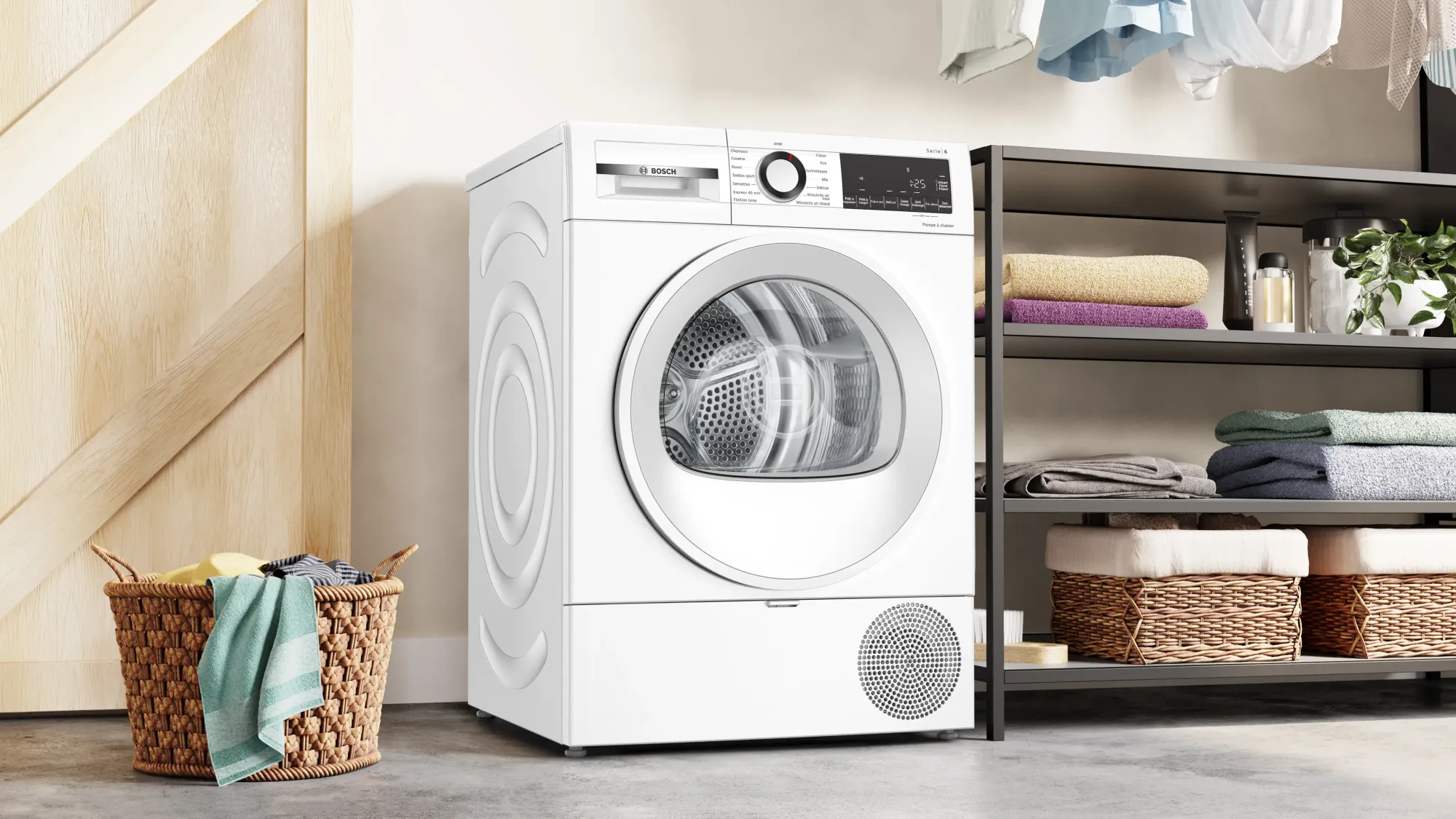
Tumble dryers Bosch
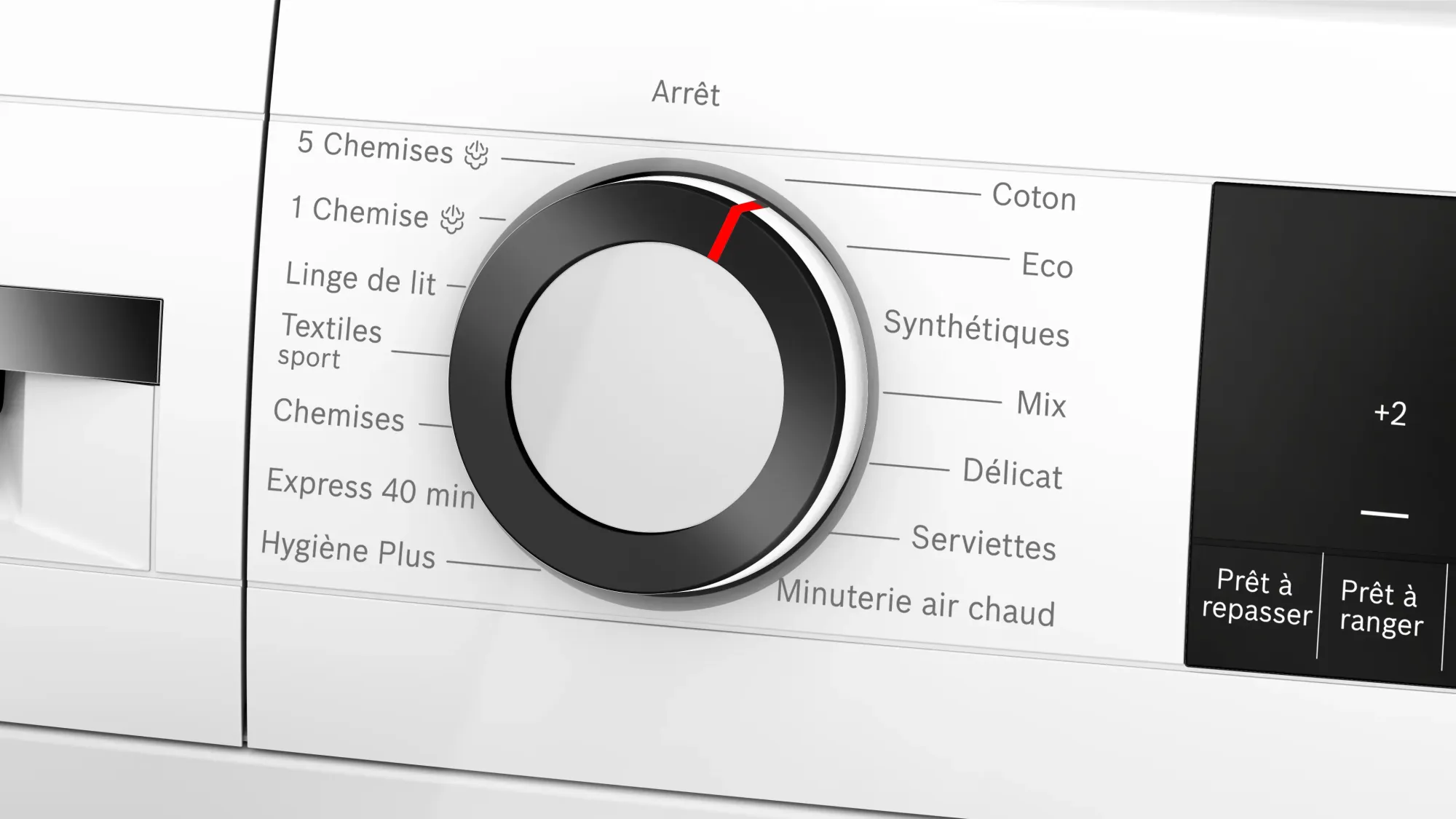
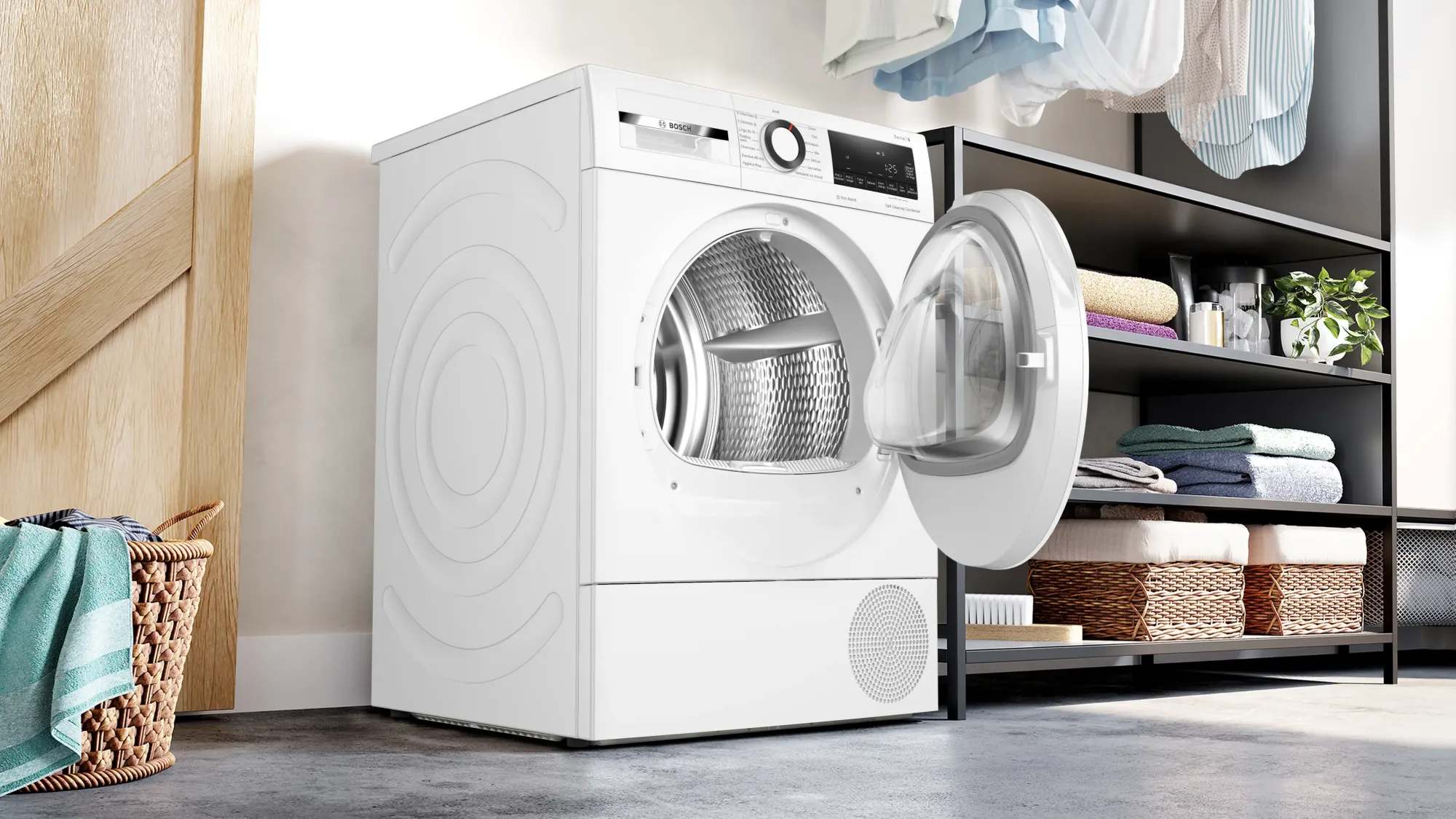
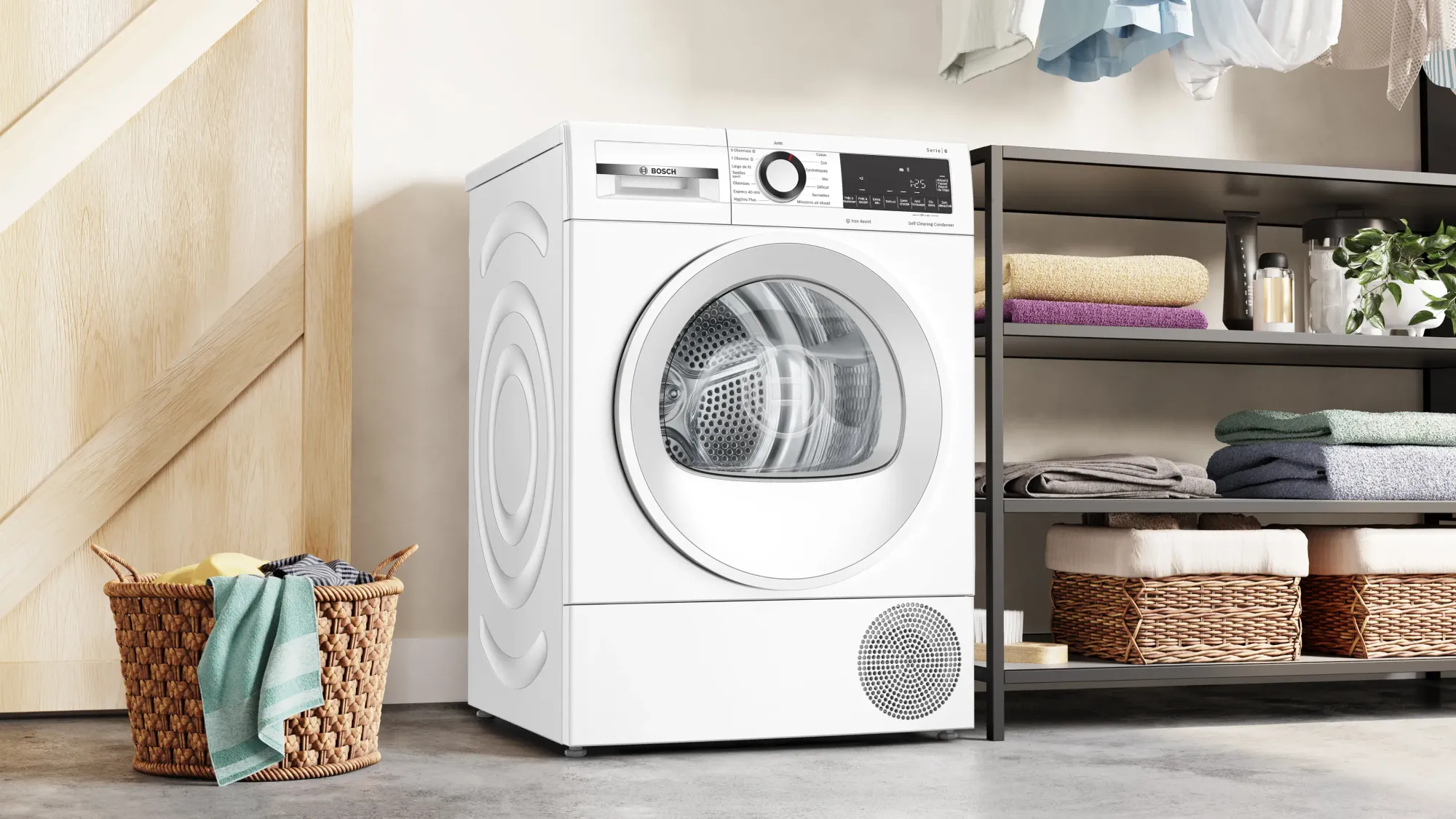
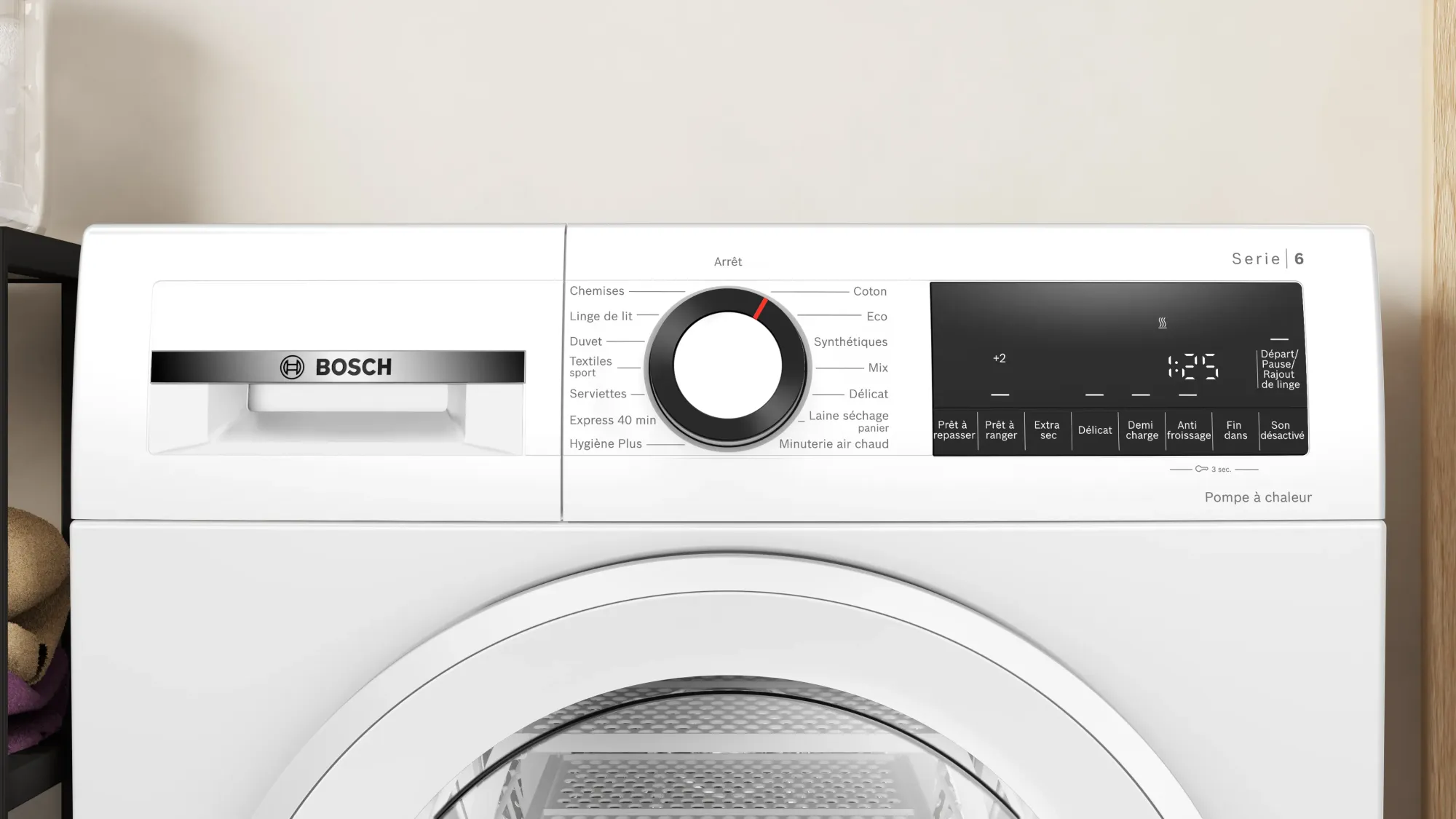
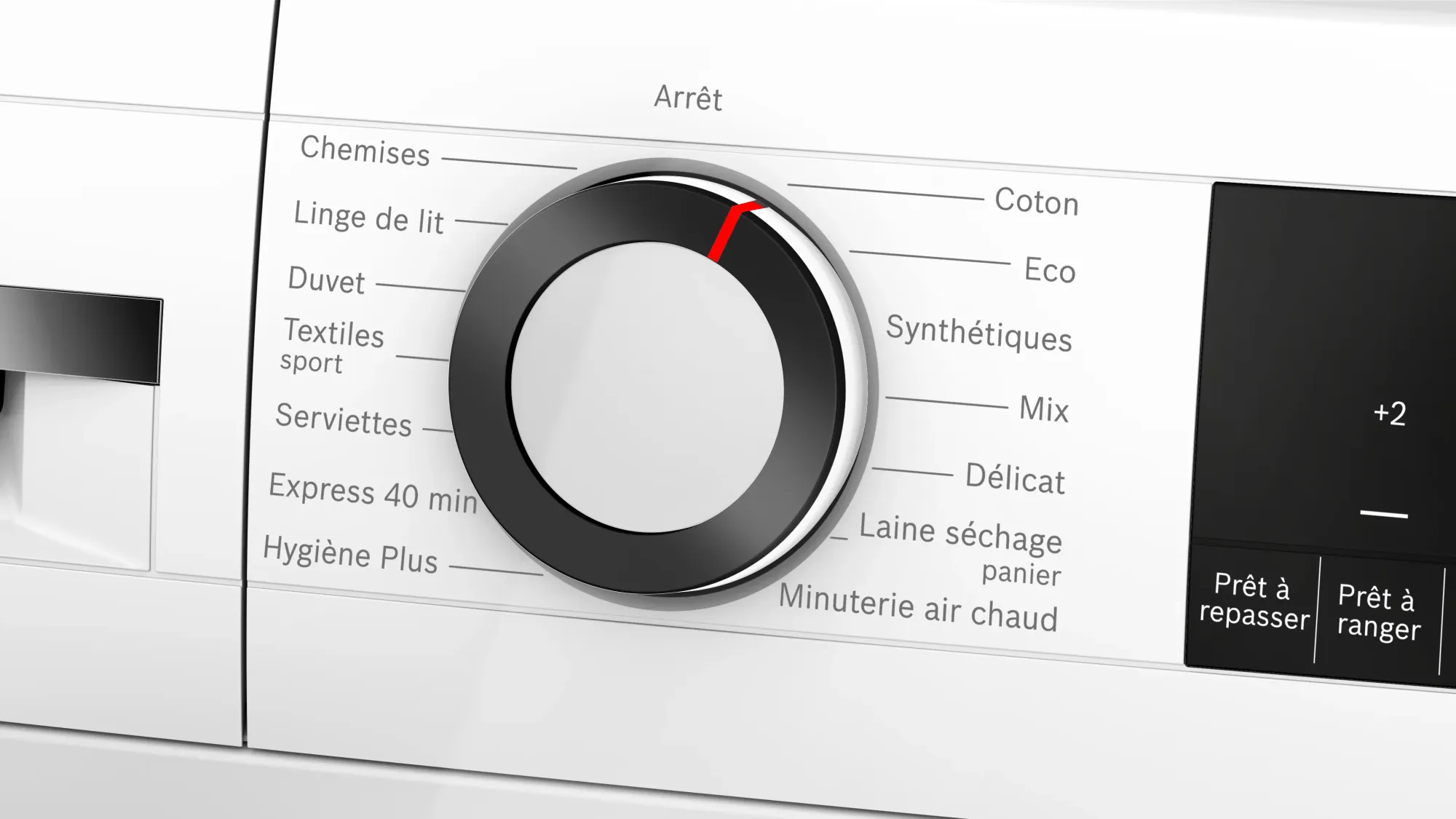
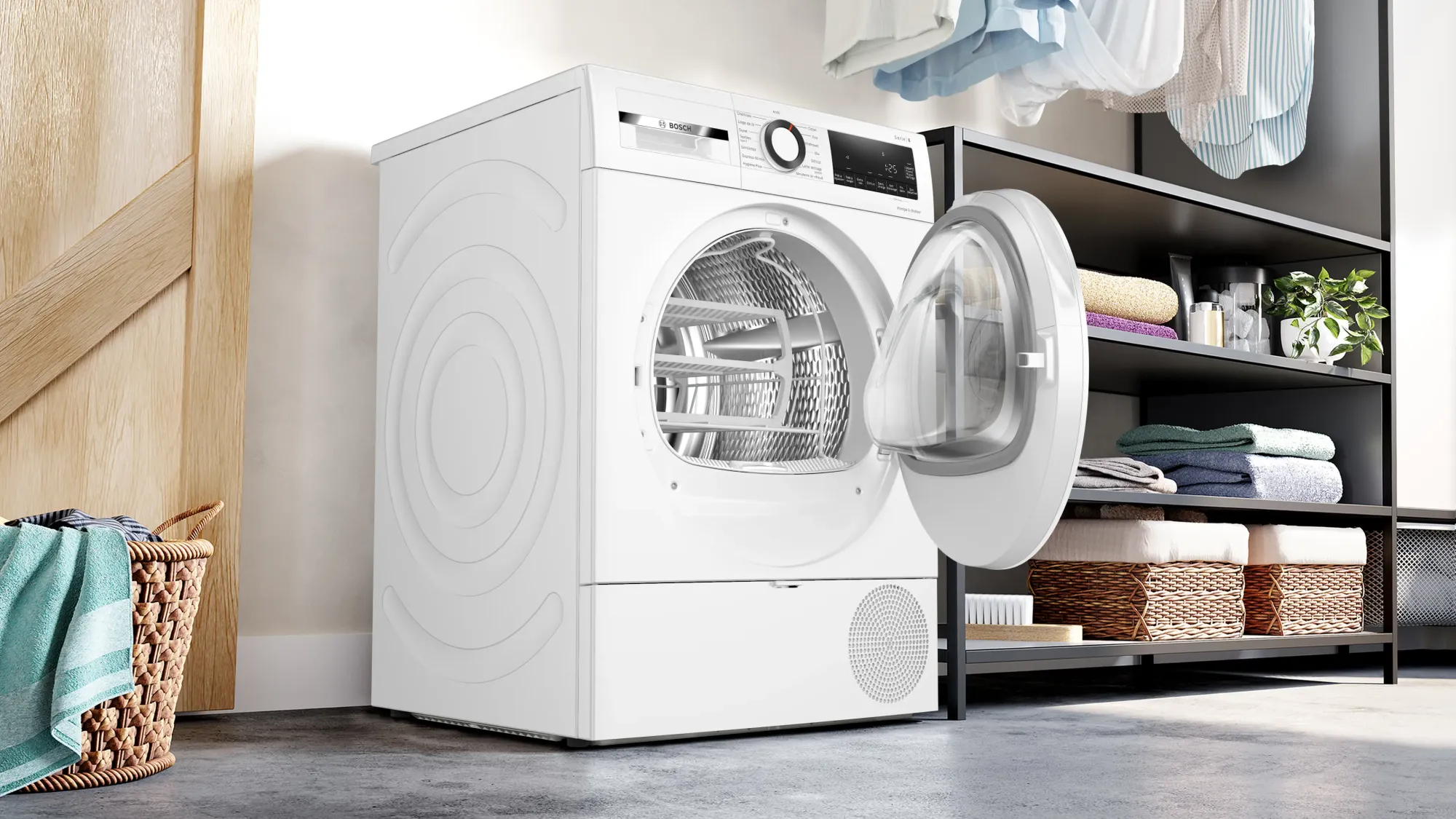
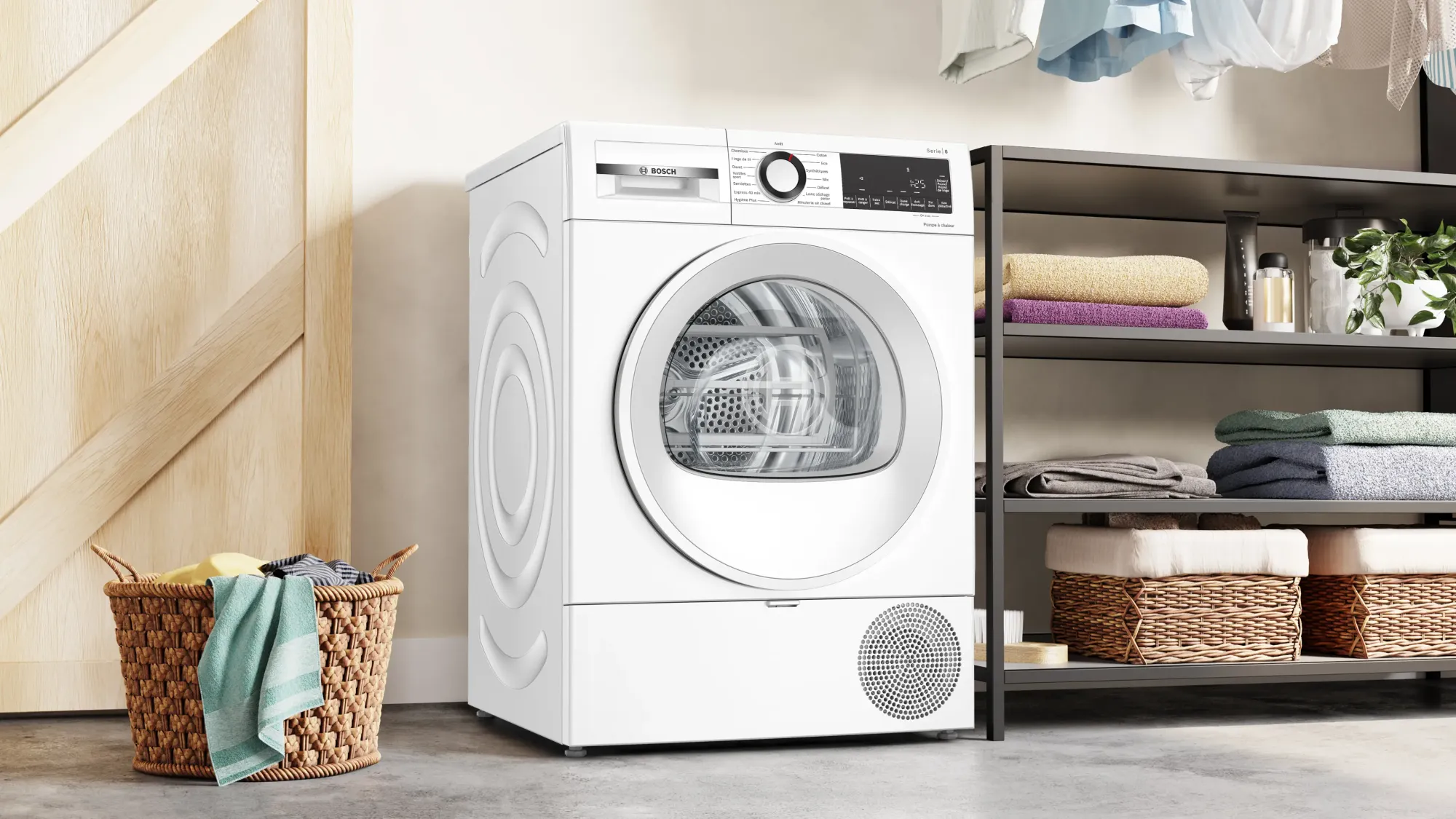
Serie 6 Heat pump tumble dryer 9 kg WQG1420DFR
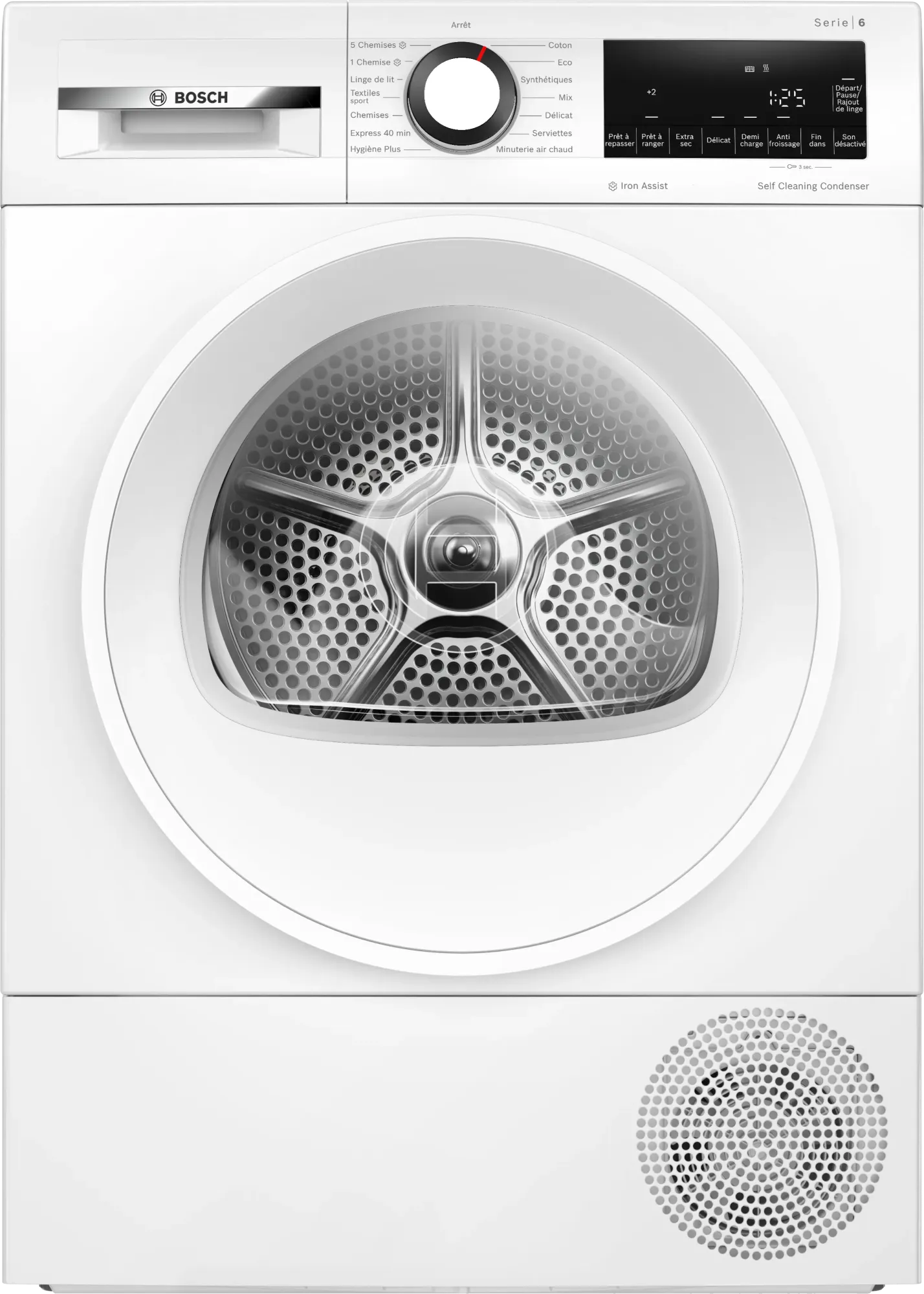
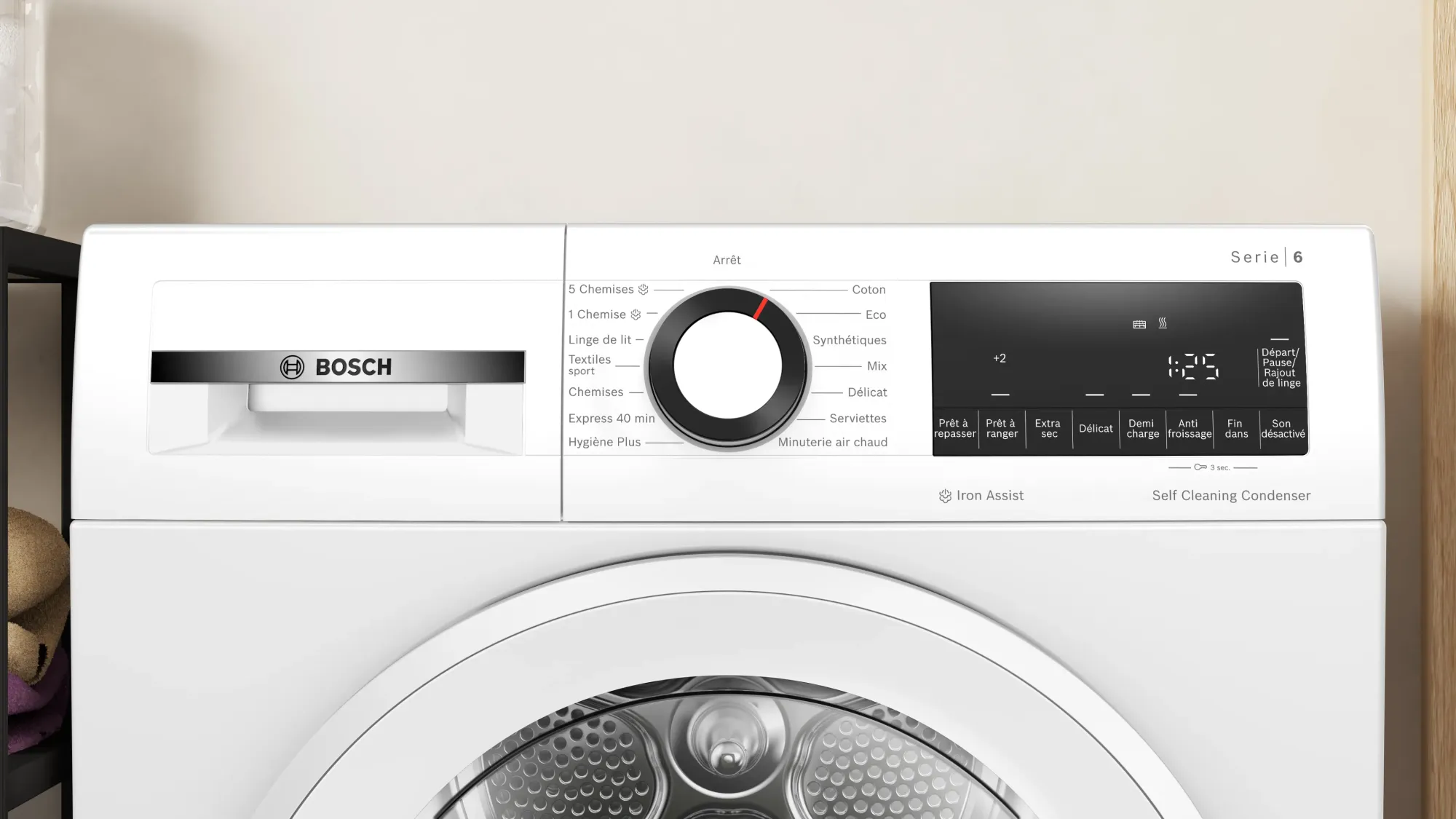
Tumble dryers Bosch
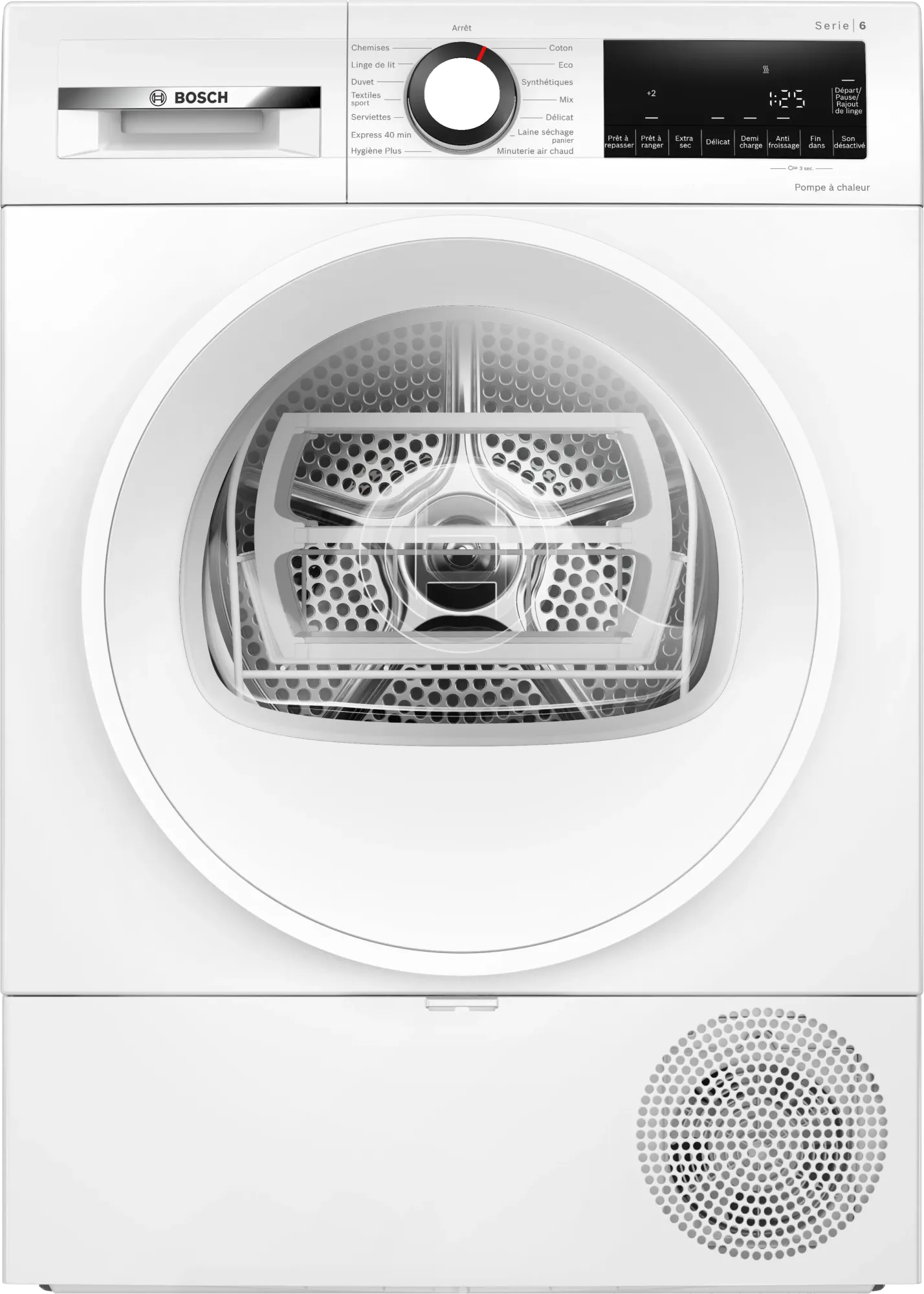
Serie 6 Heat pump tumble dryer 8 kg WQG24502FR
Tumble dryers Bosch