Scanners Ricoh
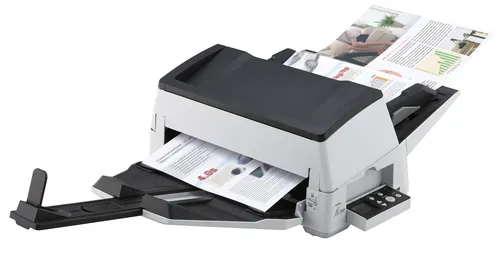
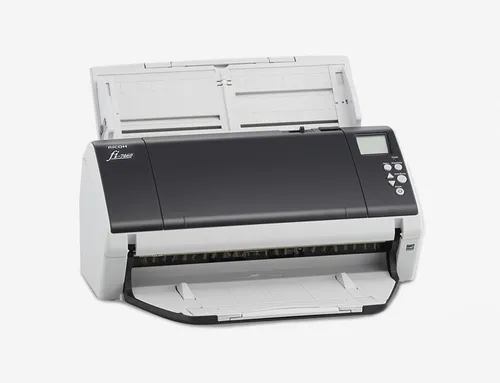
Ricoh fi-7460 ADF + Manual feed scanner 600 x 600 DPI A3 Grey, White
Relevance for this use: 64/100
Organisations integrating environmental impact into purchasing decisions examine every consumption item. A scanner operating several hours daily weighs on carbon balance, however modestly. Favouring the most efficient models reduces energy footprint without sacrificing functionality, and sends a consistent signal to teams and stakeholders alike.
In this approach, electrical consumption becomes priority, followed by price reflecting reasoned resource use. Feeder capacity and maximum throughput matter less: better a device sized to actual need, wasting neither energy nor material, than an oversized model whose functions remain unused.
The same criteria as on the category page, but not the same weight: here is what goes up and what goes down.
Price matters more in a logic of sobriety: buying just what is needed, without bidding up superfluous functions, translates willingness not to waste financial and material resources. An accessible scanner suited to processed volumes avoids unnecessarily mobilising electronic components costly in raw materials and embodied energy. Price benchmarks position the offering and allow choosing a balance between purchase cost and environmental impact.
Feeder capacity loses importance when the objective is limiting material footprint. An oversized tray mobilises more plastic and metal for use that does not always justify it. Between fifty and one hundred sheets, near the median, most structures find reasonable compromise. Only those processing exceptional volumes benefit from five-hundred-sheet capacity: elsewhere, this overbidding weighs down the device without ecological benefit.
Electrical consumption becomes the central criterion for reducing environmental impact. Between seventy watts, the high threshold recorded, and five watts, the best, the gap translates directly into emissions avoided over device lifetime. A twenty-watt model, near the median, already consumes four times less than an energy-hungry scanner. The best drop below five watts: this extreme efficiency minimises carbon footprint without compromise on scanning quality, and fits into a consistent reduction approach.
Maximum daily throughput matters little in an eco-responsible approach, where the challenge is not maximising output but adjusting the tool to need. A scanner certified for forty thousand daily pages mobilises robust and energy-intensive components, rarely justified outside industrial use. Between one thousand five hundred and six thousand five hundred pages, the median, most organisations find ample capacity to meet their volumes without oversizing. Favouring right measure reduces material and energy footprint.
The features pushed in this category that make no difference in this context.
Little-used advanced scanning functions
Specialised scanning modes, like integrated optical character recognition or advanced automatic correction, demand more from the processor and increase consumption. If these functions remain unused, they unnecessarily burden the energy balance.
Large colour touchscreens
Sophisticated visual interfaces consume more energy and mobilise additional electronic components. A monochrome screen or simplified interface fulfils the same purpose with reduced footprint.
Non-recyclable materials
Some scanners incorporate composite plastics or coatings difficult to recycle at end of life. Favouring models whose design facilitates disassembly and material recovery extends resource lifecycle.
Oversized packaging
Bulky packaging, plastic overwrap or abundant paper instructions increase logistical impact and generate avoidable waste. Sober packaging in recycled materials reflects an approach consistent with environmental challenges.
Orders of magnitude, not displayed prices: a price only appears on Kalyneo once it has been collected from a merchant, with its collection date.
Under €80
Models under eighty euros often offer contained consumption and simple design, suited to modest needs without material overbidding.
€80 to €200
Between eighty and two hundred euros, access opens to the most efficient scanners, with consumption below twenty watts and essential features, ideal for an eco-responsible approach.
Over €200
Above two hundred euros, gains focus on robustness and speed, rarely essential in a logic of sobriety: investment often exceeds the impact reduction objective.
Ranked by relevance for this specific case, not by their overall score.
Scanners Ricoh
Relevance for this use: 64/100
Scanners Ricoh
Relevance for this use: 63/100
A product only enters this list if it meets every one of these points. Its relevance is rated for this specific use, independently of its overall score in the category.