Lightweight sat nav for cycling and hiking
Travelling by bike or on foot requires limiting equipment weight. Every gram counts in the bag or on the handlebars, and a sat nav that is too heavy quickly becomes a burden during long outings. The device must above all be unobtrusive while remaining readable when consulting the route, without requiring a large screen or extensive storage capacity.
Price becomes an important criterion for this situation. A compact model slips easily into a pocket or attaches effortlessly to handlebars. Cyclists and hikers often seek functional equipment without excessive investment, while screen size and storage capacity become less important for following pre-downloaded routes.
What matters in this specific case
The same criteria as on the category page, but not the same weight: here is what goes up and what goes down.
-
Price
Matters more coefficient 1.5Price becomes more important in this situation because cyclists and hikers seek reliable equipment without unnecessary expense. A basic sat nav is often sufficient to follow a pre-downloaded route, and entry-level models meet this need. Advanced functions like voice navigation or traffic updates provide nothing for off-road use, which makes it possible to target affordable models.
-
Screen
Matters less coefficient 0.6The screen matters less for cycling or hiking use because consultations remain brief and occasional. Benchmarks show diagonals from six point seven five to ten point one inches, and low values suit perfectly here. A display of six or seven inches is sufficient to check your position on the route during a break. A large screen adds weight and consumes more battery without genuinely improving the experience on a trail.
-
Storage
Matters less coefficient 0.7Storage matters little in this situation because cycling and hiking routes occupy far less space than complete road maps. Benchmarks range from sixteen to sixty-four gigabytes, and the lowest value is amply sufficient to record dozens of tracks. Hikers generally download routes before setting off and do not need to keep large databases permanently on the device.
What is not worth paying for
The features pushed in this category that make no difference in this context.
-
Complete road mapping
Many sat navs include detailed road maps of all European countries. For use on paths and trails, these data remain useless and occupy space. Tracks downloaded from specialised applications are amply sufficient, without requiring road navigation.
-
Real-time traffic information
Alerts about slowdowns and calculations of alternative routes have no relevance off roads. A cyclist on a cycle path or a hiker in the mountains encounters no traffic jams. This function makes the software heavier and consumes battery without providing any benefit.
-
High-resolution touchscreen
A very precise touchscreen makes entering complex addresses easier, but becomes superfluous when you simply load a prepared track. Operation with gloves remains difficult, and high resolution consumes more power than a basic screen that just displays position on the route.
-
Permanent Bluetooth connectivity
Some sat navs connect continuously to the phone to display notifications. When hiking or cycling, this distraction is unwanted and quickly drains the battery. An occasional connection to transfer tracks before departure is sufficient, without keeping Bluetooth active throughout the outing.
Price ranges for this use
Orders of magnitude, not displayed prices: a price only appears on Kalyneo once it has been collected from a merchant, with its collection date.
Under €100
Under one hundred euros, lightweight models offer essential functions to follow a track without frills, perfect for beginners or occasional use.
€100 to €200
Between one hundred and two hundred euros, you find compact devices with readable screens and sufficient battery life for full-day outings.
Over €200
Over two hundred euros, sat navs offer reinforced housings and advanced sports functions that exceed the needs of simple use on paths.
The products selected for this use
Ranked by relevance for this specific case, not by their overall score.
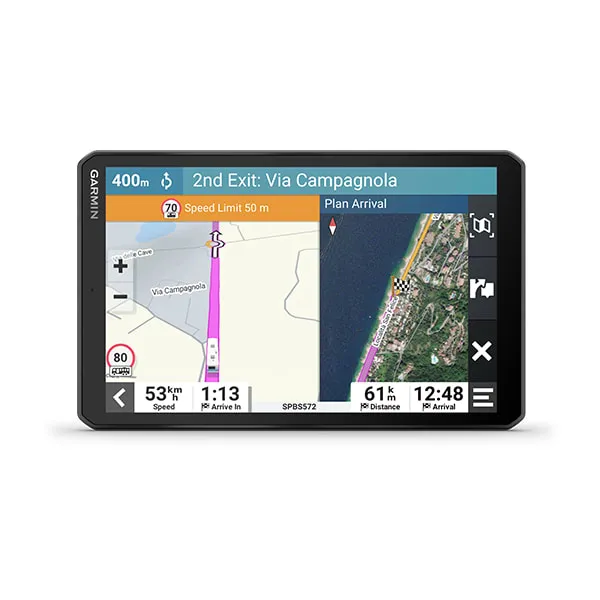
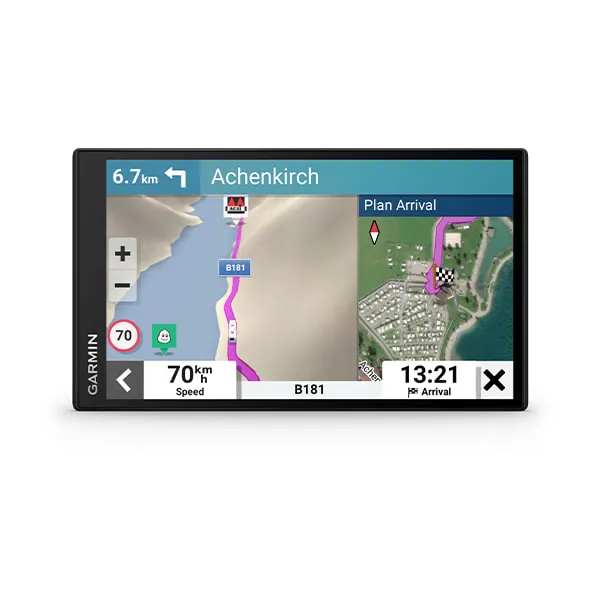
Our selection criteria for this use
A product only enters this list if it meets every one of these points. Its relevance is rated for this specific use, independently of its overall score in the category.
- The screen measures between six and seven inches diagonal
- The battery provides at least six hours of autonomy
- The housing resists water splashes
- The weight remains below three hundred grams
Other situations in this category
Sat nav for motorhomes and large vehicles
Finding the right sat nav for a motorhome requires a large screen visible from distance, storage for detailed maps and suitable dimensions.
Read
Professional sat nav with extended storage
A professional sat nav requires significant storage for maps and business databases, with a readable screen and reasonable price.
Read