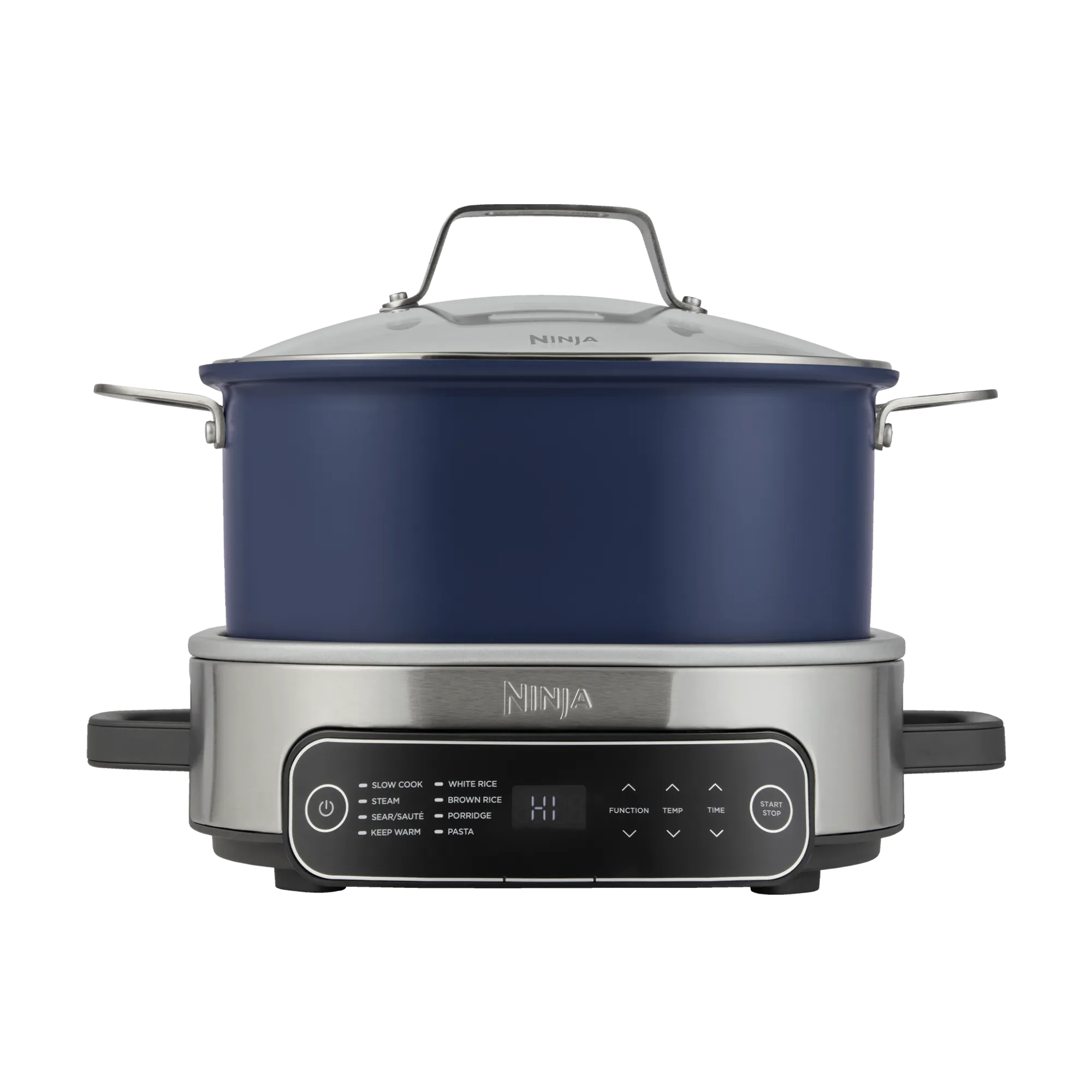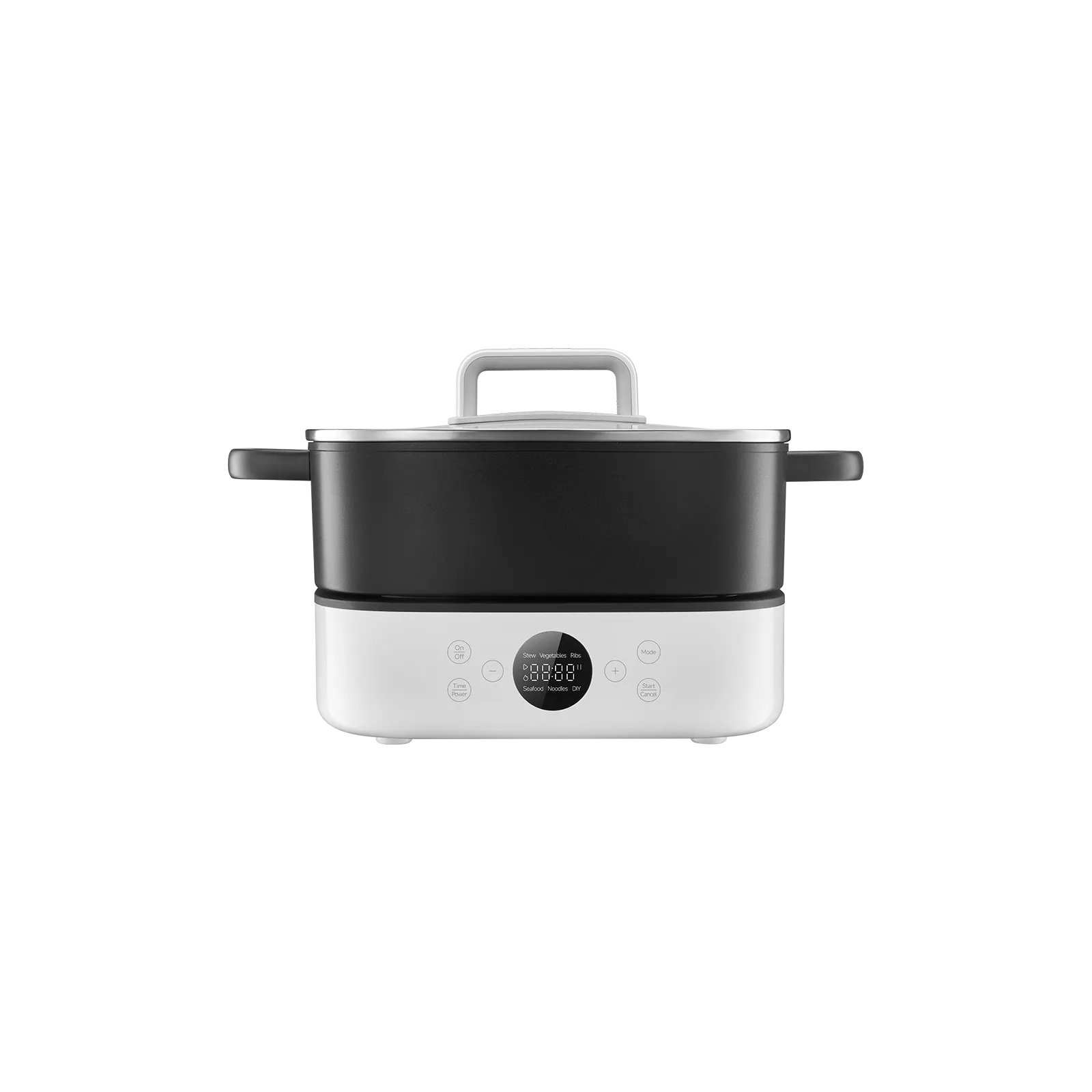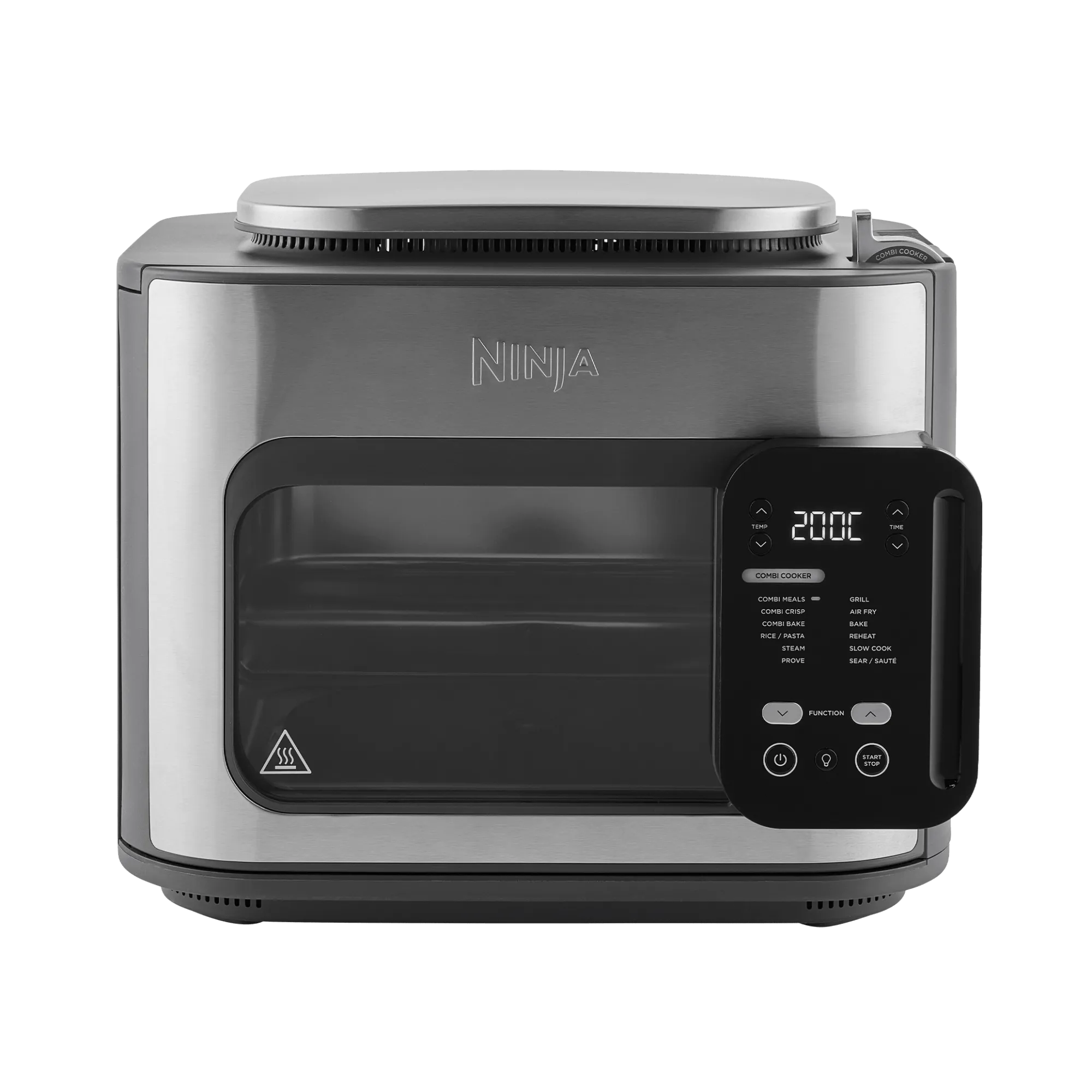
Multicookers and pressure cookers Ninja
Ninja Combi Rapid Multi-Cooker, steamer, oven, air fryer 12-in-1
Relevance for this use: 95/100
Varying dishes daily enriches diet and breaks meal monotony. The multicooker becomes a culinary exploration tool when it offers numerous automatic programs, each optimised for a specific preparation type. This versatility avoids multiplying appliances and simplifies access to recipes hitherto intimidating.
With this in mind, the count of automatic modes outweighs raw power or maximum capacity. A curious cook favours the possibility to launch soups, yoghurts, steam cooking, risottos or breads without mastering each parameter. Price remains important not to invest in unused functions, but the richness of the program catalogue justifies a slightly higher budget.
The same criteria as on the category page, but not the same weight: here is what goes up and what goes down.
The cost of a multi-program multicooker often exceeds that of a basic model, but this expense is justified by enlarged use. Each new automatic mode opens access to a recipe family without technical learning. Comparing recorded prices identifies appliances offering the best ratio between program count and rate, without falling into superfluous premium for domestic use.
Electrical power influences cooking speed but loses importance against program variety. Market benchmarks range from four hundred and thirty-six watts to one thousand five hundred, the median sitting at one thousand. To diversify diet, one thousand watts suffice amply to handle most automatic modes without excessively lengthening preparation times. Favouring programs over watts avoids paying for a secondary characteristic.
Bowl capacity keeps its importance but does not become priority for varied use. Observed models run from two to six litres, the median being six litres. Four to six litres suit the majority of recipes for two to four people. Too small a bowl limits possibilities of certain programs like breads or cakes, but excessive capacity remains useless if the goal is to explore rather than cook in large quantity.
The number of automatic programs constitutes the decisive criterion to vary diet. Recent sheets list from six to thirty-five, with a median of ten. Aiming for fifteen to twenty modes opens a wide range: white and brown rice, steamed vegetables, soups, yoghurts, slow cooking, sous vide, breads and cakes. Each preset program removes the need to adjust temperature and duration, easing trial of new recipes without risk of failure.
The features pushed in this category that make no difference in this context.
Excessive power
The one thousand five hundred watts observed on some premium models accelerate cooking but do not change the variety of achievable dishes. To explore new recipes, speed counts less than mode diversity. Paying for maximum power inflates the budget without widening the accessible culinary repertoire.
Six-program models
Six automatic modes cover basic needs but quickly limit discovery. Rice, steam and slow cooking do not suffice to break out of dietary habits. Investing in a multicooker without programmatic richness amounts to underusing the appliance’s potential to vary diet.
Extreme capacities
A two-litre bowl or conversely six litres answers specific household size needs. To diversify recipes, a medium capacity of four litres suffices amply and avoids limiting certain programs through lack or excess of volume. Paying for an unsuited size restricts culinary possibilities.
Complex manual functions
Some multicookers bet on precise manual adjustments rather than prerecorded programs. This approach suits experienced cooks but complicates exploration for those wishing to test new recipes without mastering cooking parameters. Favouring automation simplifies daily experimentation.
Orders of magnitude, not displayed prices: a price only appears on Kalyneo once it has been collected from a merchant, with its collection date.
Under €60
Under sixty euros give access to multicookers of eight to ten programs, sufficient to start varying without investing heavily.
€60 to €120
Between sixty and one hundred and twenty euros, models offer fifteen to twenty automatic modes, covering domestic culinary exploration needs amply.
Over €120
Above one hundred and twenty euros, some appliances reach thirty programs or more, but this richness often exceeds real needs and multiplies rarely used functions.
Ranked by relevance for this specific case, not by their overall score.
Multicookers and pressure cookers Ninja
Relevance for this use: 95/100
Multicookers and pressure cookers Ninja
Relevance for this use: 69/100
Multicookers and pressure cookers Xiaomi
Relevance for this use: 65/100
A product only enters this list if it meets every one of these points. Its relevance is rated for this specific use, independently of its overall score in the category.